




- Artificial Intelligence in Cancer
- Artificial Intelligence in Gastroenterology
- Artificial Intelligence in Gastrointestinal Endoscopy
- Artificial Intelligence in Medical Imaging
- World Journal of Anesthesiology
- World Journal of Biological Chemistry
- World Journal of Cardiology
- World Journal of Clinical Cases
- World Journal of Clinical Infectious Diseases
- World Journal of Clinical Oncology
- World Journal of Clinical Pediatrics
- World Journal of Clinical Urology
- World Journal of Critical Care Medicine
- World Journal of Dermatology
- World Journal of Diabetes
- World Journal of Experimental Medicine
- World Journal of Gastroenterology
- World Journal of Gastrointestinal Endoscopy
- World Journal of Gastrointestinal Oncology
- World Journal of Gastrointestinal Pathophysiology
- World Journal of Gastrointestinal Pharmacology and Therapeutics
- World Journal of Gastrointestinal Surgery
- World Journal of Hematology
- World Journal of Hepatology
- World Journal of Hypertension
- World Journal of Immunology
- World Journal of Medical Genetics
- World Journal of Meta-Analysis
- World Journal of Methodology
- World Journal of Nephrology
- World Journal of Neurology
- World Journal of Obstetrics and Gynecology
- World Journal of Ophthalmology
- World Journal of Orthopedics
- World Journal of Otorhinolaryngology
- World Journal of Pharmacology
- World Journal of Psychiatry
- World Journal of Radiology
- World Journal of Respirology
- World Journal of Rheumatology
- World Journal of Stem Cells
- World Journal of Stomatology
- World Journal of Surgical Procedures
- World Journal of Translational Medicine
- World Journal of Transplantation
- World Journal of Virology
- 世界华人消化杂志
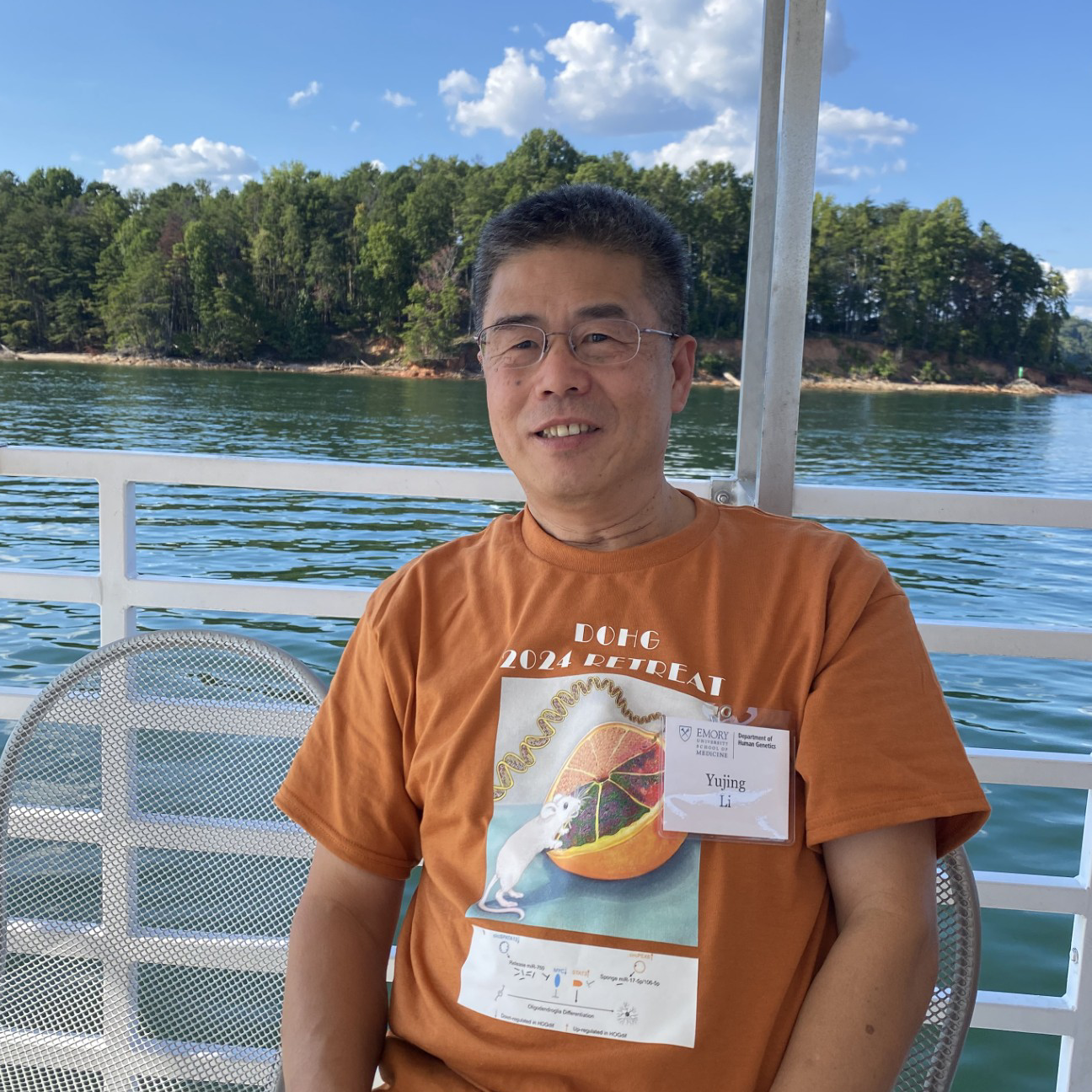
My name is Yujing Li, and I received my PhD in Genetics from the Institute of Genetics (now the Institute of Genetics and Developmental Biology), Chinese Academy of Sciences, Beijing, China. I am currently an Assistant Professor in the Department of Human Genetics at Emory University School of Medicine. My research focuses on uncovering the molecular and cellular mechanisms underlying neurological disorders. I am particularly interested in conditions such as fragile X syndrome (FXS), fragile X-associated tremor/ataxia syndrome (FXTAS), Neuronal Intranuclear Inclusion Disease (NIID), and other autism spectrum disorders (ASD), which affect many individuals yet remain poorly understood. While numerous studies have relied on animal models, differences in genetic, anatomical, and physiological features between humans and mice often limit their ability to fully recapitulate human neurological diseases, creating challenges for translating research findings to the clinic. For example, clinical trials for FXS based solely on animal models, such as those testing mGluR5 antagonists, have been unsuccessful. To address these limitations, my work employs iPSCs, iPSC-derived brain organoids from patients with FXS, FXTAS, and NIID, as well as animal models and clinical samples. In earlier studies, we identified TET2, a member of the ten-eleven translocation (TET) protein family, as a key factor enhancing iPSC induction efficiency. More recently, we have used forebrain organoids derived from FXS patients and healthy controls to study disease mechanisms, identifying numerous human-specific mRNAs physically bound by FMRP. One of these targets, CHD2, contributes to altered gene expression specifically in FXS organoids but not in mice. Our studies demonstrate that loss of FMRP during human brain development disrupts molecular, cellular, and electrophysiological processes, providing new insights into disease mechanisms and potential therapeutic strategies. I have published over 25 first-author or corresponding-author articles in leading journals, with a total of 13,596 citations and an H-index of 33 (Google Scholar). I have been invited six times to present at international conferences and am a member of the American Society of Human Genetics. I have peer-reviewed approximately 100 manuscripts and authored more than 10 editorials for scientific journals. My long-term research goal is to advance understanding of neurodevelopmental and neurodegenerative disorders to identify novel therapeutic strategies. I am developing two innovative platforms—single-cell CLIP (scCLIP) and spatial CLIP (spCLIP)—which will be essential for dissecting molecular mechanisms in neurological disorders, brain tumorigenesis, and other cancers at both the cell-type and spatial levels. By integrating these interdisciplinary tools, I aim to generate systems-level insights into disease mechanisms and translate them into therapeutic opportunities. I also bring a strong set of professional skills that enhance my research and collaborative effectiveness. My active listening, communication, and interpersonal skills support productive interactions across disciplines, while my leadership and mentoring skills foster team development and trainee growth. Additionally, my management and problem-solving abilities enable me to coordinate complex research projects efficiently and address scientific challenges with creativity and rigor. Outside of research, I enjoy traveling, gardening, volleyball, and swimming.