




- Artificial Intelligence in Cancer
- Artificial Intelligence in Gastroenterology
- Artificial Intelligence in Gastrointestinal Endoscopy
- Artificial Intelligence in Medical Imaging
- World Journal of Anesthesiology
- World Journal of Biological Chemistry
- World Journal of Cardiology
- World Journal of Clinical Cases
- World Journal of Clinical Infectious Diseases
- World Journal of Clinical Oncology
- World Journal of Clinical Pediatrics
- World Journal of Clinical Urology
- World Journal of Critical Care Medicine
- World Journal of Dermatology
- World Journal of Diabetes
- World Journal of Experimental Medicine
- World Journal of Gastroenterology
- World Journal of Gastrointestinal Endoscopy
- World Journal of Gastrointestinal Oncology
- World Journal of Gastrointestinal Pathophysiology
- World Journal of Gastrointestinal Pharmacology and Therapeutics
- World Journal of Gastrointestinal Surgery
- World Journal of Hematology
- World Journal of Hepatology
- World Journal of Hypertension
- World Journal of Immunology
- World Journal of Medical Genetics
- World Journal of Meta-Analysis
- World Journal of Methodology
- World Journal of Nephrology
- World Journal of Neurology
- World Journal of Obstetrics and Gynecology
- World Journal of Ophthalmology
- World Journal of Orthopedics
- World Journal of Otorhinolaryngology
- World Journal of Pharmacology
- World Journal of Psychiatry
- World Journal of Radiology
- World Journal of Respirology
- World Journal of Rheumatology
- World Journal of Stem Cells
- World Journal of Stomatology
- World Journal of Surgical Procedures
- World Journal of Translational Medicine
- World Journal of Transplantation
- World Journal of Virology
- 世界华人消化杂志
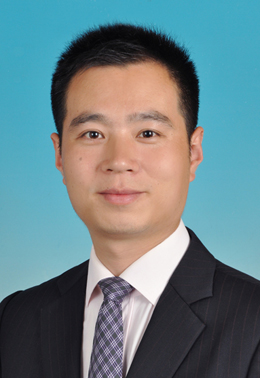
I am Chao Ma, M.S., a Professor in the Department of Radiology at Shanghai Changhai Hospital, one of the top-tier medical institutions in China. With a career spanning more than fifteen years, he has established himself as a leading authority in medical imaging technology development and computer-aided disease diagnosis, having authored or co-authored more than 100 peer-reviewed publications in high-impact journals. Among his most notable contributions, Prof. Ma was the first in China to achieve high-resolution pancreatic magnetic-resonance diffusion weighted imaging through the development of novel acquisition and reconstruction strategies that compensate for respiratory motion and low tissue contrast. Recognizing the urgent need for standardized quality assurance in MRI, he engineered an innovative water phantom that enables precise measurement and real-time calibration of gradient non-linearity across vendor platforms; the device has now been commercialized and incorporated into national QA protocols. Turning to artificial intelligence, Prof. Ma leveraged large-scale CT image repositories to train deep-learning networks capable of rapid, fully automated pancreatic segmentation, accurate fat quantification at the voxel level, and early detection of focal pancreatic anomalies with a sensitivity exceeding 99%. As the principal or co-investigator, he has secured more than 10 grants from the National Natural Science Foundation of China, the Ministry of Science and Technology, and the Shanghai Municipal Commission of Health, totaling more than 2 million RMB. Prof. Ma currently serves as the Deputy Director of the Medical Imaging Technology Branch of the Shanghai Medical Association, where he leads initiatives to establish city-wide imaging standards and promotes interdisciplinary collaboration among radiologists, engineers, and data scientists. Professor Chao Ma and his collaborators have conducted a series of clinical trials using 320-row CT, achieving a body of important and valuable results. Their team has become one of the leading imaging centers in China. I am Chao Ma, M.S., a Professor in the Department of Radiology at Shanghai Changhai Hospital, one of the top-tier medical institutions in China. With a career spanning more than fifteen years, he has established himself as a leading authority in medical imaging technology development and computer-aided disease diagnosis, having authored or co-authored more than 100 peer-reviewed publications in high-impact journals. Among his most notable contributions, Prof. Ma was the first in China to achieve high-resolution pancreatic magnetic-resonance diffusion weighted imaging through the development of novel acquisition and reconstruction strategies that compensate for respiratory motion and low tissue contrast. Recognizing the urgent need for standardized quality assurance in MRI, he engineered an innovative water phantom that enables precise measurement and real-time calibration of gradient non-linearity across vendor platforms; the device has now been commercialized and incorporated into national QA protocols. Turning to artificial intelligence, Prof. Ma leveraged large-scale CT image repositories to train deep-learning networks capable of rapid, fully automated pancreatic segmentation, accurate fat quantification at the voxel level, and early detection of focal pancreatic anomalies with a sensitivity exceeding 99%. As the principal or co-investigator, he has secured more than 10 grants from the National Natural Science Foundation of China, the Ministry of Science and Technology, and the Shanghai Municipal Commission of Health, totaling more than 2 million RMB. Prof. Ma currently serves as the Deputy Director of the Medical Imaging Technology Branch of the Shanghai Medical Association, where he leads initiatives to establish city-wide imaging standards and promotes interdisciplinary collaboration among radiologists, engineers, and data scientists. Professor Chao Ma and his collaborators have conducted a series of clinical trials using 320-row CT, achieving a body of important and valuable results. Their team has become one of the leading imaging centers in China.