
















Copyright: ©Author(s) 2026.
World J Psychiatry. Nov 19, 2026; 16(11): 123531
Published online Nov 19, 2026. doi: 10.5498/wjp.123531
Published online Nov 19, 2026. doi: 10.5498/wjp.123531
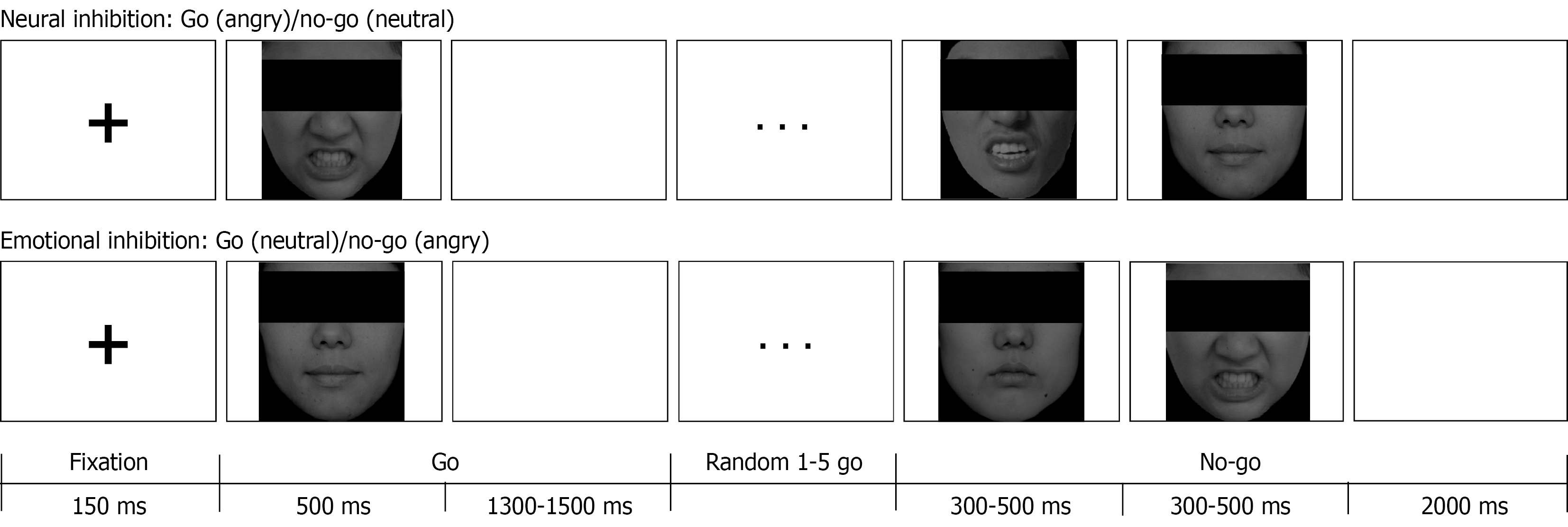
Figure 1 Flowchart of emotional go/no-go task.
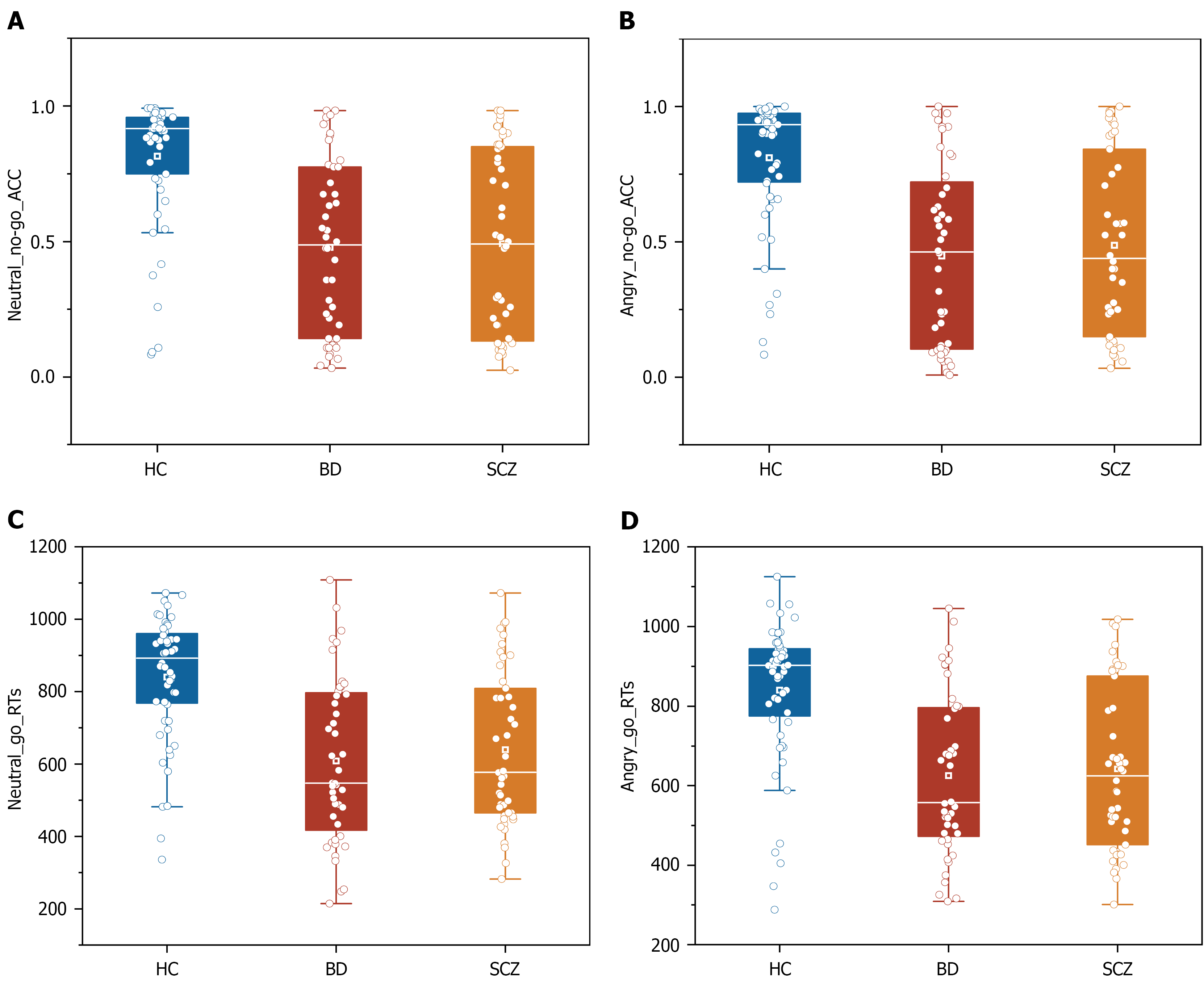
Figure 2 Comparisons of behavioral data.
A and B: The accuracy of no-go trials of angry faces or neutral faces between schizophrenia group, bipolar disorder group and healthy control group; C and D: The accuracy of reaction time of go trials of angry faces or neutral faces between schizophrenia group, bipolar disorder group and healthy control group. RTs: Reaction times; ACC: Accuracy rate; HC: Healthy control group; BD: Bipolar disorder group; SCZ: Schizophrenia group.
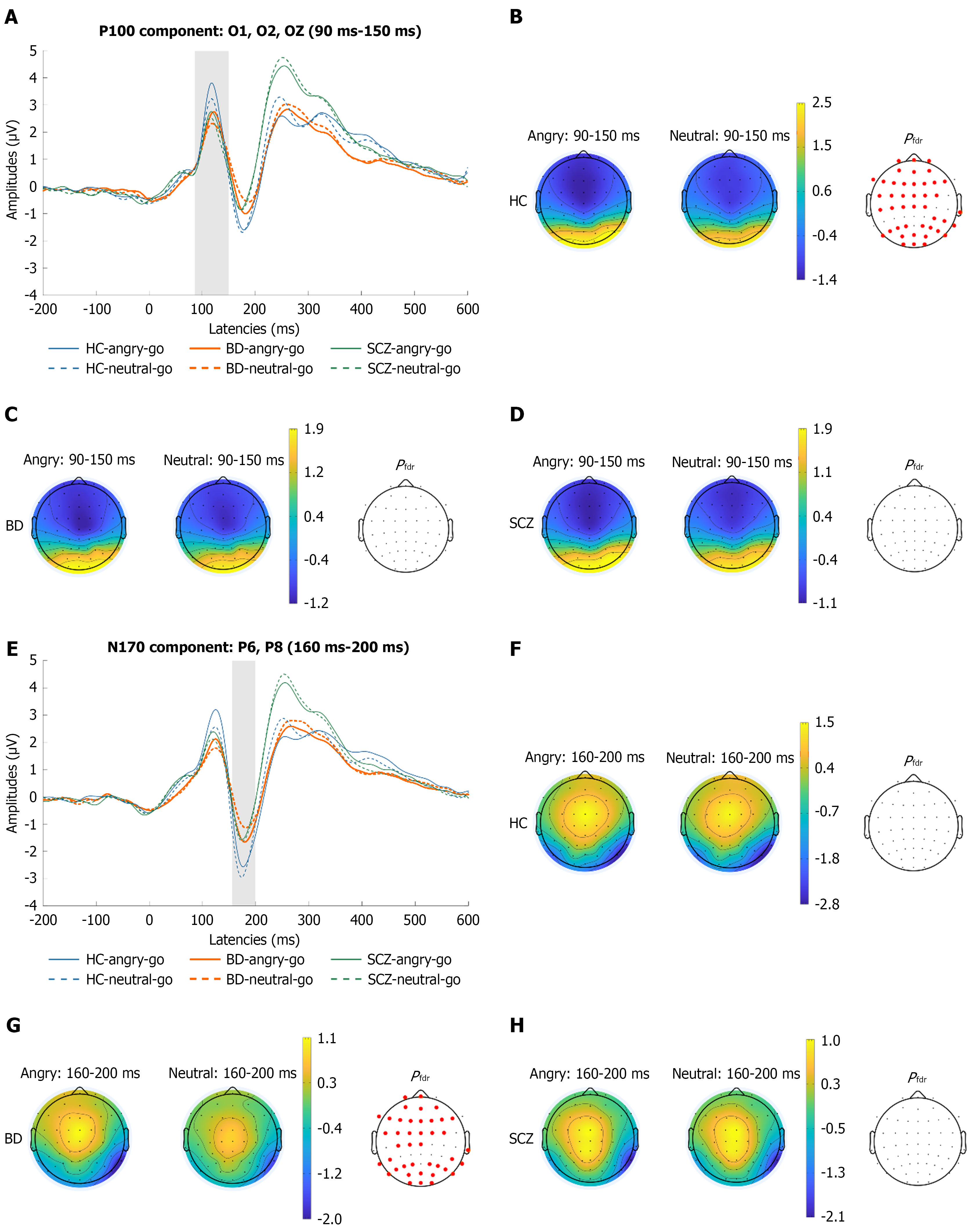
Figure 3 The significant differences of P100 and N170 in different emotion types between three groups.
A: For the go stimulus condition, the P100 mean amplitudes in the 90-150 milliseconds time window over occipital regions (O1, O2, Oz) across group schizophrenia group (SCZ) vs bipolar disorder group (BD) vs healthy control group (HC) × face type (angry vs neutral); B-D: For the P100, the difference topographic maps of emotion types within SCZ, BD and HC group; E: For the go stimulus condition, the N170 mean amplitudes in the 160-200 milliseconds time window over right temporal regions (P6, P8) across group (SCZ vs BD vs HC) × face type (angry vs neutral); F-H: For the N170, the difference topographic maps of emotion types within SCZ, BD and HC group. Electrodes marked with red color indicate a significant group-difference. HC: Healthy control group; BD: Bipolar disorder group; SCZ: Schizophrenia group.
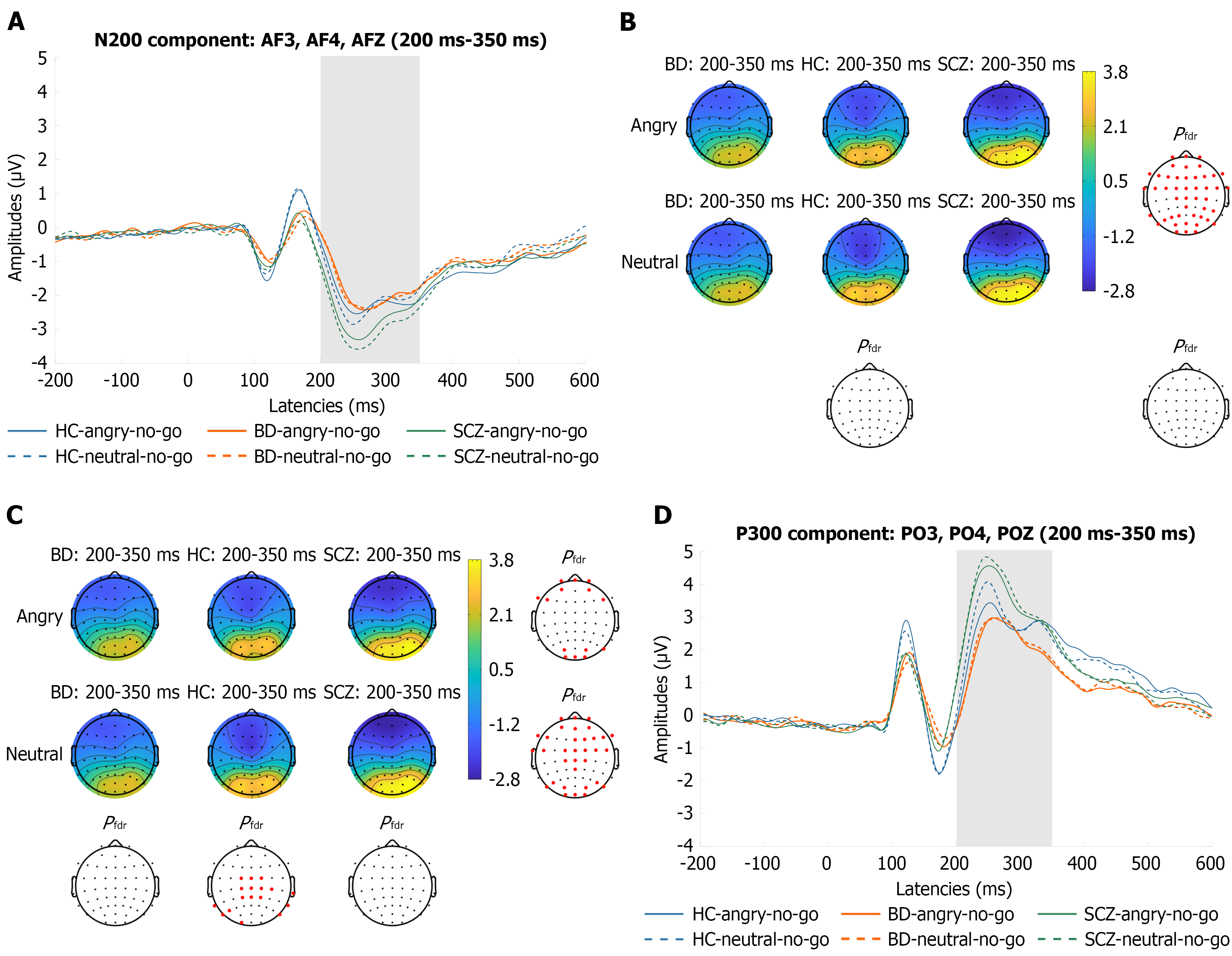
Figure 4 The significant differences of N200 and P300 in different emotion types between three groups.
A: For the no-go stimulus condition, the N200 mean amplitudes in the 200-350 milliseconds time window over prefrontal region (AF3, AF4, AFZ) across group [schizophrenia group (SCZ) vs bipolar disorder group (BD) vs healthy control group (HC)] × face type (angry vs neutral); B and C: For the N200 and P300, the difference topographic maps of emotion types within the healthy control group as well as the difference topographic maps of both emotion types within group (SCZ vs BD vs HC); D: For the no-go stimulus condition, the P300 mean amplitudes in the 200-350 milliseconds time window over occipital region (PO3, PO4, POz) across group (SCZ vs BD vs HC) × face type (angry vs neutral). Electrodes marked with red color indicate a significant group-difference. HC: Healthy control group; BD: Bipolar disorder group; SCZ: Schizophrenia group.
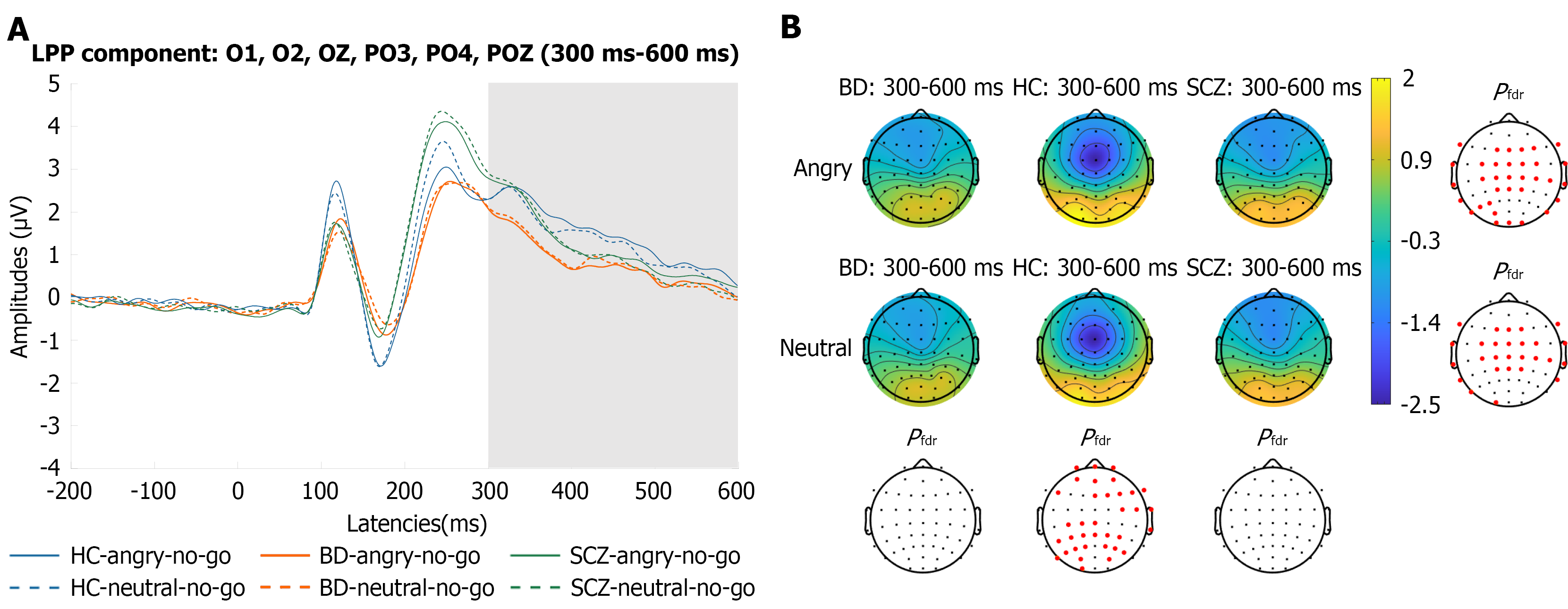
Figure 5 The significant differences of late positive potential in different emotion types between three groups.
A: For the no-go stimulus condition, the late positive potential mean amplitudes in the 300-600 milliseconds time window over occipital regions (O1, O2, Oz, PO3, PO4, POZ) across group (schizophrenia group vs bipolar disorder group vs healthy control group) × face type (angry vs neutral); B: For the late positive potential, the difference topographic maps of emotion types within the healthy control group as well as the difference topographic maps of both emotion types within group (schizophrenia group vs bipolar disorder group vs healthy control group). Electrodes marked with red color indicate a significant group-difference. HC: Healthy control group; BD: Bipolar disorder group; SCZ: Schizophrenia group; LPP: Late positive potential.
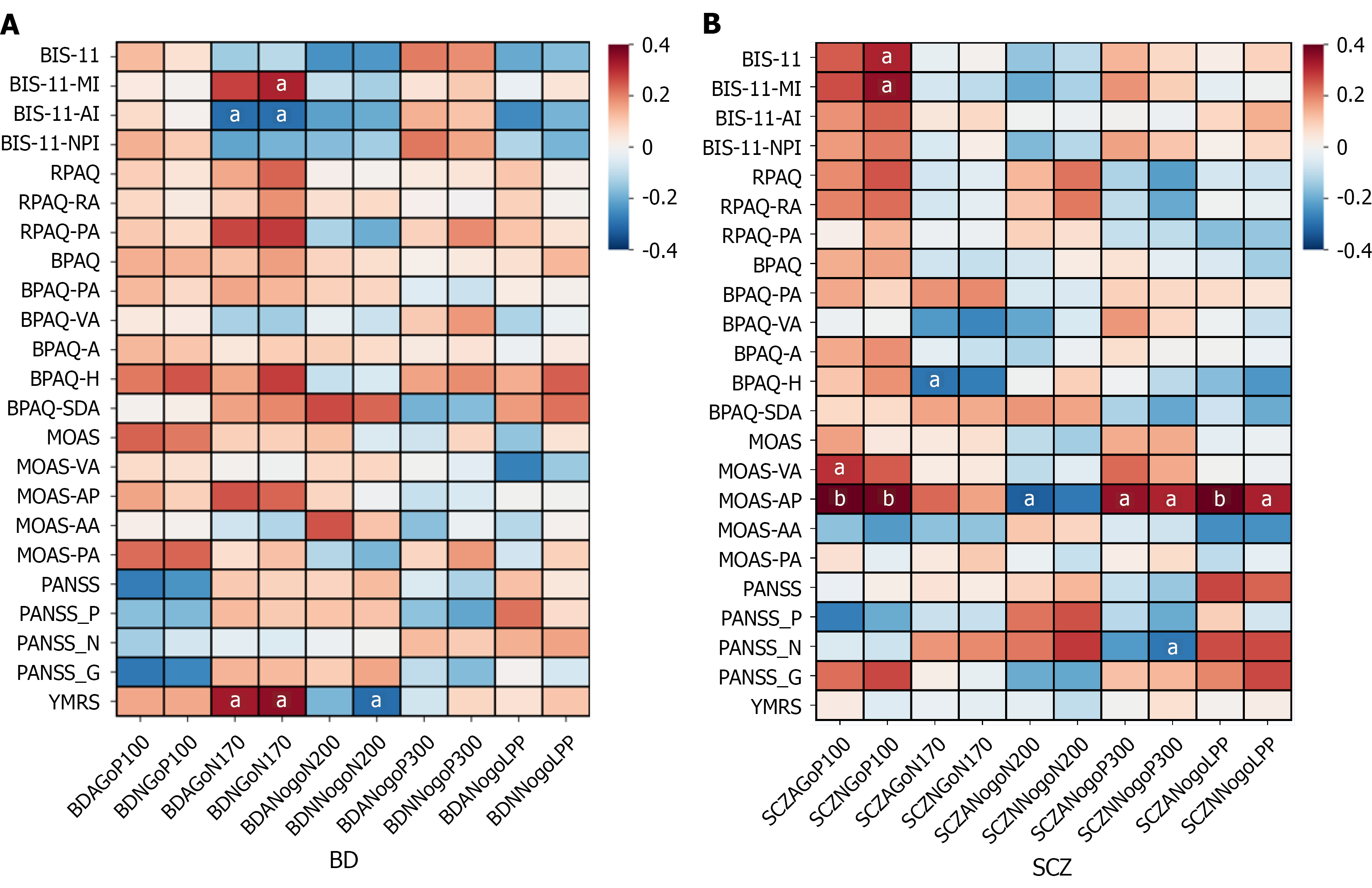
Figure 6 Correlation analysis of event-related potential data and clinical data within bipolar disorder group and schizophrenia group.
A: Bipolar disorder group; B: Schizophrenia group. aP ≤ 0.050, bP ≤ 0.010. BD: Bipolar disorder group; SCZ: Schizophrenia group; BIS-11: Barratt impulsiveness Scale-11; BIS-11-MI: Barratt impulsiveness Scale-11-motor impulsiveness; BIS-11-AI: Barratt impulsiveness Scale-11-attentional impulsiveness; BIS-11-NPI: Barratt impulsiveness Scale-11-no plan impulsiveness; RPAQ: Reactive-Proactive Aggression Questionnaire; RPAQ-PA: Reactive-Proactive Aggression Questionnaire-proactive aggression; RPAQ-RA: Reactive-Proactive Aggression Questionnaire-reactive aggression; BPAQ: The Buss-Perry Aggression Questionnaire; BPAQ-PA: The Buss-Perry Aggression Questionnaire-physical aggression; BPAQ-VA: The Buss-Perry Aggression Questionnaire-verbal aggression; BPAQ-A: The Buss-Perry Aggression Questionnaire-angry; BPAQ-H: The Buss-Perry Aggression Questionnaire-hostility; BPAQ-SDA: The Buss-Perry Aggression Questionnaire-self-directed aggression; MOAS: Modified Overt Aggression Scale; MOAS-VA: Modified Overt Aggression Scale-verbal aggression; MOAS-AP: Modified Overt Aggression Scale-aggression against property; MOAS-AA: Modified Overt Aggression Scale-auto-aggression; MOAS-PA: Modified Overt Aggression Scale-physical aggression; PANSS: Positive and Negative Syndrome Scale; PANSS-P: PANSS-positive scale; PANSS-N: PANSS-negative scale; PANSS-G: PANSS-general psychopathology scale; YMRS: Young Manic Rating Scale.
- Citation: Li XP, Zhang J, Liu Q, Wu YQ, Yang WY, Li JX, Liu XH, Sun YF, Zhou HL, Zhou ZH, Dai ZZ, Wang XY. Neural correlates of aggressive impulsive behavior differ between schizophrenia and bipolar disorder: An event-related potential study with a go/no-go task. World J Psychiatry 2026; 16(11): 123531
- URL: https://www.wjgnet.com/2220-3206/full/v16/i11/123531.htm
- DOI: https://dx.doi.org/10.5498/wjp.123531