
















Copyright: ©Author(s) 2026.
World J Clin Cases. Sep 16, 2026; 14(26): 125278
Published online Sep 16, 2026. doi: 10.12998/wjcc.125278
Published online Sep 16, 2026. doi: 10.12998/wjcc.125278
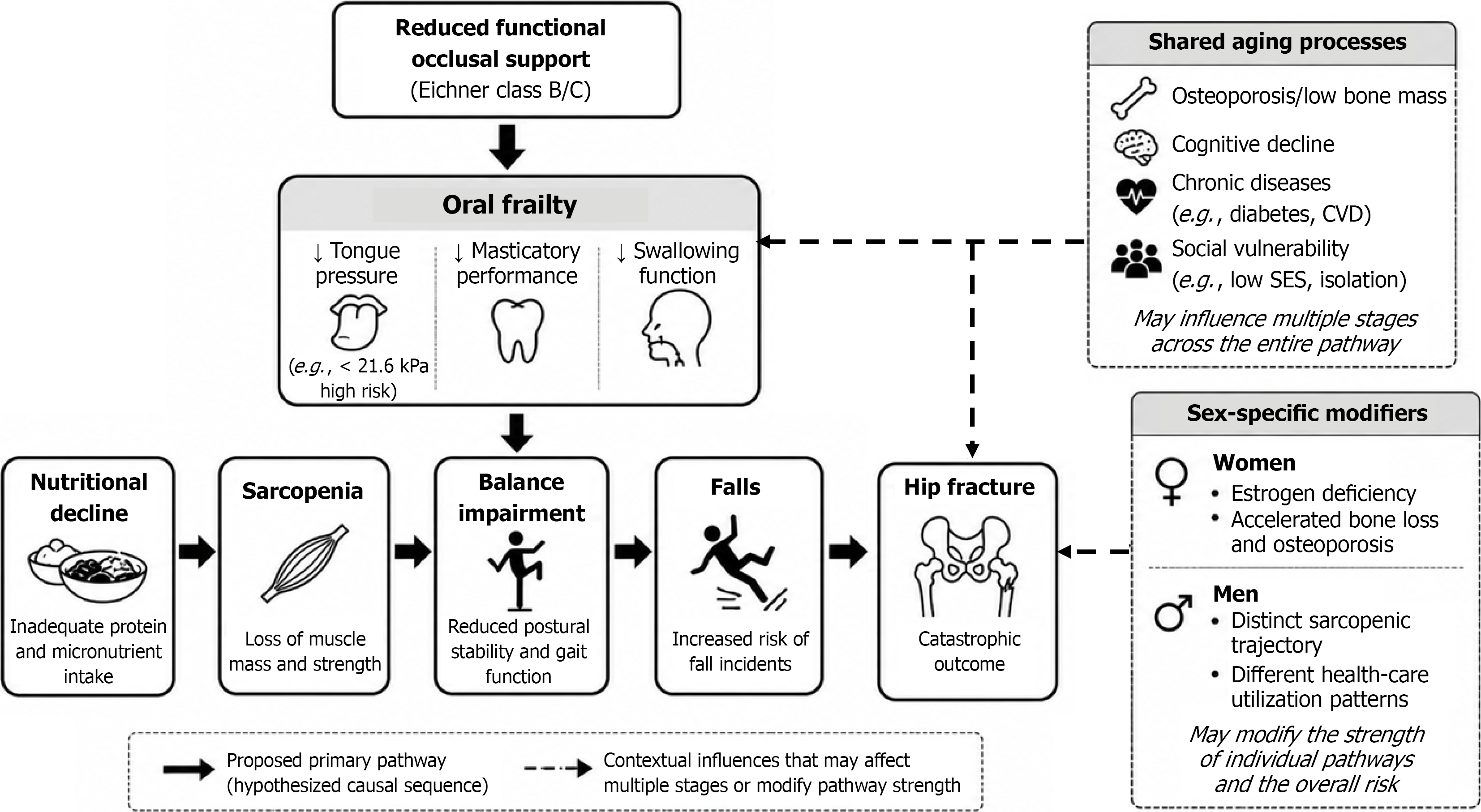
Figure 1 Proposed conceptual model positioning oral frailty and sensory blurring as network mediators of hip fracture risk.
The model illustrates how the loss of posterior occlusal support (Eichner Class B/C) triggers oral frailty, characterized by reduced tongue pressure and masticatory decline. This craniofacial perturbation pathways into a metabolic cascade of nutritional decline and sarcopenia, disrupting biomechanical stability. Simultaneously, age-related descending pain inhibitory system dysfunction produces “sensory blurring”, degrading neural signaling fidelity and delaying protective feedforward contractions during a postural slip. Together, these convergent network failures act through the non-linear dynamics of the “butterfly effect”, turning minor initial deficits into an unmitigated fall and catastrophic hip fracture. This systemic framework supports complex statistical validation via causal mediation, structural equation modeling, network analysis, and critical slowing down tracking. CVD: Cardiovascular disease; SES: Socioeconomic status.
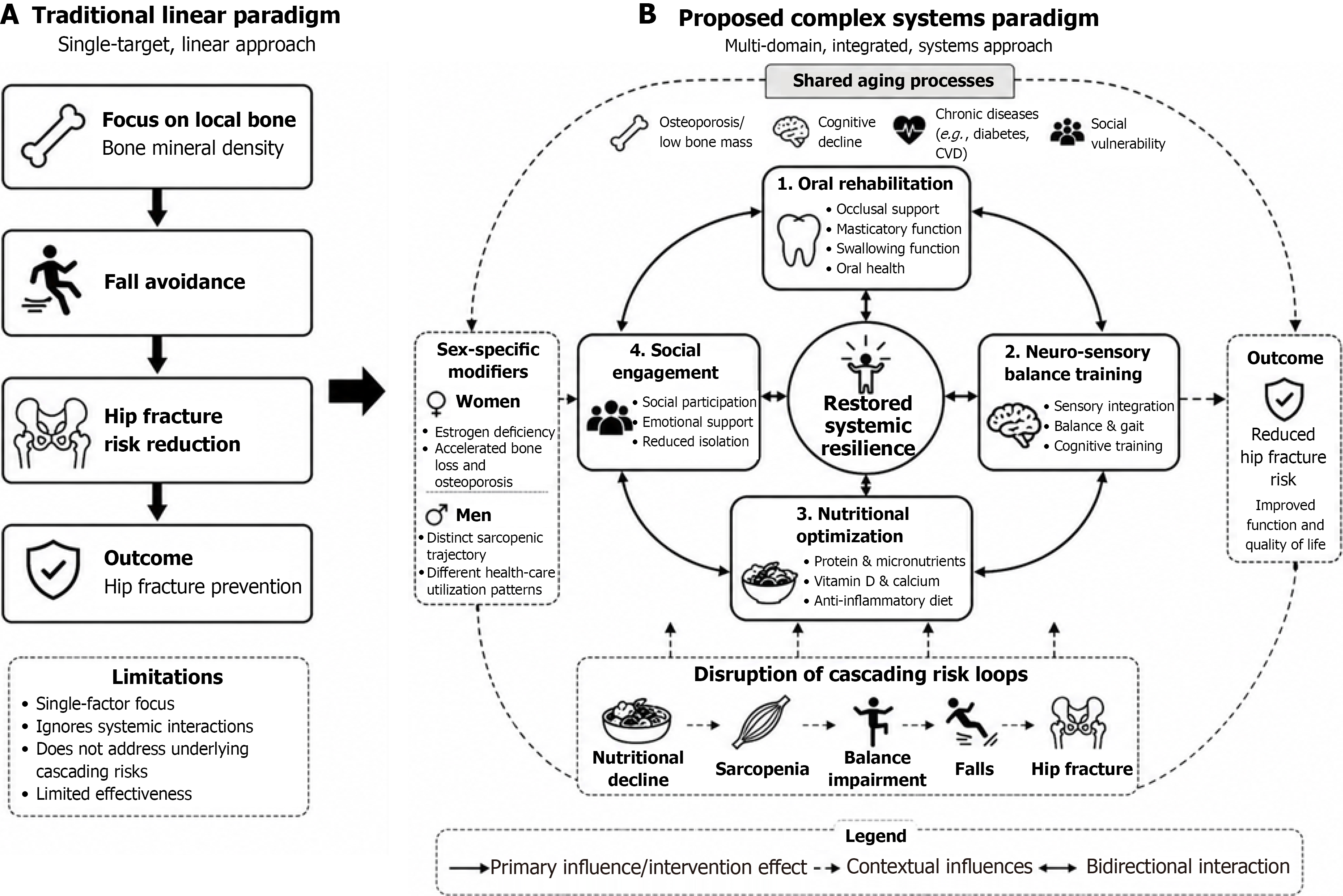
Figure 2 Comparison between traditional linear hip fracture prevention and the proposed complex systems multi-domain intervention program.
A: Traditional linear paradigm: Focuses solely on local bone mineral density and fall avoidance; B: Proposed complex systems paradigm: Implements simultaneous, multi-node interventions across oral rehabilitation, neuro-sensory balance training, nutritional optimization, and social engagement to restore overall systemic resilience and disrupt cascading risk loops. CVD: Cardiovascular disease.
- Citation: Nagamine T. Butterfly effect of oral frailty and sensory blurring: A complex systems framework for hip fracture vulnerability. World J Clin Cases 2026; 14(26): 125278
- URL: https://www.wjgnet.com/2307-8960/full/v14/i26/125278.htm
- DOI: https://dx.doi.org/10.12998/wjcc.125278