
















Copyright: ©Author(s) 2026.
World J Psychiatry. Nov 19, 2026; 16(11): 124485
Published online Nov 19, 2026. doi: 10.5498/wjp.124485
Published online Nov 19, 2026. doi: 10.5498/wjp.124485
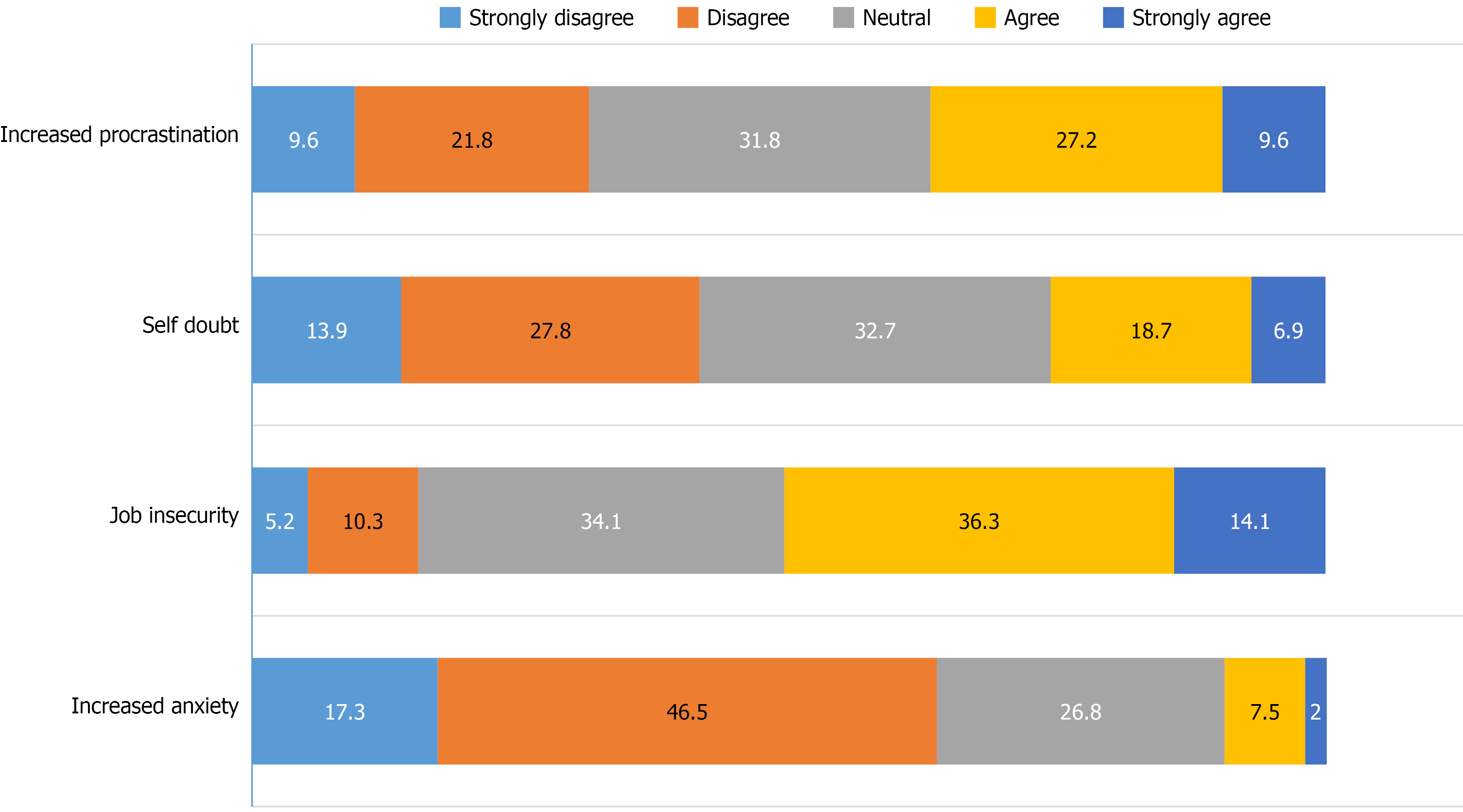
Figure 1
Distribution of attitudes toward AI use, ranging from “strongly disagree” to “strongly agree”.
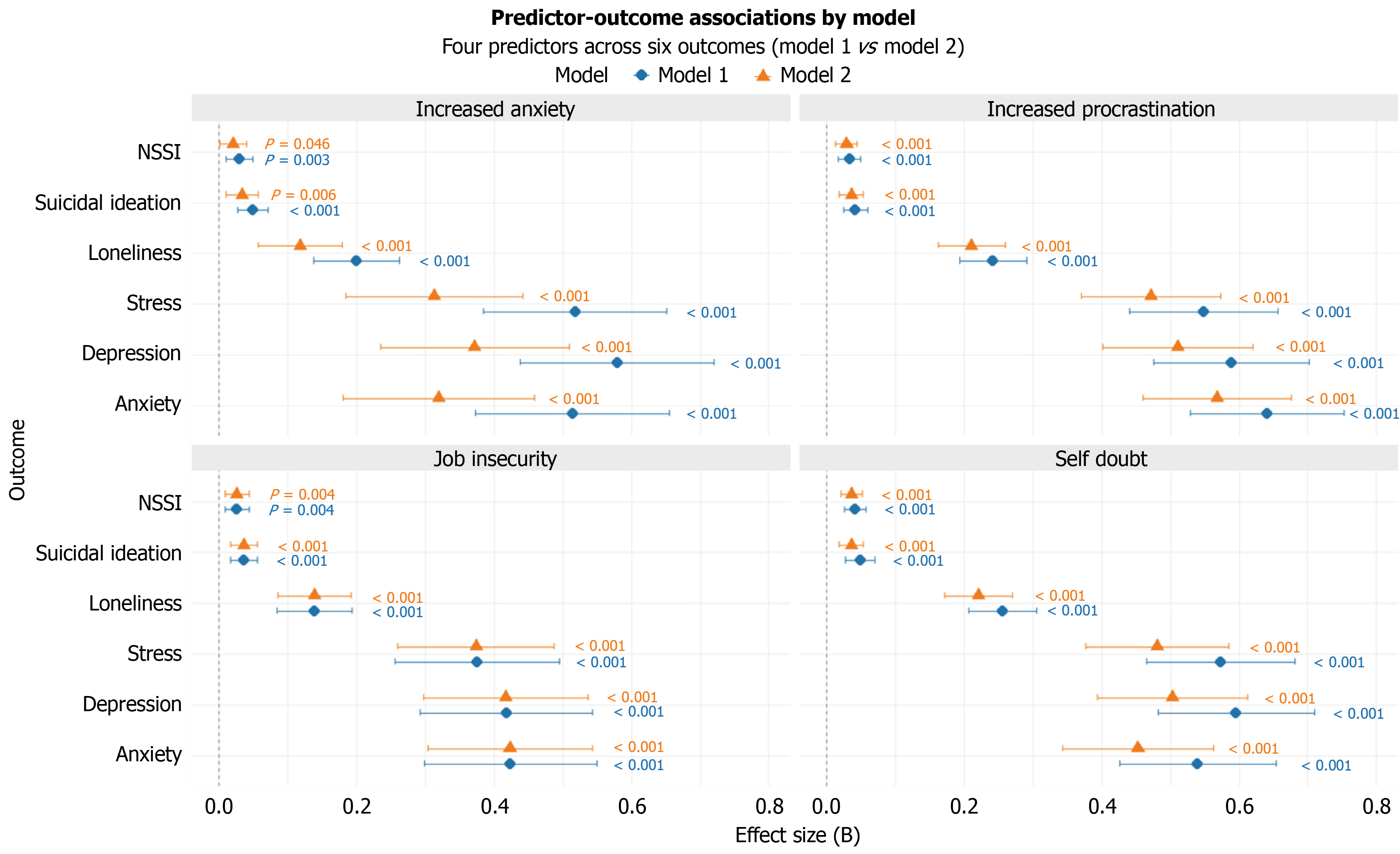
Figure 2 Linear regression results for the associations among AI attitudes, self-efficacy, and psychological outcomes.
Model 1: Psy
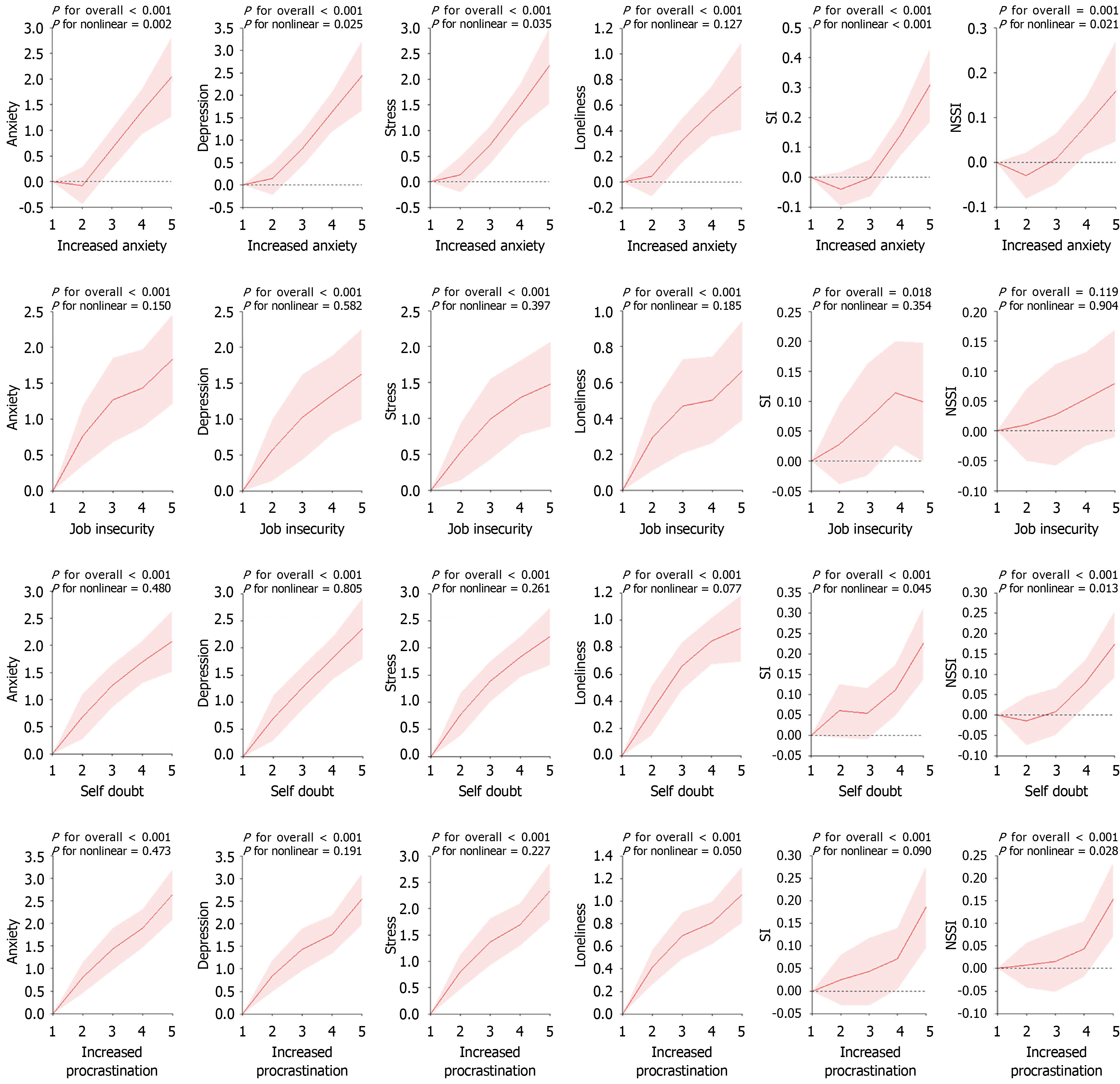
Figure 3
Nonlinear relationships between AI attitudes and mental health outcomes, estimated using restricted cubic splines.
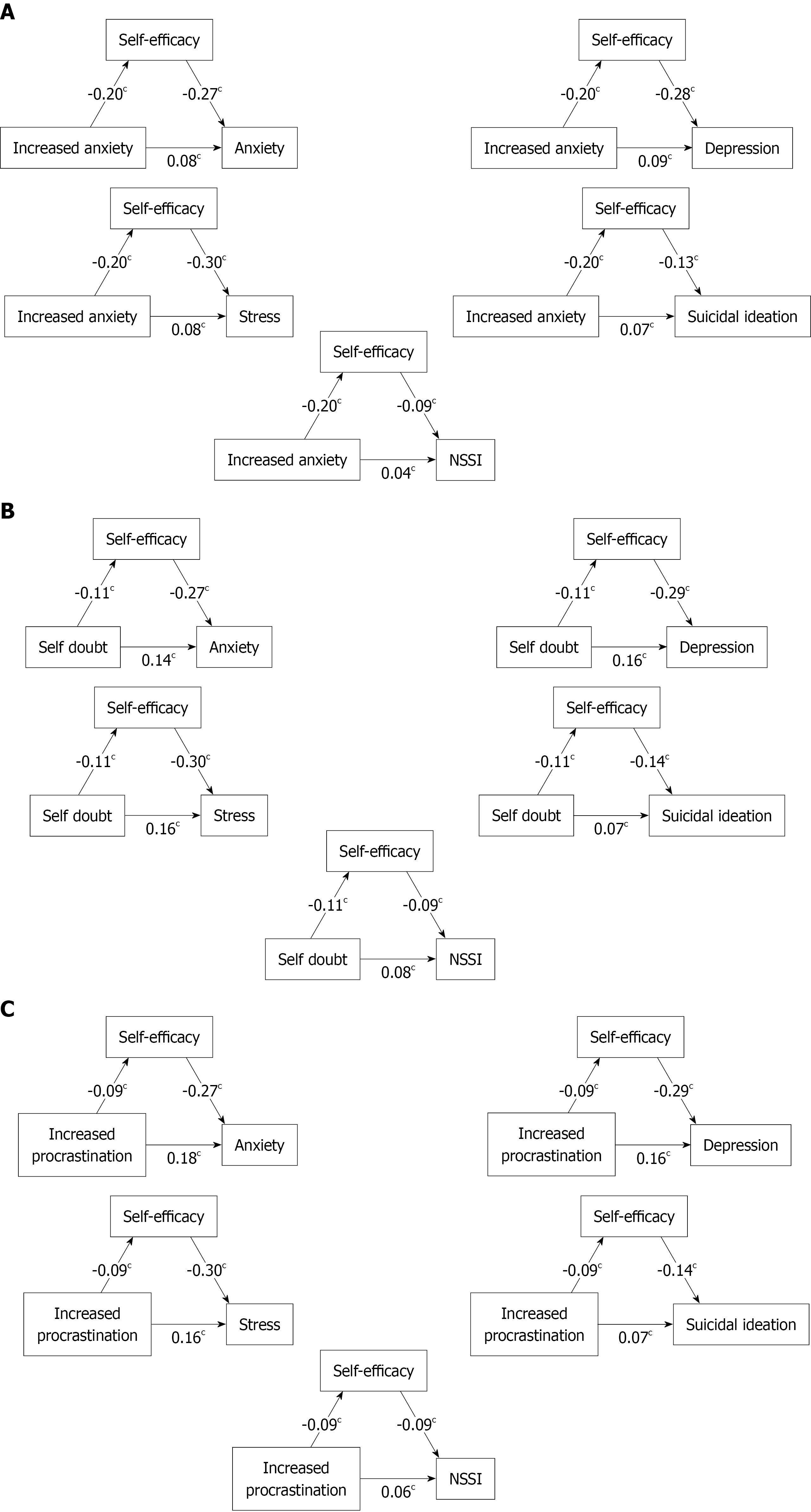
Figure 4 Path analysis results showing the mediating role of self-efficacy in the relationships between AI attitudes and mental health outcomes.
A: Self-efficacy mediates the relationship between increased anxiety and mental health outcomes; B: Self-efficacy mediates the relationship between self-doubt and mental health outcomes; C: Self-efficacy mediates the relationship between increased procrastination and mental health outcomes. All models demonstrated good fit, with 2 < CMIN/DF < 3, CFI > 0.95, TLI > 0.94, RMSEA < 0.050, and NFI > 0.95. All models were adjusted for basic demographic variables. cP < 0.001. NSSI: Non-suicidal self-injury.
- Citation: Fan S, Duan ZZ. Artificial intelligence attitudes and mental health in Chinese university students: Nonlinear relationships and the mediating role of self-efficacy. World J Psychiatry 2026; 16(11): 124485
- URL: https://www.wjgnet.com/2220-3206/full/v16/i11/124485.htm
- DOI: https://dx.doi.org/10.5498/wjp.124485