
















Copyright: ©Author(s) 2026.
World J Exp Med. Sep 20, 2026; 16(3): 124614
Published online Sep 20, 2026. doi: 10.5493/wjem.124614
Published online Sep 20, 2026. doi: 10.5493/wjem.124614
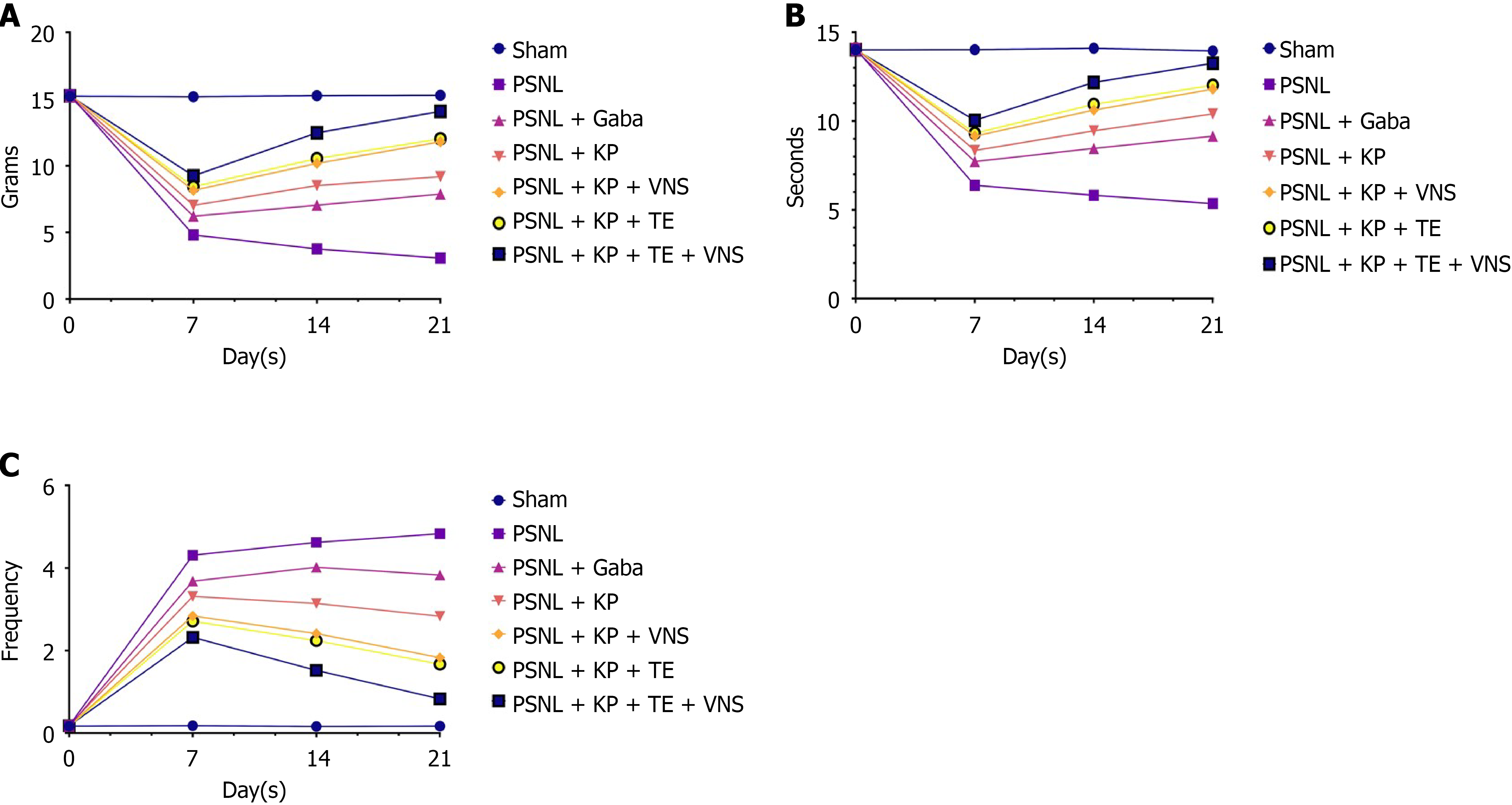
Figure 1 The effects of Kalanchoe pinnata, vagus nerve stimulation, and treadmill exercise on behavioral tests: Mechanical allodynia, thermal hyperalgesia, and cold allodynia, after partial sciatic nerve ligation.
A: Mechanical allodynia; B: Thermal hyperalgesia; C: Cold allodynia. Data are presented as mean ± SEM. Statistical significance was assessed using one-way analysis of variance followed by Tukey’s honestly significant difference multiple comparison test. Effect sizes and confidence intervals were calculated to complement P value interpretation (Supplementary Table 1). Sham: Normal control; PSNL: Partial sciatic nerve ligation; KP: Kalanchoe pinnata; TE: Treadmill exercise; VNS: Vagus nerve stimulation; Gaba: Gabapentin.
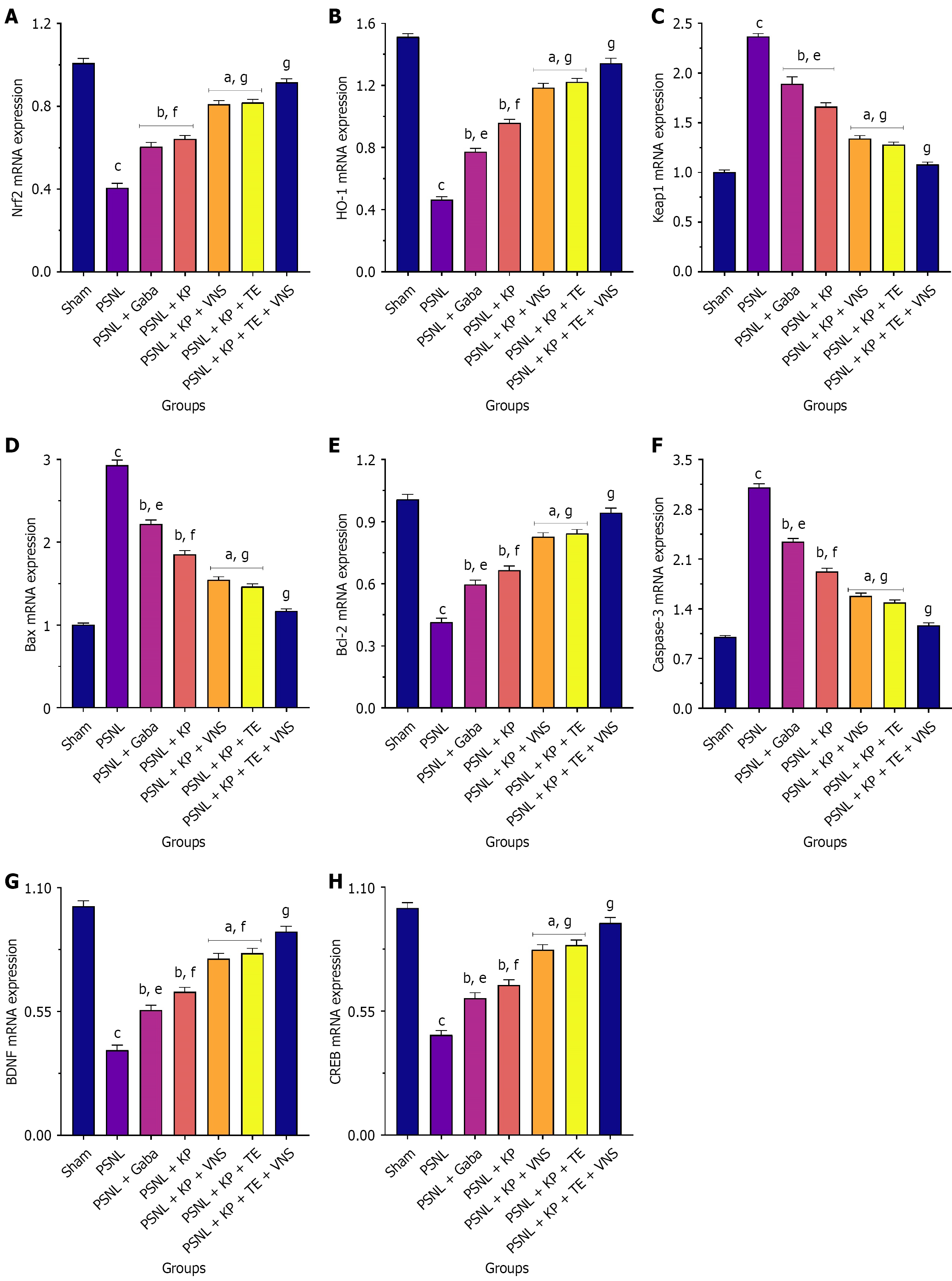
Figure 2 The effects of Kalanchoe pinnata, vagus nerve stimulation, and treadmill exercise on prefrontal cortex related mRNA expression after partial sciatic nerve ligation.
A: Nuclear factor erythroid 2-related factor 2 mRNA; B: Heme-oxygenase 1 mRNA; C: Kelch-like ECH-associated protein 1 mRNA; D: B-cell lymphoma 2 associated X-protein mRNA; E: B-cell lymphoma 2 mRNA; F: Caspase-3 mRNA; G: Brain-derived neurotrophic factor mRNA; H: The cAMP response element-binding protein mRNA. Data are presented as mean ± SEM. Statistical significance was assessed using one-way analysis of variance followed by Tukey’s honestly significant difference multiple comparison test. Effect sizes and confidence intervals were calculated to complement P value interpretation (Supplementary Table 1). aP < 0.05, bP < 0.01, cP < 0.001 compared with the normal control group. eP < 0.05, fP < 0.01, gP < 0.001 compared with partial sciatic nerve ligation group. Sham: Normal control; PSNL: Partial sciatic nerve ligation; KP: Kalanchoe pinnata; TE: Treadmill exercise; VNS: Vagus nerve stimulation; Nrf2: Nuclear factor erythroid 2-related factor 2; HO-1: Heme-oxygenase 1; Keap1: Kelch-like ECH-associated protein 1; Bax: B-cell lymphoma 2 associated X-protein; Bcl-2: B-cell lymphoma 2; BDNF: Brain-derived neurotrophic factor; CREB: CAMP response element-binding protein; Gaba: Gabapentin.
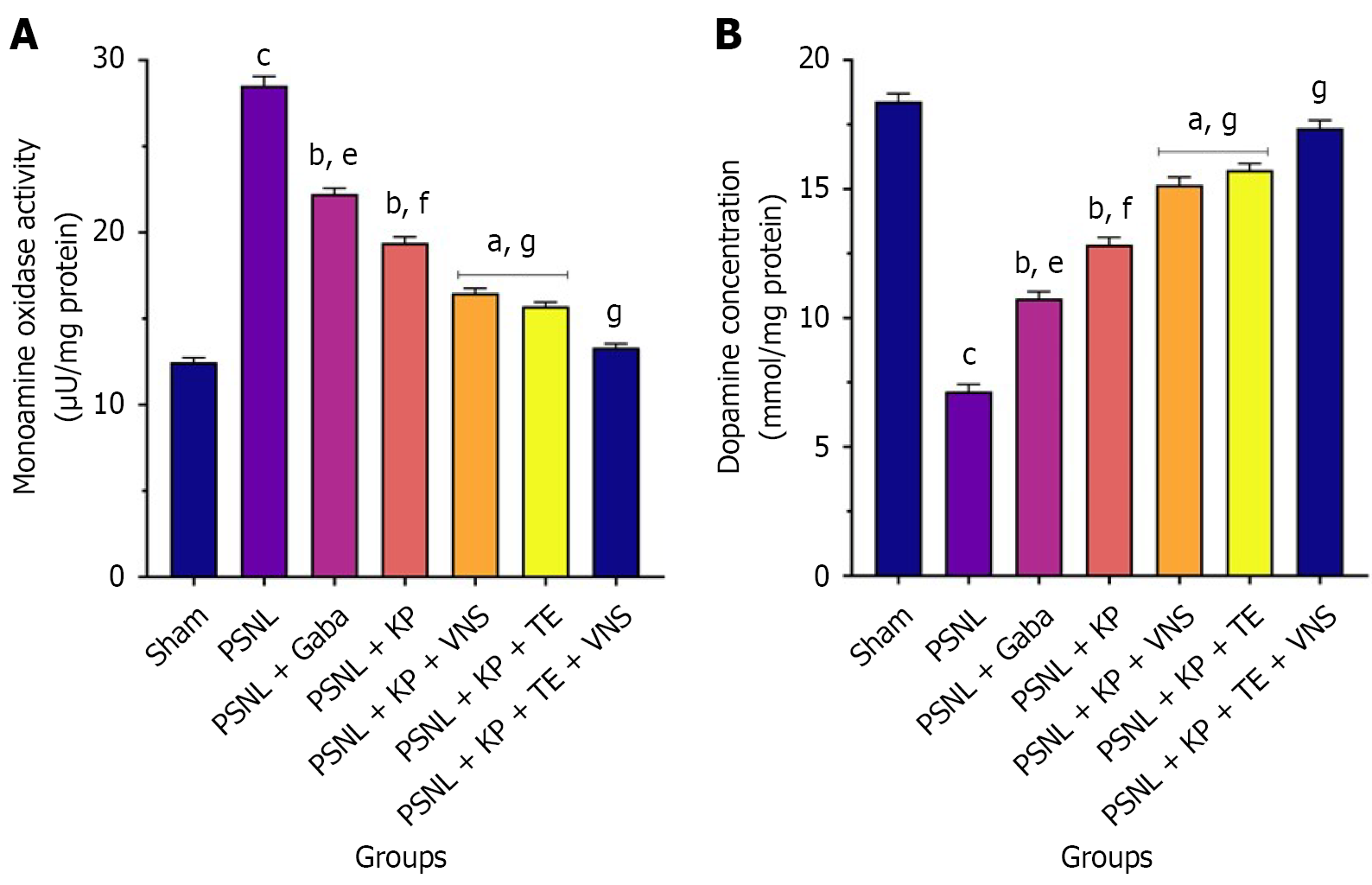
Figure 3 The effects of Kalanchoe pinnata, vagus nerve stimulation, and treadmill exercise on the prefrontal cortex monoaminergic neurotransmission system, monoamine oxidase activity and dopamine concentration after partial sciatic nerve ligation.
A: Monoamine oxidase activity; B: Dopamine concentration. Data are presented as mean ± SEM. Statistical significance was assessed using one-way analysis of variance followed by Tukey’s honestly significant difference multiple comparison test. Effect sizes and confidence intervals were calculated to complement P value interpretation (Supplementary Table 1). aP < 0.05, bP < 0.01, cP < 0.001 compared with the normal control group. eP < 0.05, fP < 0.01, gP < 0.001 compared with partial sciatic nerve ligation group. Sham: Normal control; PSNL: Partial sciatic nerve ligation; KP: Kalanchoe pinnata; TE: Treadmill exercise; VNS: Vagus nerve stimulation; Gaba: Gabapentin.
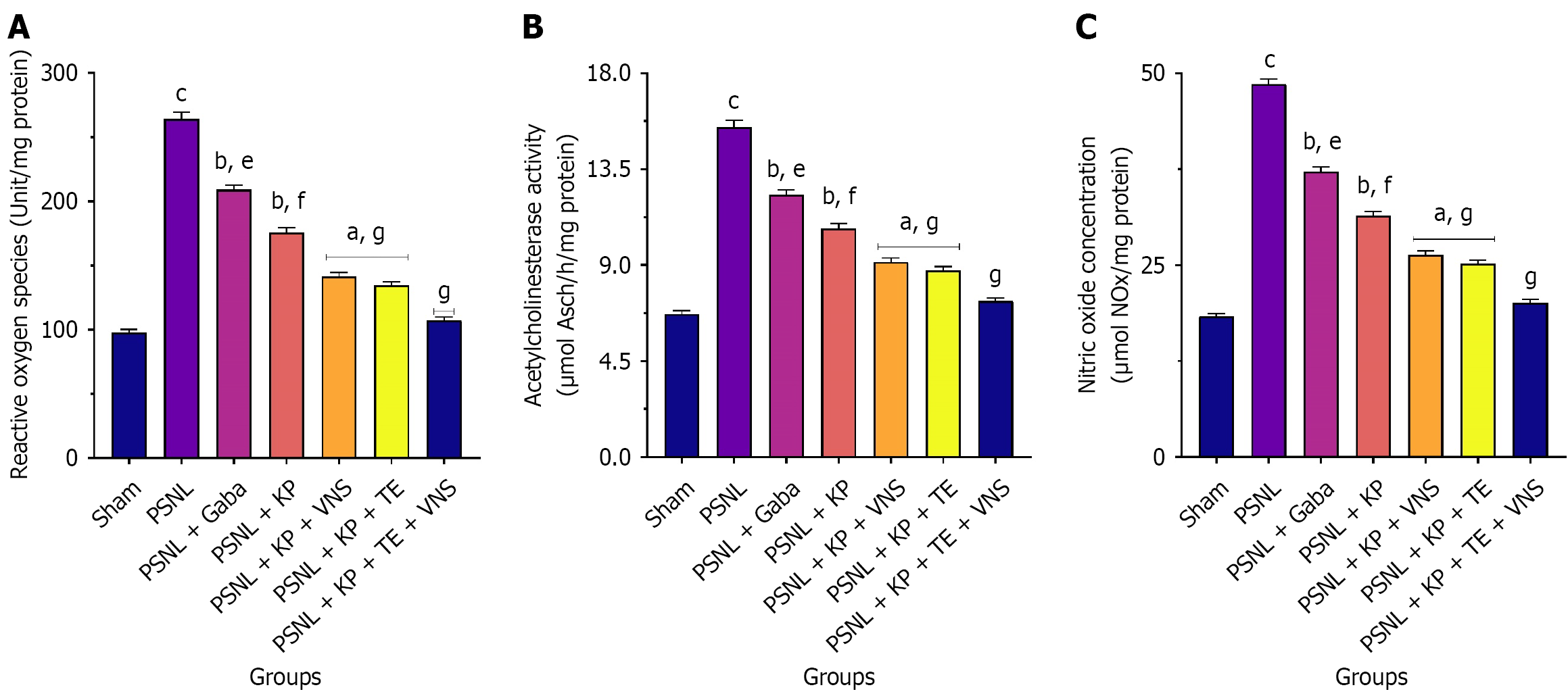
Figure 4 The effects of Kalanchoe pinnata, vagus nerve stimulation, and treadmill exercise on prefrontal cortex reactive oxygen species levels, acetylcholinesterase activity, nitric oxide concentration after partial sciatic nerve ligation.
A: Reactive oxygen species levels; B: Ace
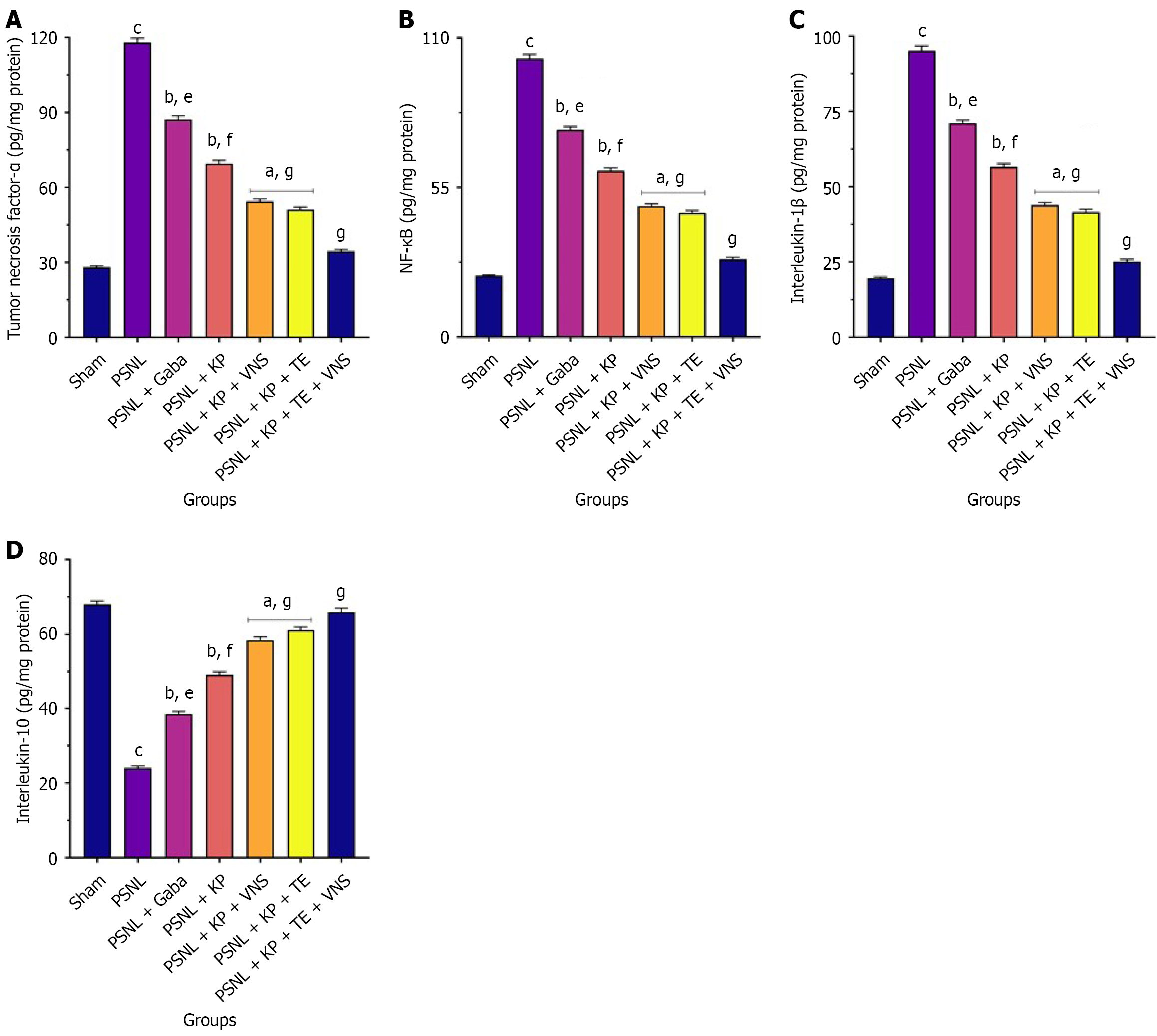
Figure 5 The effects of Kalanchoe pinnata, vagus nerve stimulation, and treadmill exercise on inflammatory markers: Tumor necrosis factor-α, nuclear factor-kappa B, interleukin-1β, interleukin-10, after partial sciatic nerve ligation.
A: Tumor necrosis factor-α; B: Nuclear factor-kappa B; C: Interleukin-1β; D: Interleukin-10. Data are presented as mean ± SEM. Statistical significance was assessed using one-way analysis of variance followed by Tukey’s honestly significant difference multiple comparison test. Effect sizes and confidence intervals were calculated to complement P value interpretation (Supplementary Table 1). aP < 0.05, bP < 0.01, cP < 0.001, dP < 0.0001 compared with the normal control group. eP < 0.05, fP < 0.01, gP < 0.001, hP < 0.0001 compared with partial sciatic nerve ligation group. Sham: Normal control; PSNL: Partial sciatic nerve ligation; KP: Kalanchoe pinnata; TE: Treadmill exercise; VNS: Vagus nerve stimulation; NF-κB: Nuclear factor-kappa B; Gaba: Gabapentin.
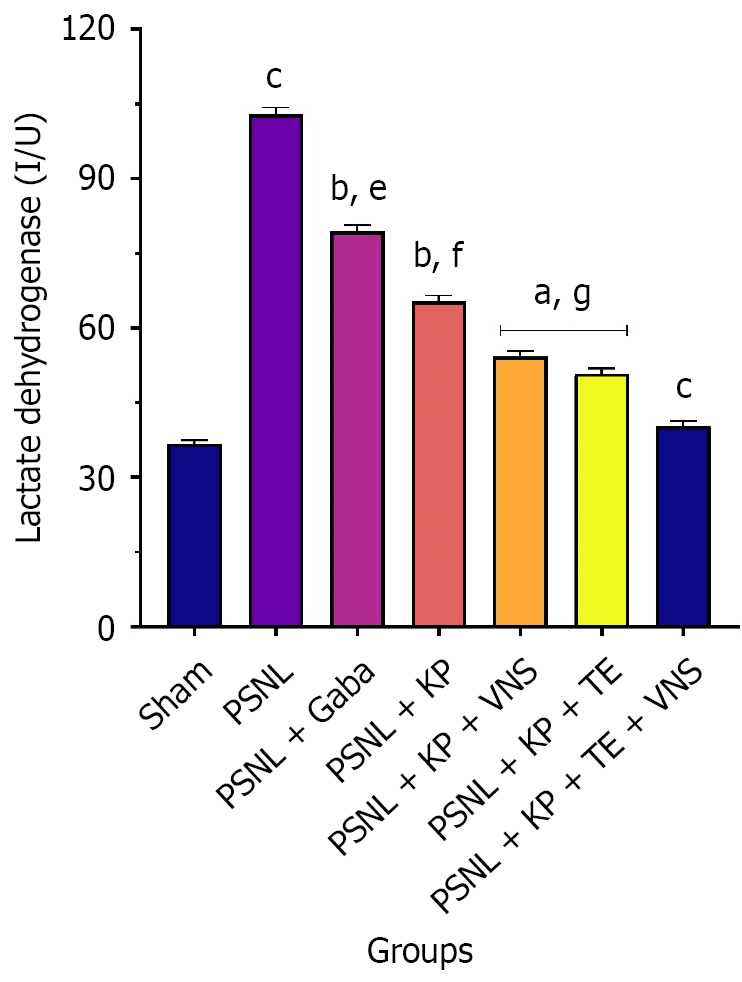
Figure 6 The effects of Kalanchoe pinnata, vagus nerve stimulation, and treadmill exercise on prefrontal cortex lactate dehydrogenase concentration after partial sciatic nerve ligation.
Data are presented as mean ± SEM. Statistical significance was assessed using one-way analysis of variance followed by Tukey’s honestly significant difference multiple comparison test. Effect sizes and confidence intervals were calculated to complement P value interpretation (Supplementary Table 1). aP < 0.05, bP < 0.01, cP < 0.001 compared with the normal control group. eP < 0.05, fP < 0.01, gP < 0.001 compared with partial sciatic nerve ligation group. Sham: Normal control; PSNL: Partial sciatic nerve ligation; KP: Kalanchoe pinnata; TE: Treadmill exercise; VNS: Vagus nerve stimulation; Gaba: Gabapentin.
- Citation: Fasakin OW, Awosika A, Ojo FM, Boboye AS. Effects of Kalanchoe pinnata, exercise, and stimulation on neuroinflammation, redox homeostasis, and neuropathic pain in a Wistar-rat model. World J Exp Med 2026; 16(3): 124614
- URL: https://www.wjgnet.com/2220-315x/full/v16/i3/124614.htm
- DOI: https://dx.doi.org/10.5493/wjem.124614