
















Copyright: ©Author(s) 2026.
World J Diabetes. Nov 15, 2026; 17(11): 124667
Published online Nov 15, 2026. doi: 10.4239/wjd.124667
Published online Nov 15, 2026. doi: 10.4239/wjd.124667
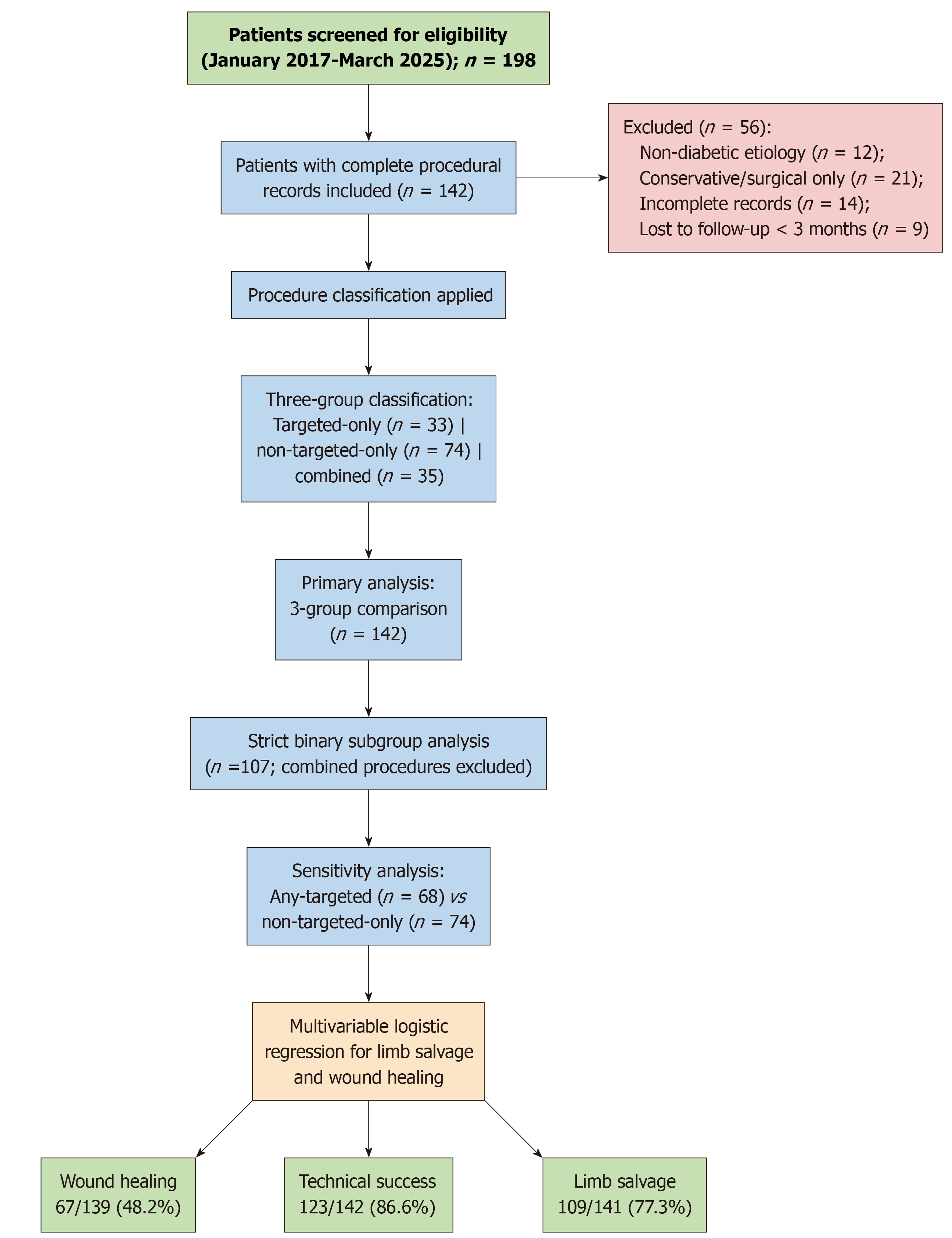
Figure 1 Study flow diagram.
Of 198 patients screened, 56 were excluded [non-diabetic etiology (n = 12), non-interventional management (n = 21), incomplete records (n = 14), and lost to follow-up before 3 months (n = 9)]. The final analytic cohort comprised 142 patients: Angiosome-targeted (direct; n = 33, 23.2%), non-targeted (indirect; n = 74, 52.1%), and combined (n = 35, 24.6%).
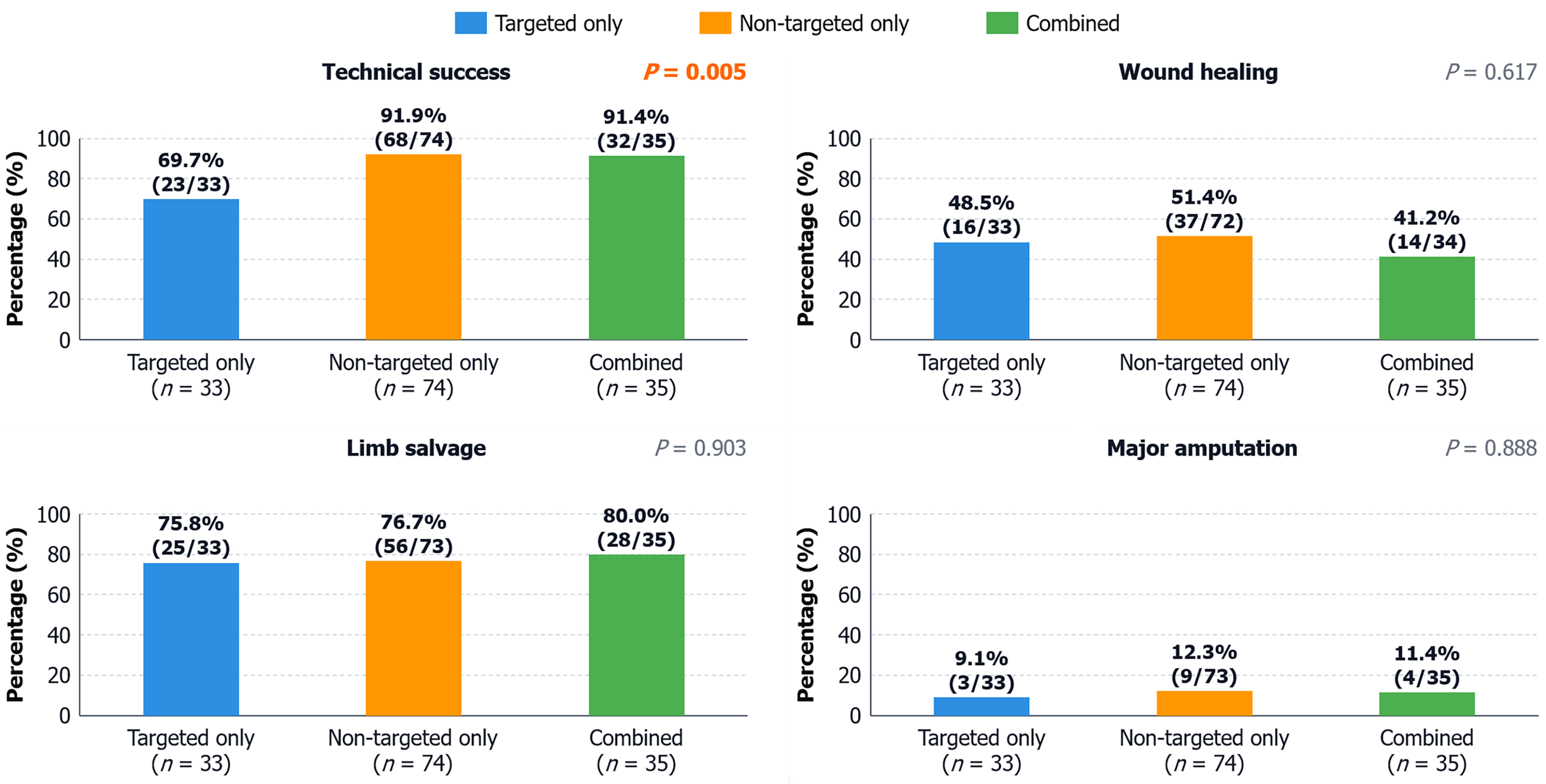
Figure 2 Clinical outcomes.
Technical success, wound healing, limb salvage, and major amputation stratified by procedure group (targeted-only, non-targeted-only, and combined).
- Citation: Zoghoul S, Obeidat M, Abdallah E, Al-Hashemi A, Shalaby R, Al-Hashimi I, El-Menyar A, Al-Thani H, Omar A, Barah A. Angiosome-targeted vs non-targeted endovascular revascularization in diabetic foot ischemia: A retrospective cohort study. World J Diabetes 2026; 17(11): 124667
- URL: https://www.wjgnet.com/1948-9358/full/v17/i11/124667.htm
- DOI: https://dx.doi.org/10.4239/wjd.124667