
















Copyright: ©Author(s) 2026.
World J Cardiol. Oct 26, 2026; 18(10): 125761
Published online Oct 26, 2026. doi: 10.4330/wjc.125761
Published online Oct 26, 2026. doi: 10.4330/wjc.125761
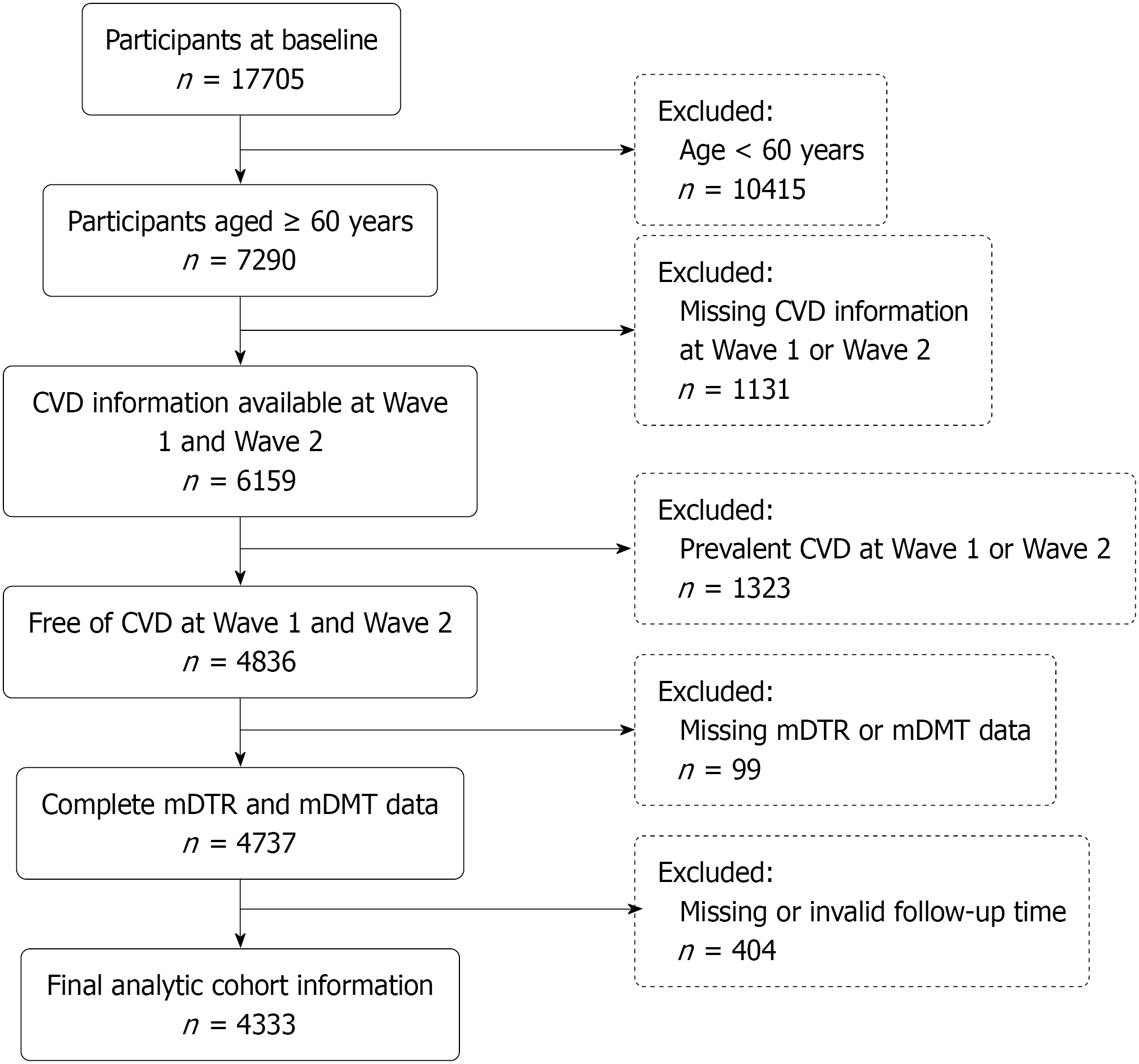
Figure 1 Flowchart of the study population.
CVD: Cardiovascular disease; mDTR: Mean diurnal temperature range; mDMT: Mean daily mean temperature.
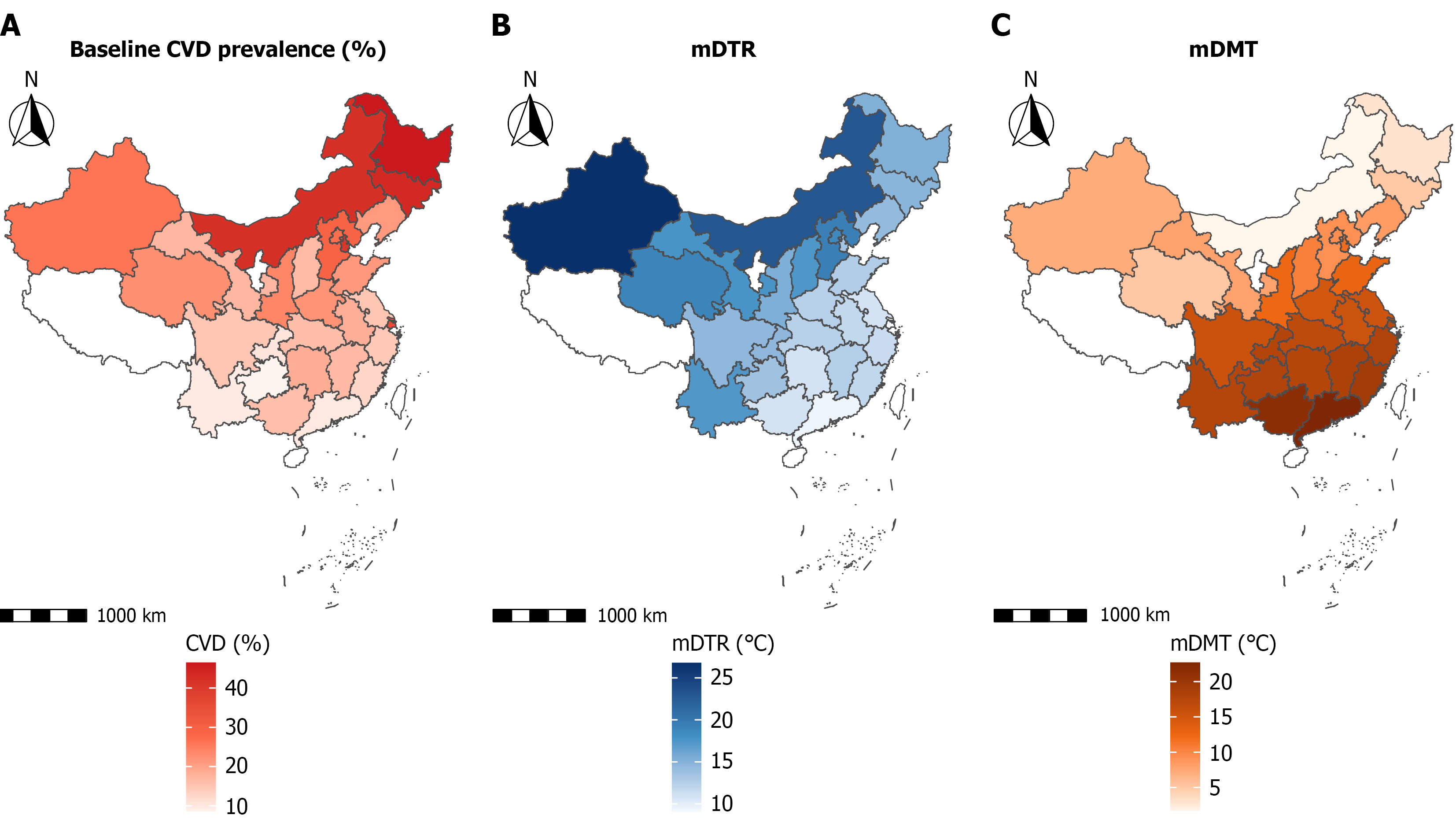
Figure 2 Spatial distribution of cardiovascular disease prevalence, mean diurnal temperature range, and mean daily mean temperature across Chinese provinces.
A: Baseline cardiovascular disease prevalence; B: Average mean diurnal temperature range (2011 and 2013); C: Average mean daily mean temperature (2011 and 2013). Meteorological data were available for 28 provinces covered by the China Health and Retirement Longitudinal Study survey; white areas indicate missing data across all panels. CVD: Cardiovascular disease; mDTR: Mean diurnal temperature range; mDMT: Mean daily mean temperature.
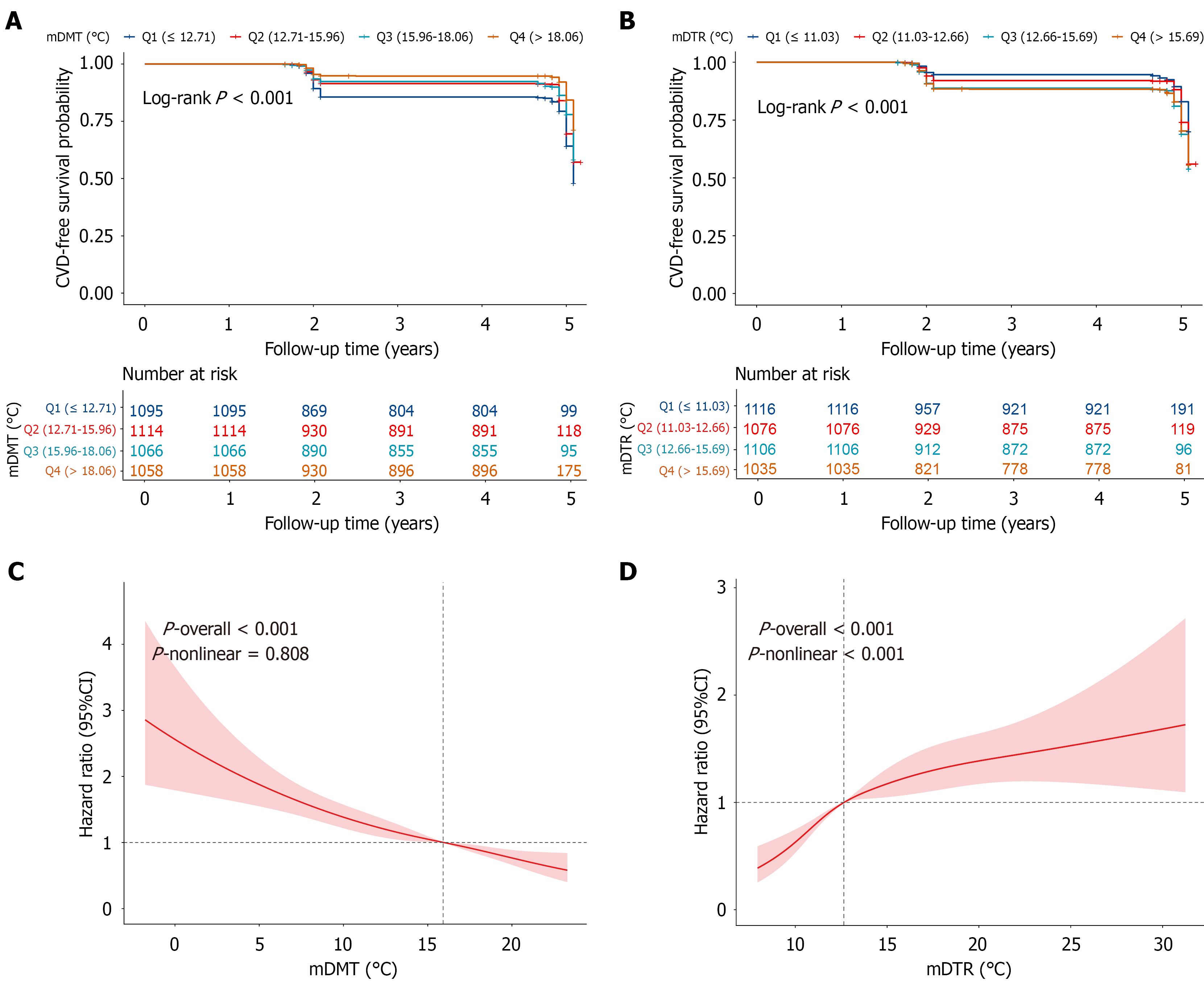
Figure 3 Kaplan-Meier survival curves for incident cardiovascular disease across quartiles of A mean daily mean temperature and B mean diurnal temperature range.
Cardiovascular disease (CVD)-free survival probability was compared using the log-rank test, and the corresponding P values are shown in each panel. Dose-response relationship between C mean daily mean temperature and D mean diurnal temperature range and incident CVD risk using restricted cubic spline models. Models were adjusted for age, sex, education, wealth, residence, marital status, smoking, drinking, body mass index, and fine particulate matter with an aerodynamic diameter ≤ 2.5 μm. CVD: Cardiovascular disease; mDTR: Mean diurnal temperature range; mDMT: Mean daily mean temperature.
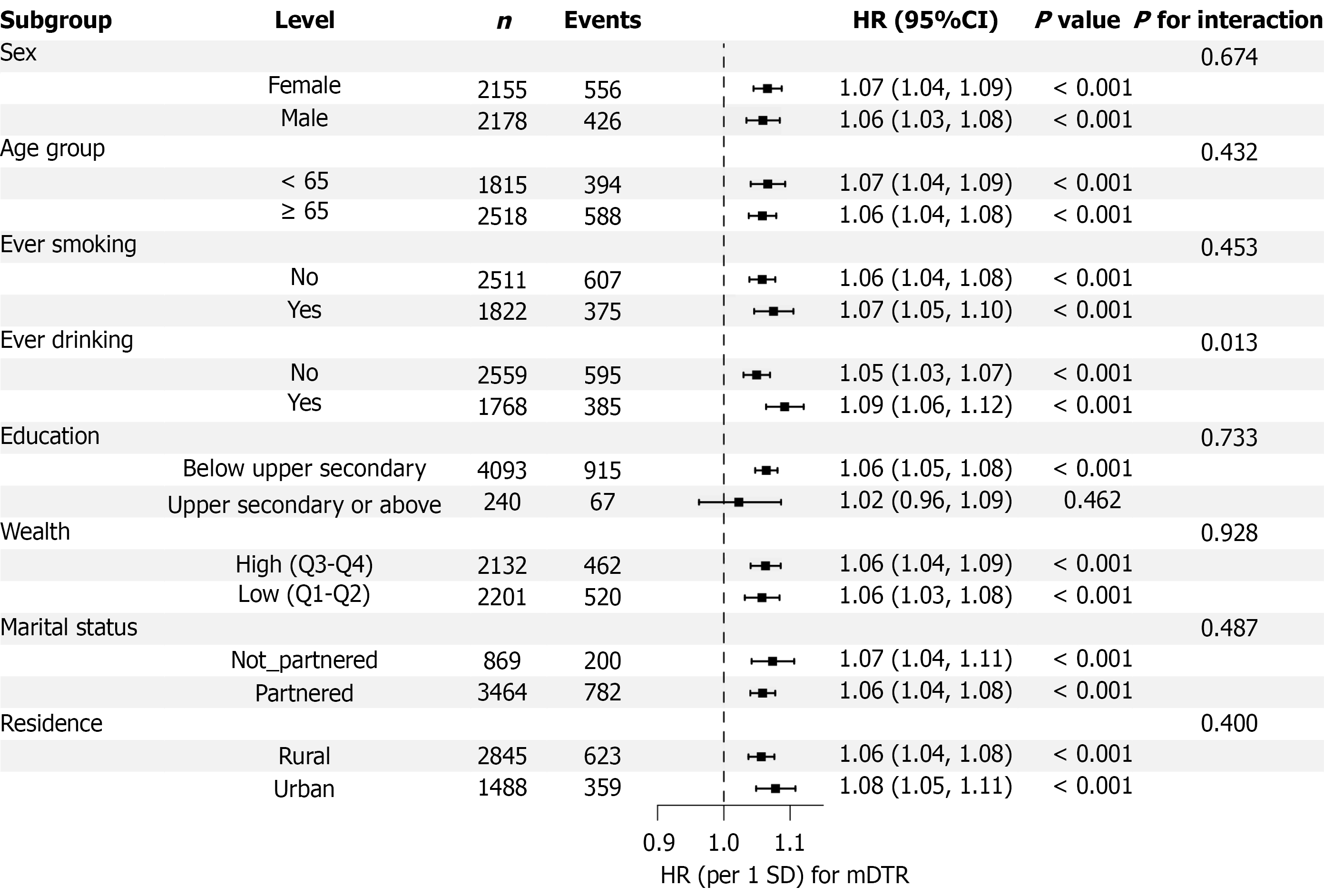
Figure 4 Forest plot of subgroup analyses for the association between mean diurnal temperature range and incident cardiovascular disease risk.
Hazard ratios and 95% confidence intervals are shown for each subgroup. P values for interaction are indicated on the right. Models were adjusted for age, sex, education, wealth, residence, marital status, smoking, drinking, body mass index, and fine particulate matter with an aerodynamic diameter ≤ 2.5 μm. CI: Confidence interval; CVD: Cardiovascular disease; mDTR: Mean diurnal temperature range; HR: Hazard ratio.
- Citation: Yang TY, Zhang YH, Sun QY, Wang YR, Wang KJ. Diurnal temperature range, daily mean temperature, and incident cardiovascular disease in older adults: A longitudinal cohort study. World J Cardiol 2026; 18(10): 125761
- URL: https://www.wjgnet.com/1949-8462/full/v18/i10/125761.htm
- DOI: https://dx.doi.org/10.4330/wjc.125761