
















Copyright: ©Author(s) 2026.
World J Gastrointest Endosc. Nov 16, 2026; 18(11): 126239
Published online Nov 16, 2026. doi: 10.4253/wjge.126239
Published online Nov 16, 2026. doi: 10.4253/wjge.126239
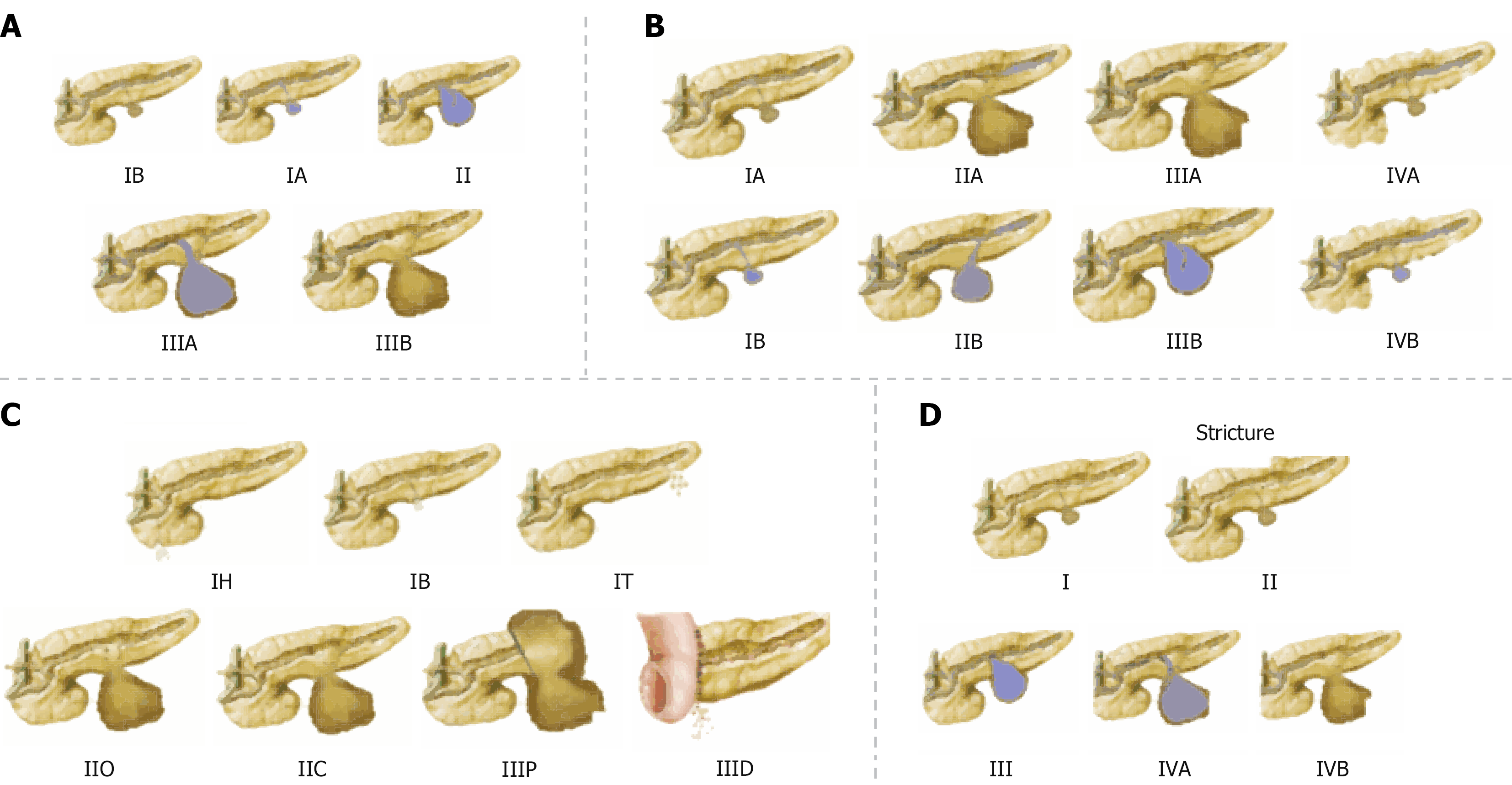
Figure 1 Previous classification systems relevant to pancreatic fistula and endoscopic decision-making.
A: Nordback et al[12] classification: Type I, normal main pancreatic duct (MPD) with (IA) or without (IB) collection filling; Type II, MPD opens to the collection; Type III, MPD stricture with (IIIA) or without (IIIB) collection filling; B: Nealon et al[31] classification: Type I, normal MPD; Type II, MPD stricture; Type III, MPD occlusion; Type IV, chronic pancreatitis; Subtype A indicates no communication between the pancreatic duct and the collection, and subtype B indicates communication; C: Mutignani et al[3] classification: Type I, side-branch leak in the pancreatic head, body, or tail; Type II, MPD leak with open or closed proximal stump; Type III, post-pancreatectomy leak after proximal or distal pancreatic resection; D: Proença et al[11] classification: Type I, normal MPD; Type II, MPD stricture; Type III, partial disruption; Type IV, complete disruption with (IV-A) or without (IV-B) contrast extravasation.

Figure 2 Proposed B-P-C-A classification framework for pancreatic fistula.
Type B: Branch-duct leak with intact main pancreatic duct (MPD) continuity. Type P: Partial MPD disruption, with contrast beyond the disruption. Type C: Complete MPD disruption or disconnected pancreatic duct syndrome, with non-opacification beyond the interruption interpreted alongside computed tomography/magnetic resonance cholangiopancreatography to exclude obstruction and assess the upstream pancreas; C1 indicates a patent proximal duct and C2 indicates a stenotic or closed proximal duct. Type A: Postoperative stump or anastomotic leak, including distal pancreatectomy stump leak (A1) and pancreaticojejunostomy anastomotic leak (A2).
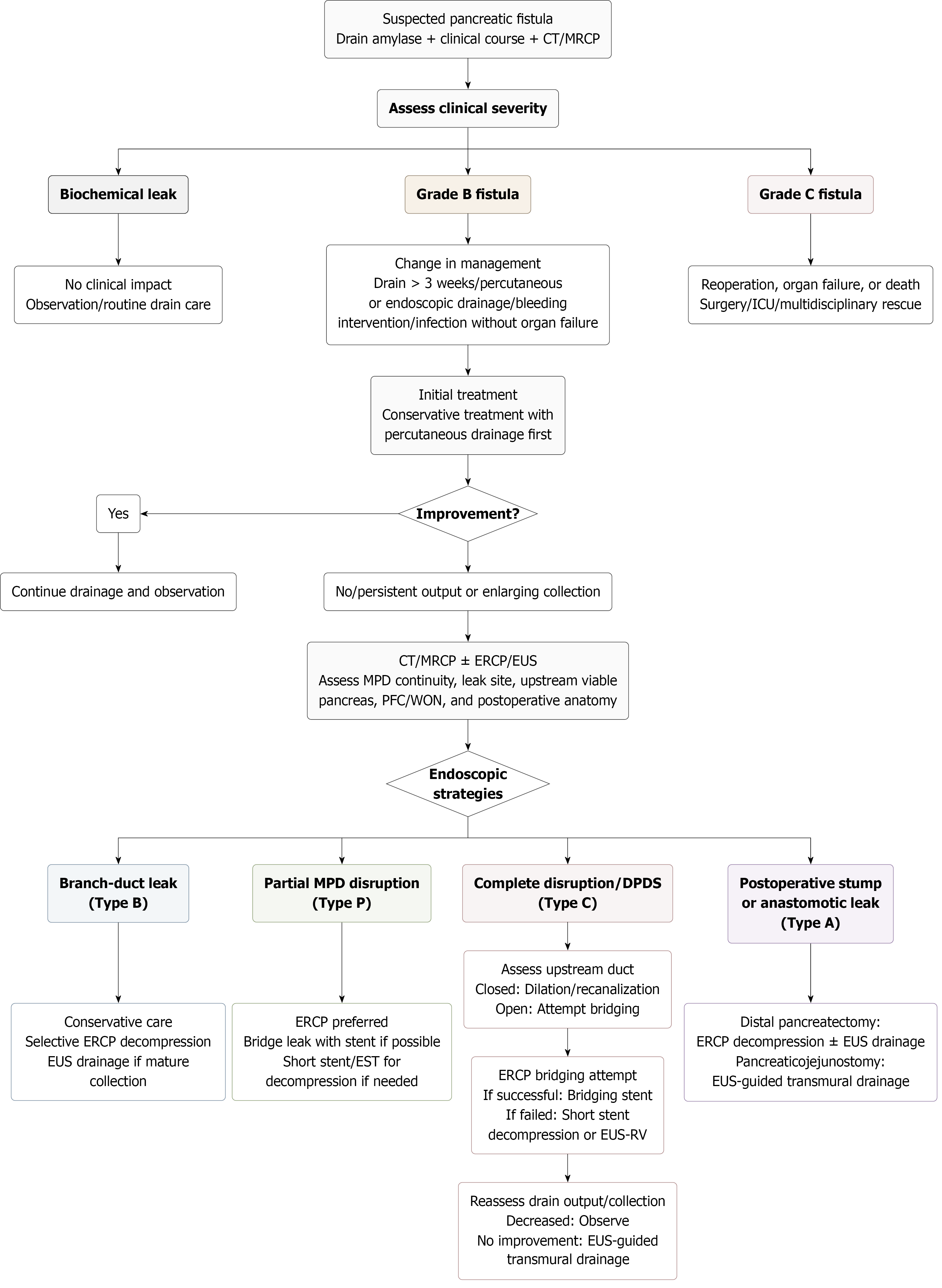
Figure 3 Clinical and endoscopic management considerations for pancreatic fistula.
This decision-oriented schematic translates the B-P-C-A framework into endoscopic management considerations. Type B generally emphasizes conservative management, pressure reduction, and management of mature collections when needed. Type P highlights endoscopic retrograde cholangiopancreatography decompression and stent bridging when duct continuity can be restored. For Type C, “upstream duct” refers to the gland-side duct beyond the interruption, not the papilla-side segment defining C1/C2. “Open/closed” concerns upstream duct access; dilation, recanalization, bridging, and endoscopic ultrasound (EUS) guided rendezvous are conditional options in selected technically feasible cases, not routine treatment for established disconnected pancreatic duct syndrome. Short transpapillary stenting decompresses the papilla-side segment but does not drain the disconnected upstream gland. Persistent non-bridgeable leakage requires assessment for EUS-guided transmural drainage, long-term plastic stents, EUS-guided pancreatic duct drainage, EUS-guided pancreaticocutaneous fistula internalization, hybrid therapy, or surgery. Type A emphasizes postoperative anatomy, associated pancreatic fluid collection, and possible EUS-guided internal drainage or fistula internalization when conventional transpapillary bridging is unlikely. CT: Computed tomography; MRCP: Magnetic resonance cholangiopancreatography; ICU: Intensive care unit; ERCP: Endoscopic retrograde cholangiopancreatography; EUS: Endoscopic ultrasound; PFC: Pancreatic fluid collection; WON: Walled-off necrosis; MPD: Main pancreatic duct; DPDS: Disconnected pancreatic duct syndrome; EST: Endoscopic sphincterotomy; EUS-RV: Endoscopic ultrasound-guided rendezvous.
- Citation: He ZY, Chen DX, Zhai YQ, Li MY. Classification and endoscopic management of pancreatic fistulas. World J Gastrointest Endosc 2026; 18(11): 126239
- URL: https://www.wjgnet.com/1948-5190/full/v18/i11/126239.htm
- DOI: https://dx.doi.org/10.4253/wjge.126239