
















Copyright: ©Author(s) 2026.
World J Gastrointest Endosc. Nov 16, 2026; 18(11): 126239
Published online Nov 16, 2026. doi: 10.4253/wjge.126239
Published online Nov 16, 2026. doi: 10.4253/wjge.126239
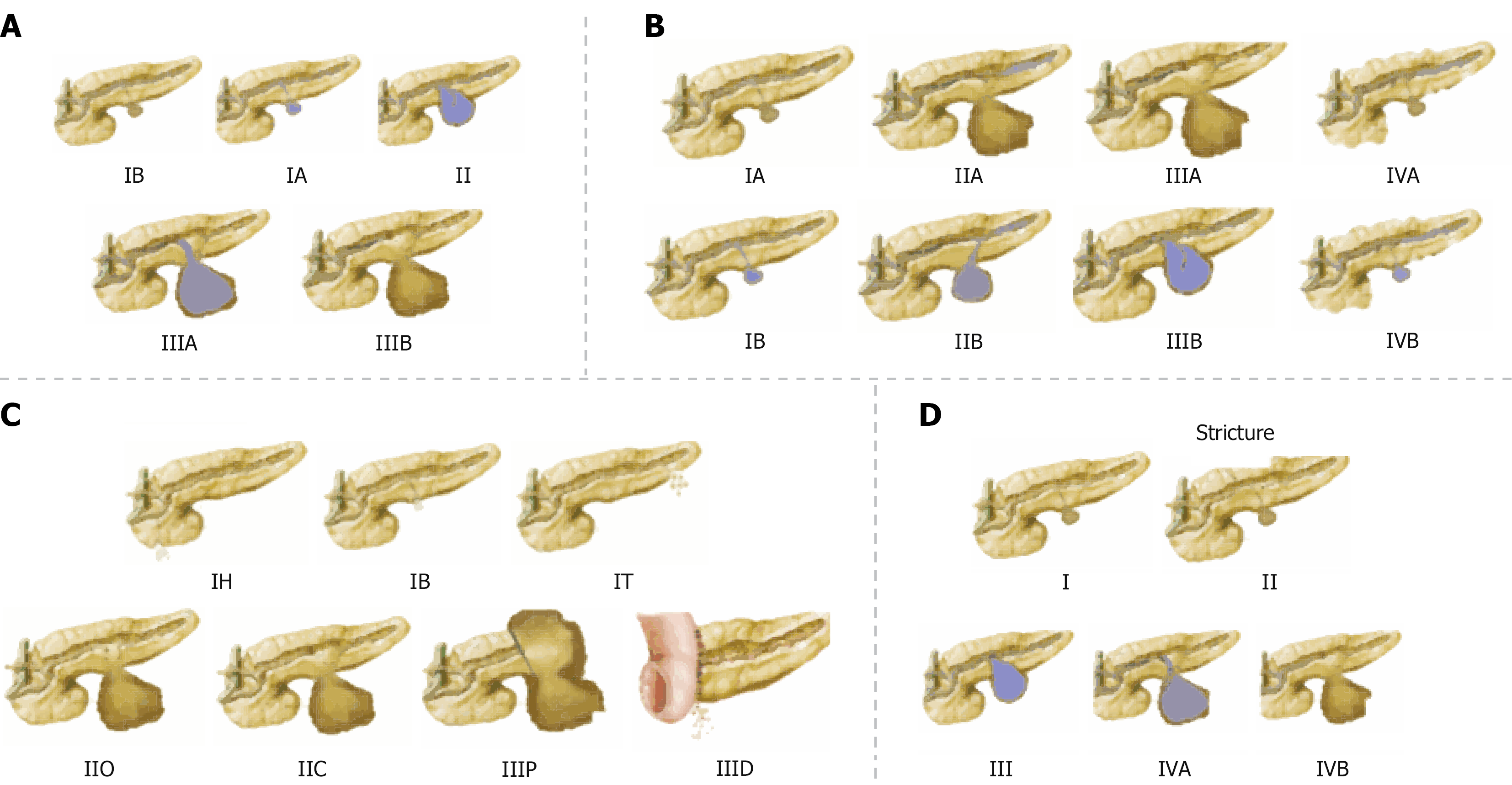
Figure 1 Previous classification systems relevant to pancreatic fistula and endoscopic decision-making.
A: Nordback et al[12] classification: Type I, normal main pancreatic duct (MPD) with (IA) or without (IB) collection filling; Type II, MPD opens to the collection; Type III, MPD stricture with (IIIA) or without (IIIB) collection filling; B: Nealon et al[31] classification: Type I, normal MPD; Type II, MPD stricture; Type III, MPD occlusion; Type IV, chronic pancreatitis; Subtype A indicates no communication between the pancreatic duct and the collection, and subtype B indicates communication; C: Mutignani et al[3] classification: Type I, side-branch leak in the pancreatic head, body, or tail; Type II, MPD leak with open or closed proximal stump; Type III, post-pancreatectomy leak after proximal or distal pancreatic resection; D: Proença et al[11] classification: Type I, normal MPD; Type II, MPD stricture; Type III, partial disruption; Type IV, complete disruption with (IV-A) or without (IV-B) contrast extravasation.
- Citation: He ZY, Chen DX, Zhai YQ, Li MY. Classification and endoscopic management of pancreatic fistulas. World J Gastrointest Endosc 2026; 18(11): 126239
- URL: https://www.wjgnet.com/1948-5190/full/v18/i11/126239.htm
- DOI: https://dx.doi.org/10.4253/wjge.126239