
















Copyright: ©Author(s) 2026.
World J Gastroenterol. Nov 28, 2026; 32(44): 122876
Published online Nov 28, 2026. doi: 10.3748/wjg.122876
Published online Nov 28, 2026. doi: 10.3748/wjg.122876
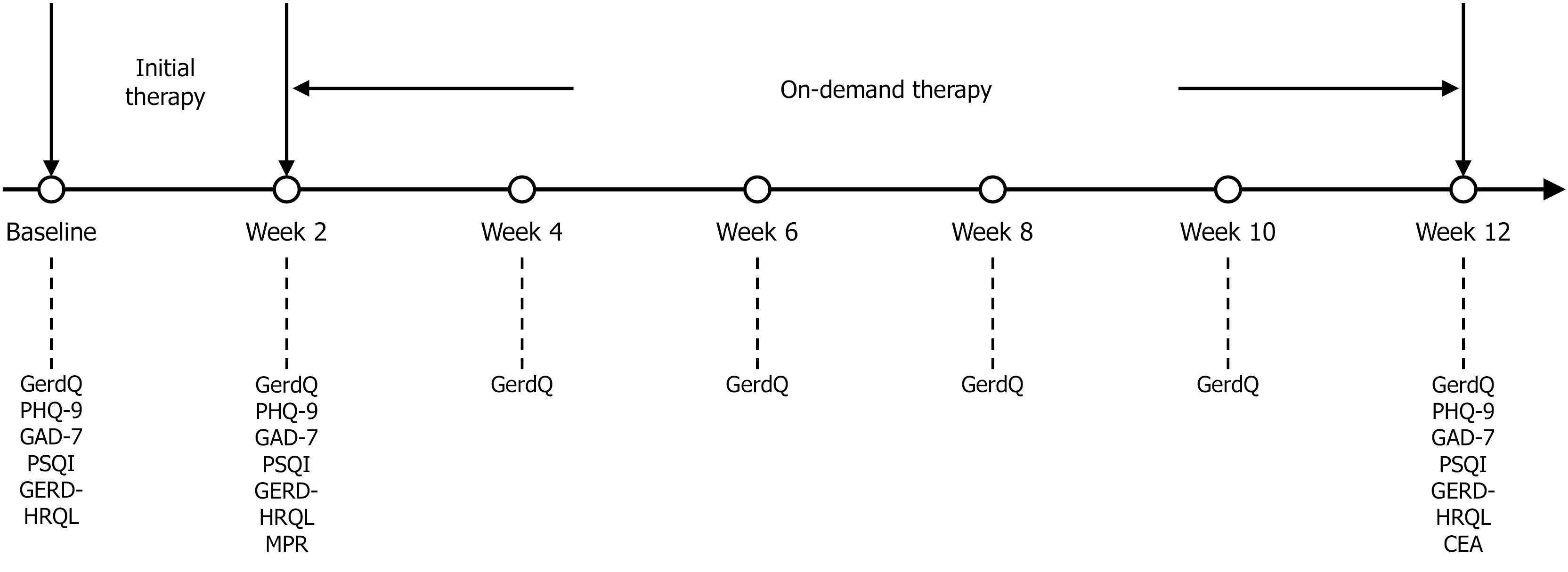
Figure 1 The protocol of the study.
Gastroesophageal reflux disease questionnaire scores were collected every 2 weeks during the study. Patient Health Questionnaire-9, Generalized Anxiety Disorder 7-item scale, Pittsburgh Sleep Quality Index, Gastro
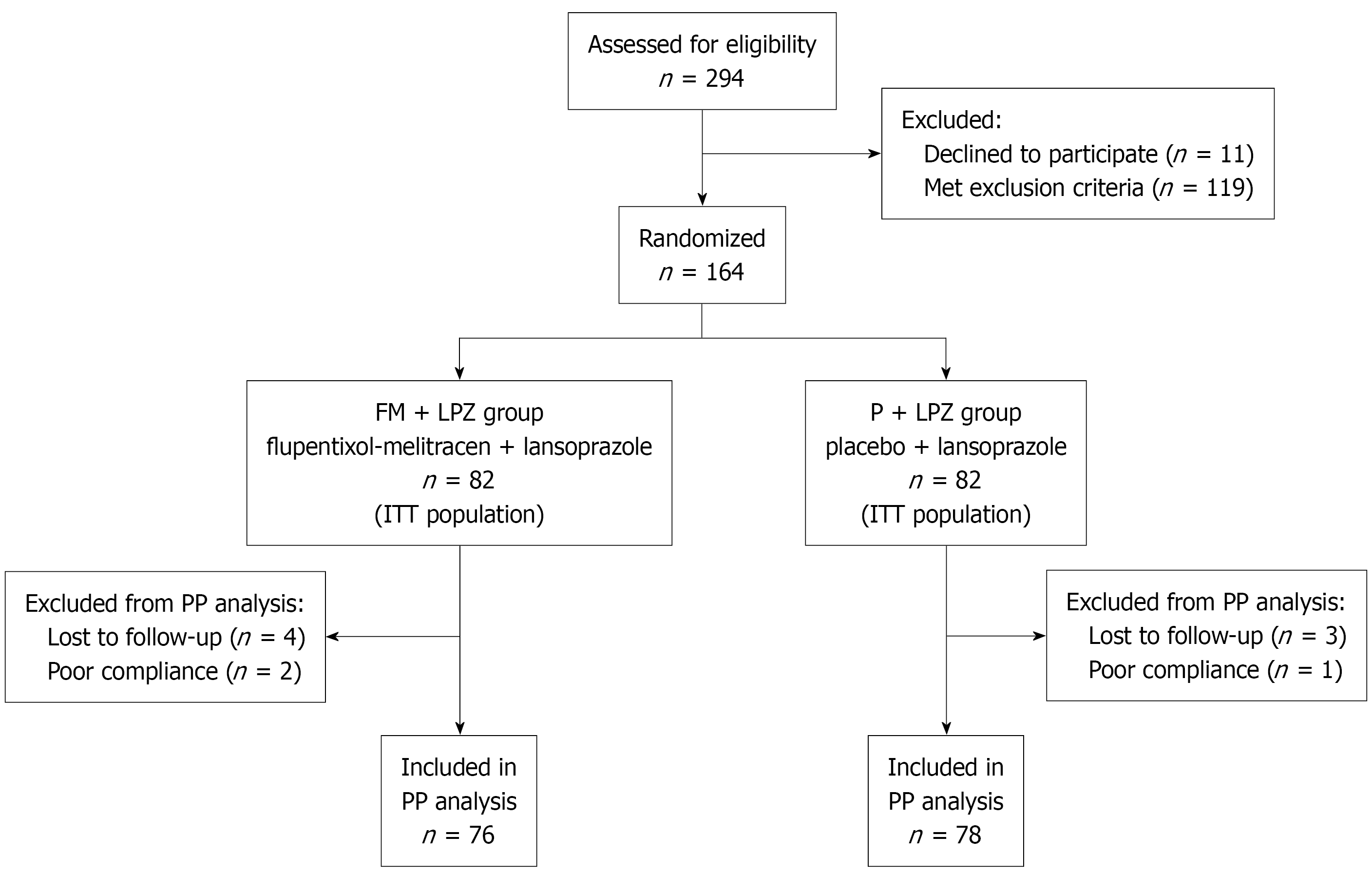
Figure 2 Workflow of randomization and treatment procedures of enrolled patients.
ITT: Intent-to-treat; PP: Per-protocol; FM: Flupentixol-melitracen; LPZ: Lansoprazole; P + LPZ: Lansoprazole plus placebo.
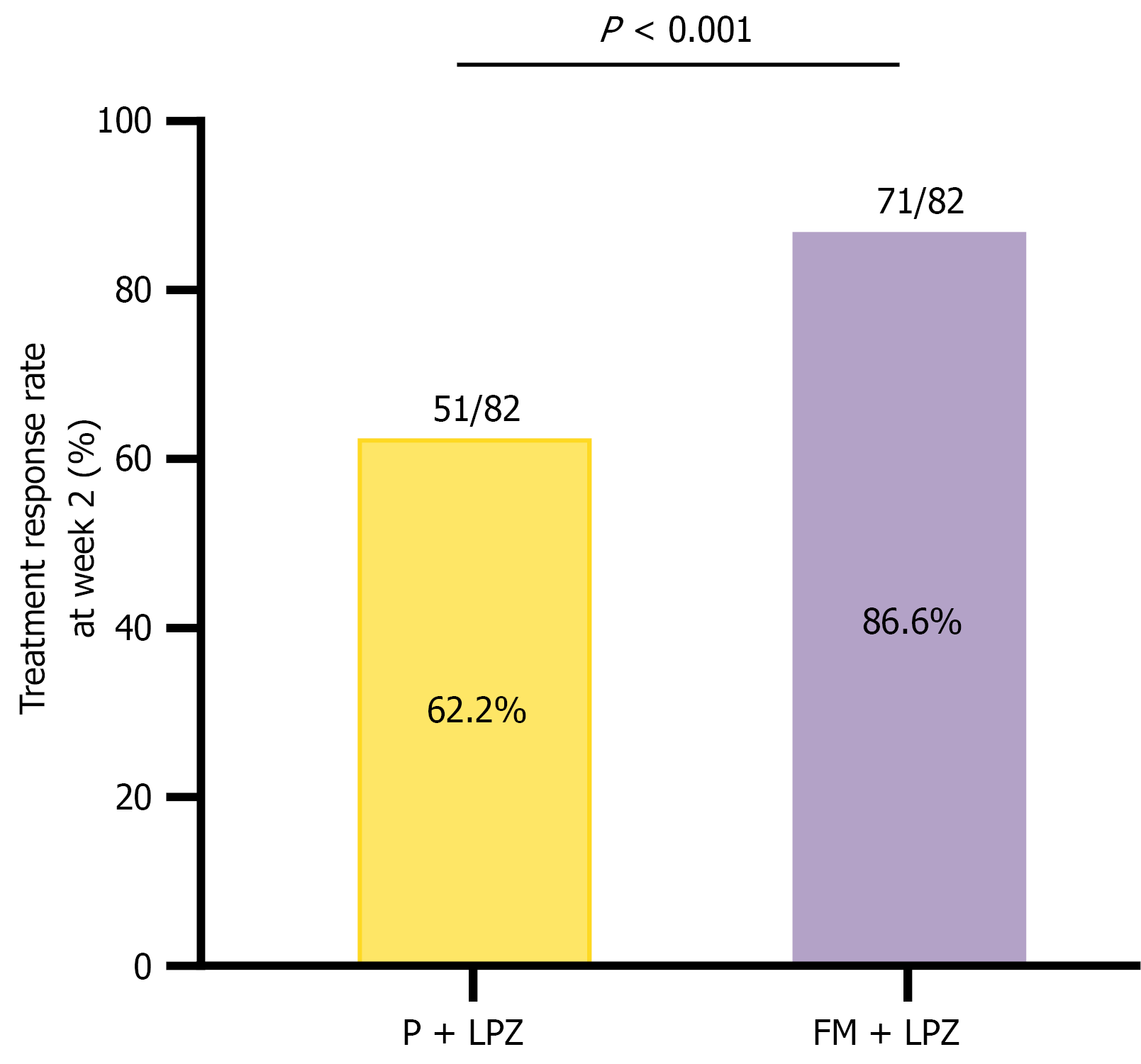
Figure 3 Primary efficacy outcomes.
Comparison of treatment response rate in intent-to-treat populations at week 2. Lansoprazole plus placebo: 51/82 (62.2%, 95%CI: 51.4%-71.9%); flupentixol-melitracen + lansoprazole: 71/82 (86.6%, 95%CI: 77.6%-92.3%). FM: Flupentixol-melitracen; LPZ: Lansoprazole; P + LPZ: Lansoprazole plus placebo.
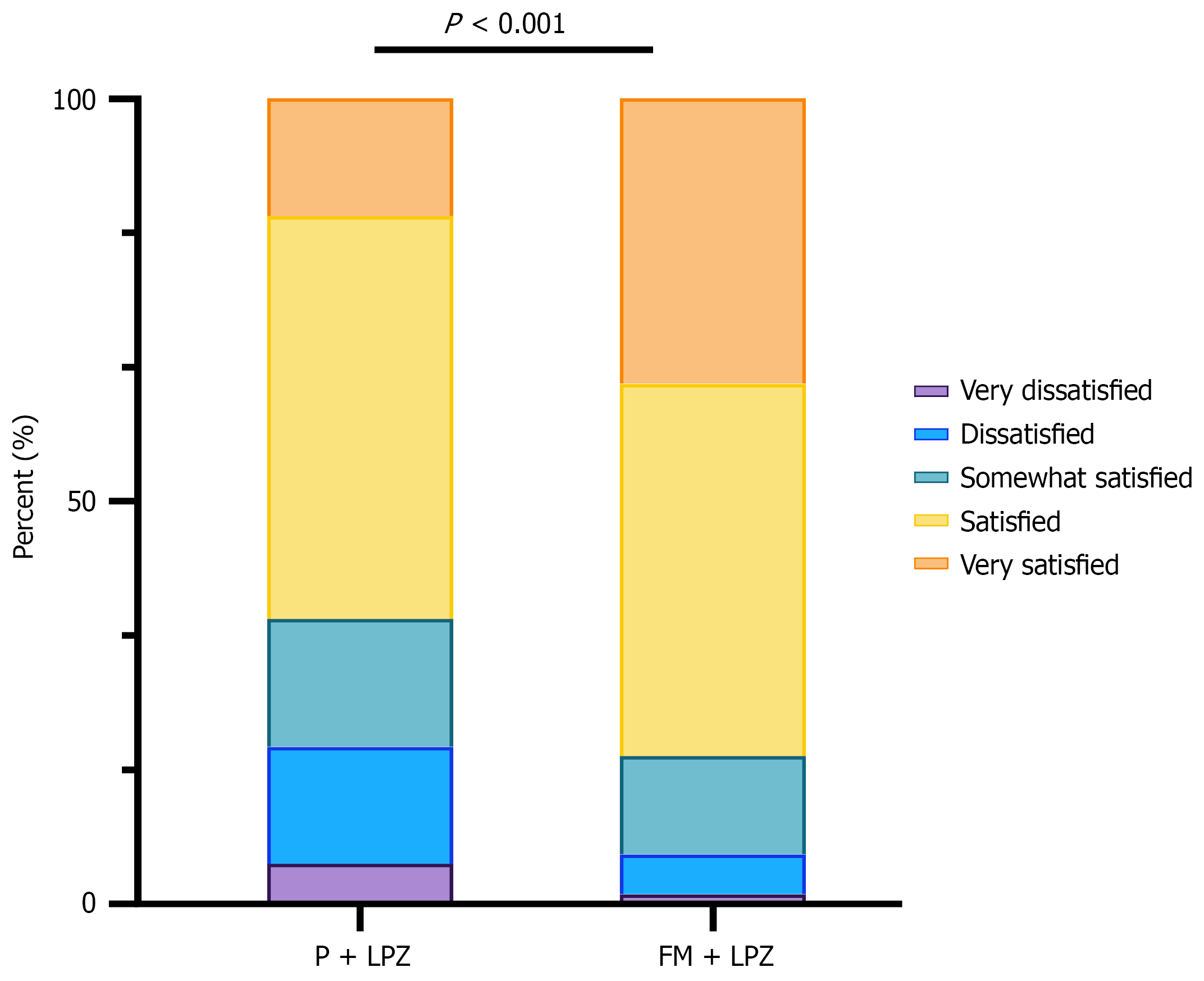
Figure 4 Treatment satisfaction of patients at week 2.
FM: Flupentixol-melitracen; LPZ: Lansoprazole; P + LPZ: Lansoprazole plus placebo.
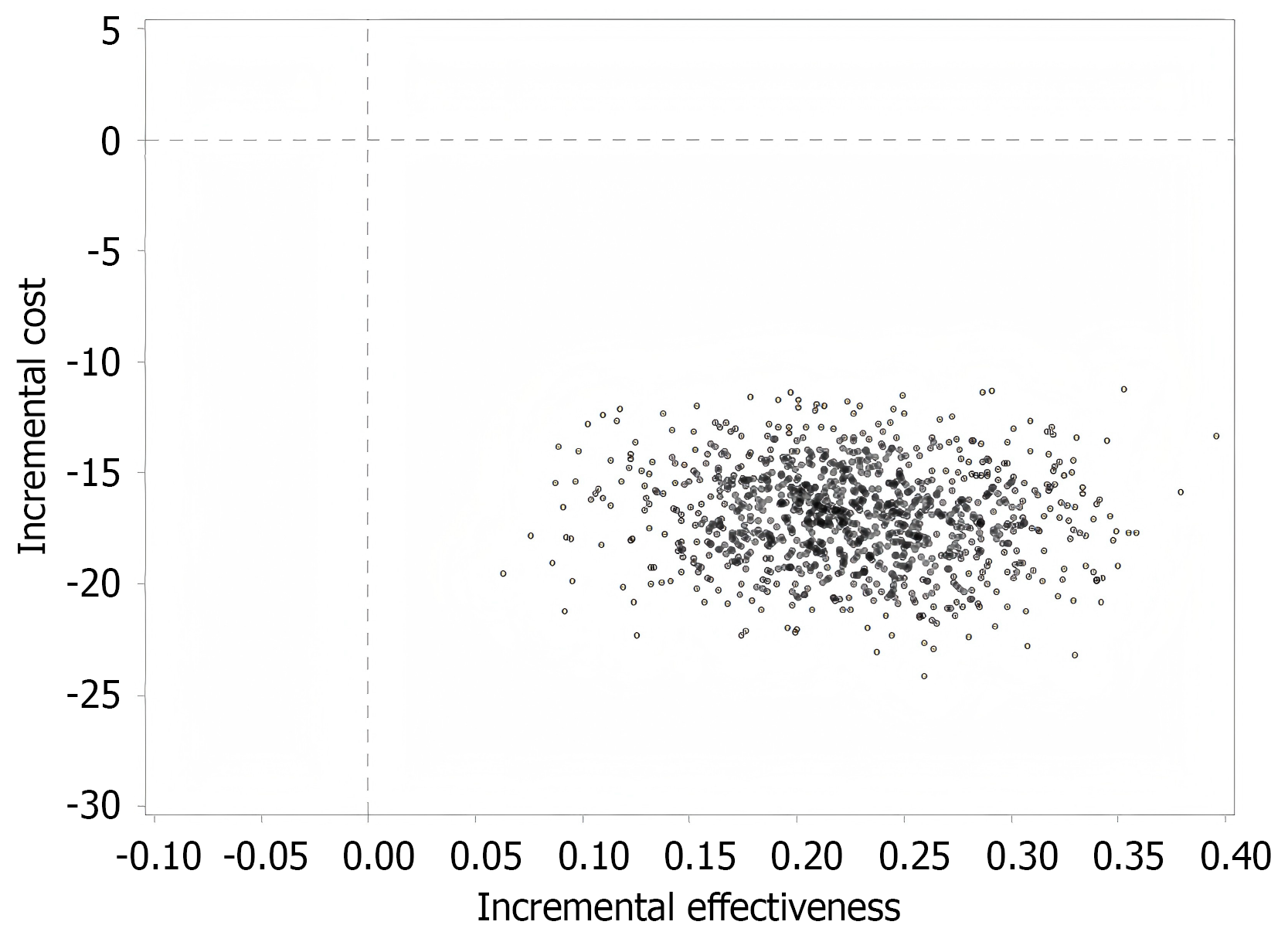
Figure 5 Scatter plot of incremental cost-effectiveness probability sensitivity analysis (n = 1000).
The fourth quadrant indicated that the flupentixol-melitracen + lansoprazole regimen is an advantageous solution (with good performance and low cost).
- Citation: Yin KH, Wang XY, Wang XY, Cheng L, Wang B, Wang QQ, Qiao Y, Tang XR, Yan XJ, Chen SL. Efficacy and safety of neuromodulators combined with proton pump inhibitors for non-erosive reflux disease: A randomized clinical trial. World J Gastroenterol 2026; 32(44): 122876
- URL: https://www.wjgnet.com/1007-9327/full/v32/i44/122876.htm
- DOI: https://dx.doi.org/10.3748/wjg.122876