











BPG is committed to discovery and dissemination of knowledge
Review
Copyright: ©Author(s) 2026.
World J Gastroenterol. Nov 28, 2026; 32(44): 121972
Published online Nov 28, 2026. doi: 10.3748/wjg.121972
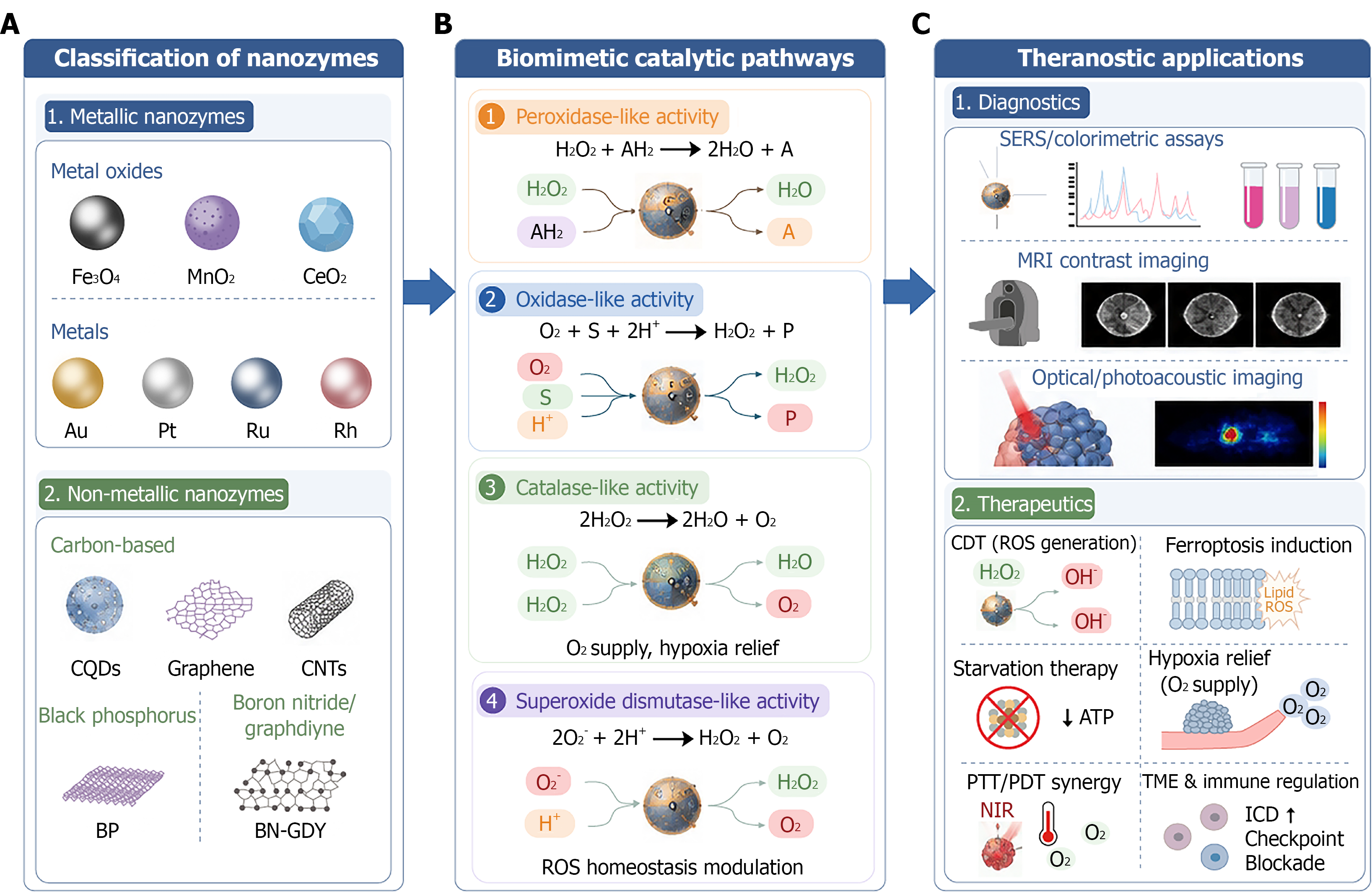
Figure 1
Figure 1 Schematic illustration of the classification, biomimetic catalytic activities, and theranostic applications of nanozymes in gastrointestinal malignancies. A: Classification: Nanozymes are categorized into metallic (e.g., iron-, manganese-, and noble metal-based systems) and non-metallic (e.g., carbon quantum dots, black phosphorus, and graphdiyne) classes; B: Catalytic pathways: The four primary biomimetic activities - peroxidase, oxidase, catalase, and superoxide dismutase - mediate key biochemical cascades within the tumor microenvironment to modulate intracellular oxidative stress; C: Theranostic applications: In cancer diagnostics, nanozymes power surface-enhanced Raman scattering/colorimetric biosensing assays and serve as contrast agents for multimodal imaging (magnetic resonance imaging, photoacoustic imaging, and fluorescence imaging). In therapeutics, they mediate tumor cell death pathways (apoptosis, ferroptosis) via toxic reactive oxygen species generation, alleviate hypoxia through in situ oxygenation, and synergize with photothermal therapy, photodynamic therapy, starvation therapy, and immune checkpoint blockade therapies. CQDs: Carbon quantum dots; CNTs: Carbon nanotubes; BP: Black phosphorus; BN-GDY: Boron graphdiyne; ROS: Reactive oxygen species; SERS: Surface-enhanced Raman scattering; MRI: Magnetic resonance imaging; CDT: Chemodynamic therapy; PTT: Photothermal therapy; PDT: Photodynamic therapy; NIR: Near-infrared; TME: Tumor microenvironment; ICD: Immunogenic cell death.


Write to the Help Desk