
















Copyright: ©Author(s) 2026.
World J Gastroenterol. Sep 14, 2026; 32(34): 119523
Published online Sep 14, 2026. doi: 10.3748/wjg.119523
Published online Sep 14, 2026. doi: 10.3748/wjg.119523
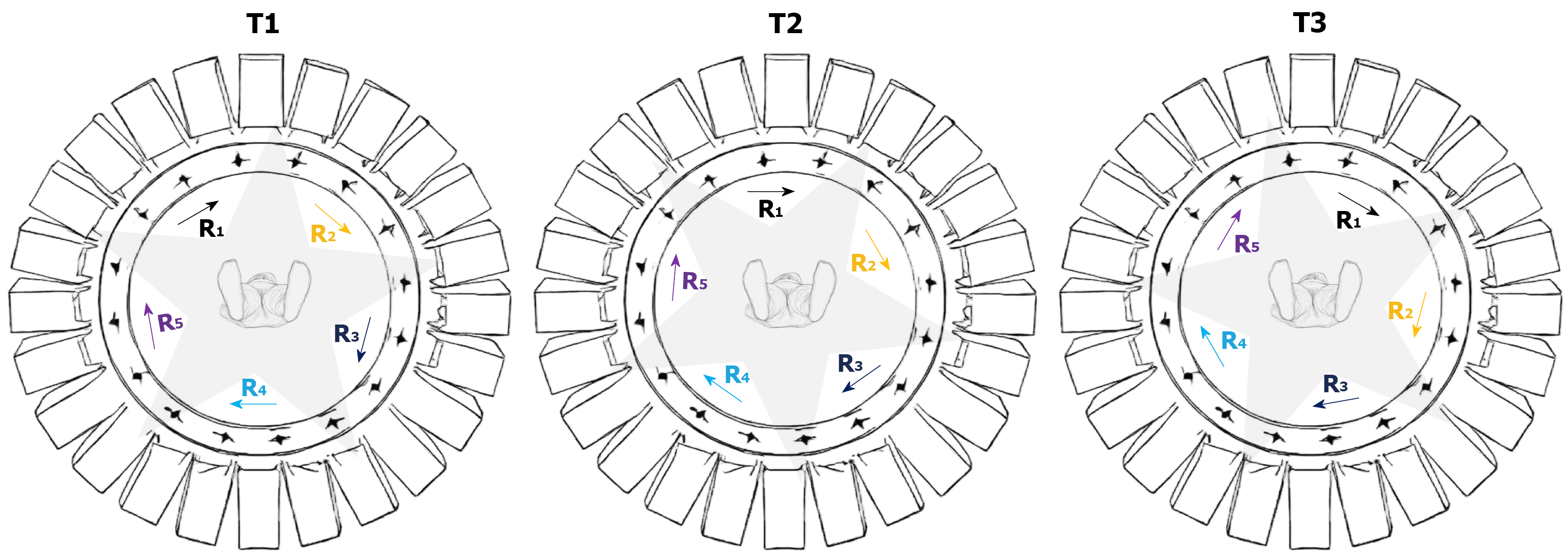
Figure 1 Schematic diagram of the electronic control imaging system for phased-array computed tomography.
The core technology of Phased-array computed tomography is based on the electronic rotation of a full-circle detector array and a distributed X-ray source array, drawing on the principles of phased-array technology. It employs X-ray electronic steering technology based on multi-source coordination, replacing the mechanical rotation of the X-ray tube and detector in spiral computed tomography with electronic control technology. Specifically, at different time points T1, T2, and T3, the X-ray tube, under electronic control, sequentially irradiates the human body, forming a static spiral continuous rotation scan. The spatial angular positions at which the X-ray tube sequentially irradiates change from R1→R2→R3→R4→R5.
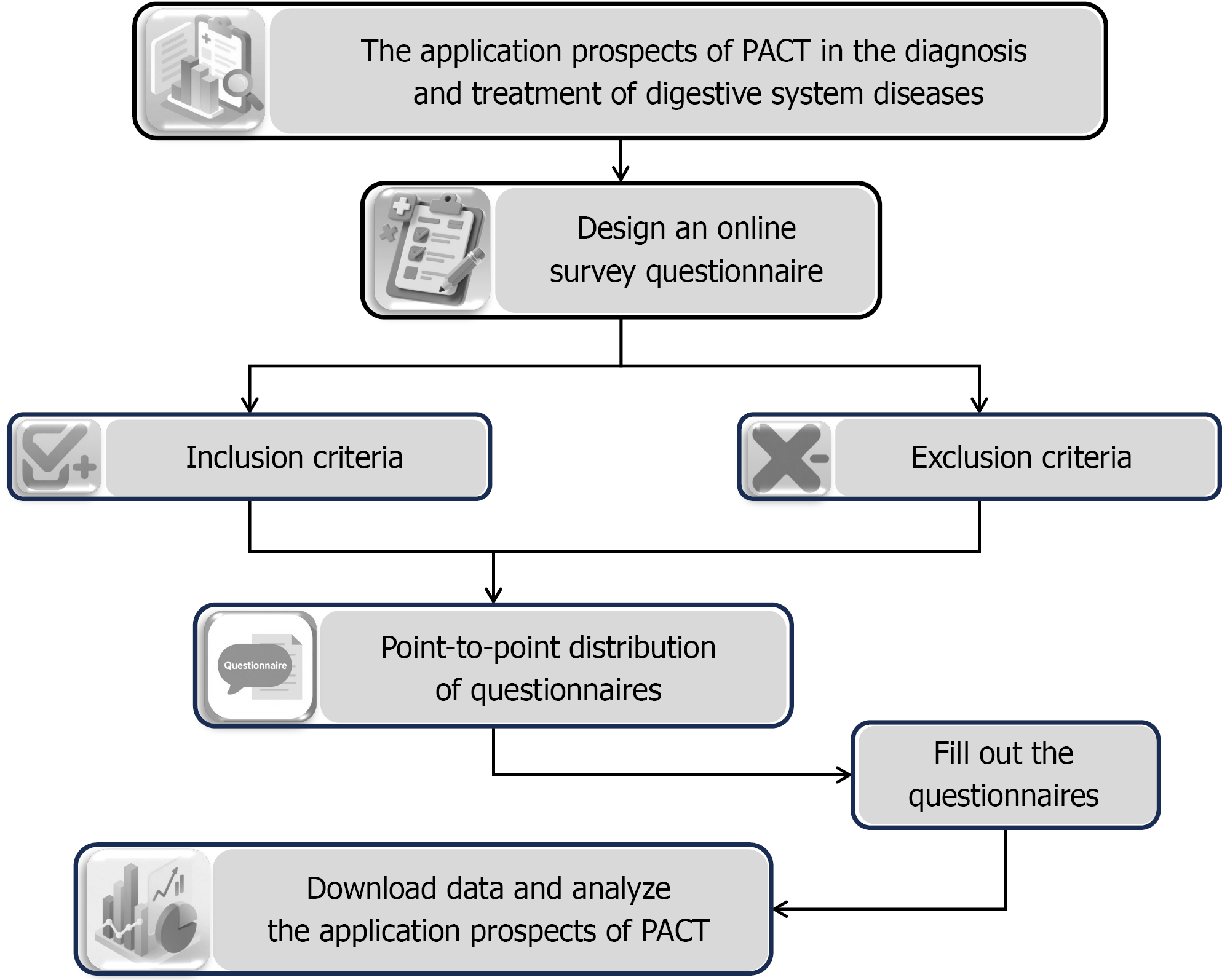
Figure 2 Design approach of this study.
PACT: Phased-array computed tomography.
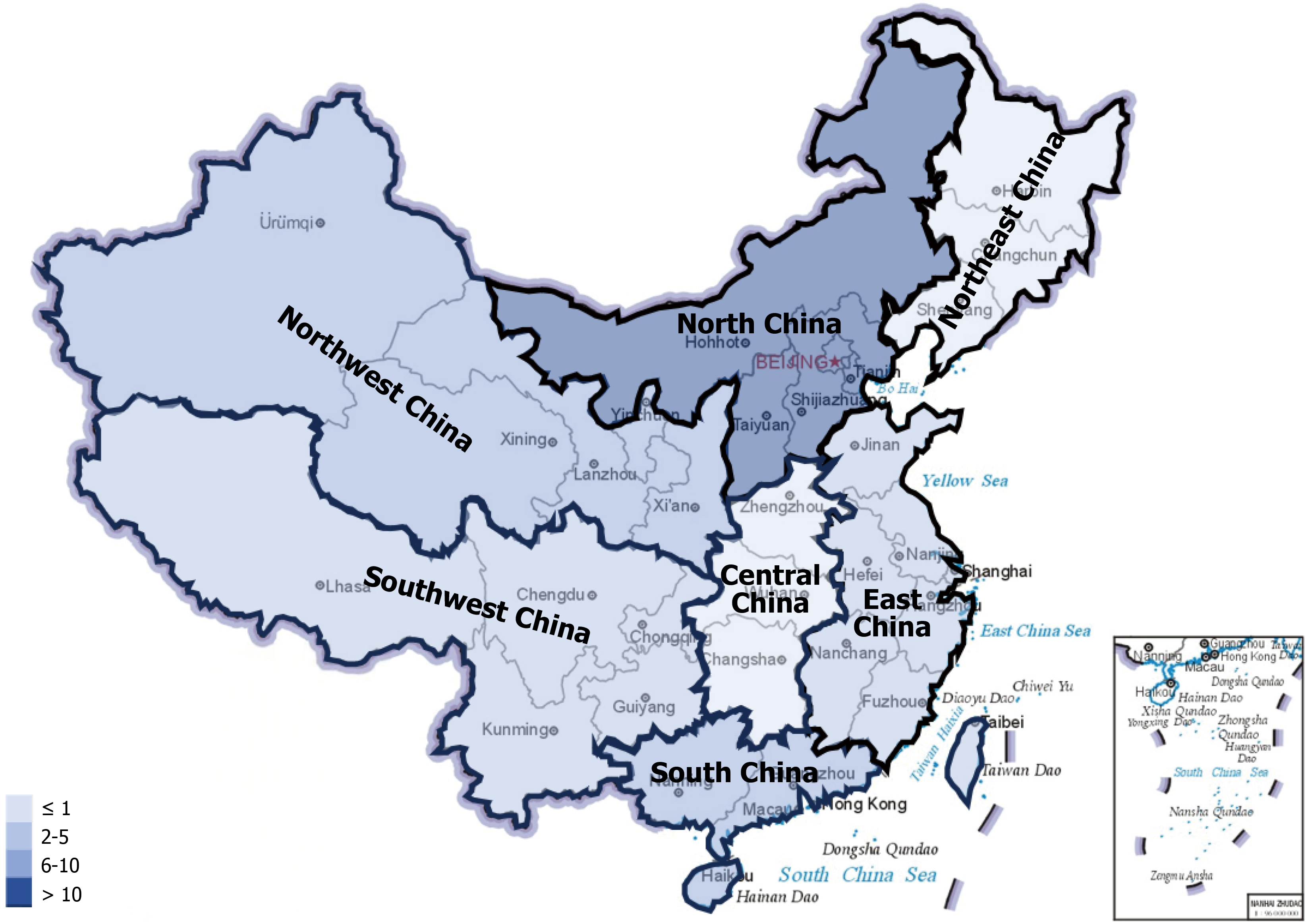
Figure 3 Geographic distribution of respondents in China.
The sample size and proportion for each geographic region are as follows: (1) Northeast (1/112, 0.89%); (2) North China (94/112, 83.93%); (3) Northwest (5/112, 4.46%); (4) Southwest (1/112, 0.89%); (5) Central China (1/112, 0.89%); (6) East China (3/112, 2.68%); and (7) South China (7/112, 6.25%).
- Citation: Wang RG, Dong HB. Application prospects of phased-array computed tomography in the diagnosis and treatment of digestive system diseases: A cross-sectional survey. World J Gastroenterol 2026; 32(34): 119523
- URL: https://www.wjgnet.com/1007-9327/full/v32/i34/119523.htm
- DOI: https://dx.doi.org/10.3748/wjg.119523