
















Copyright: ©Author(s) 2026.
World J Orthop. Jun 18, 2026; 17(6): 119956
Published online Jun 18, 2026. doi: 10.5312/wjo.v17.i6.119956
Published online Jun 18, 2026. doi: 10.5312/wjo.v17.i6.119956
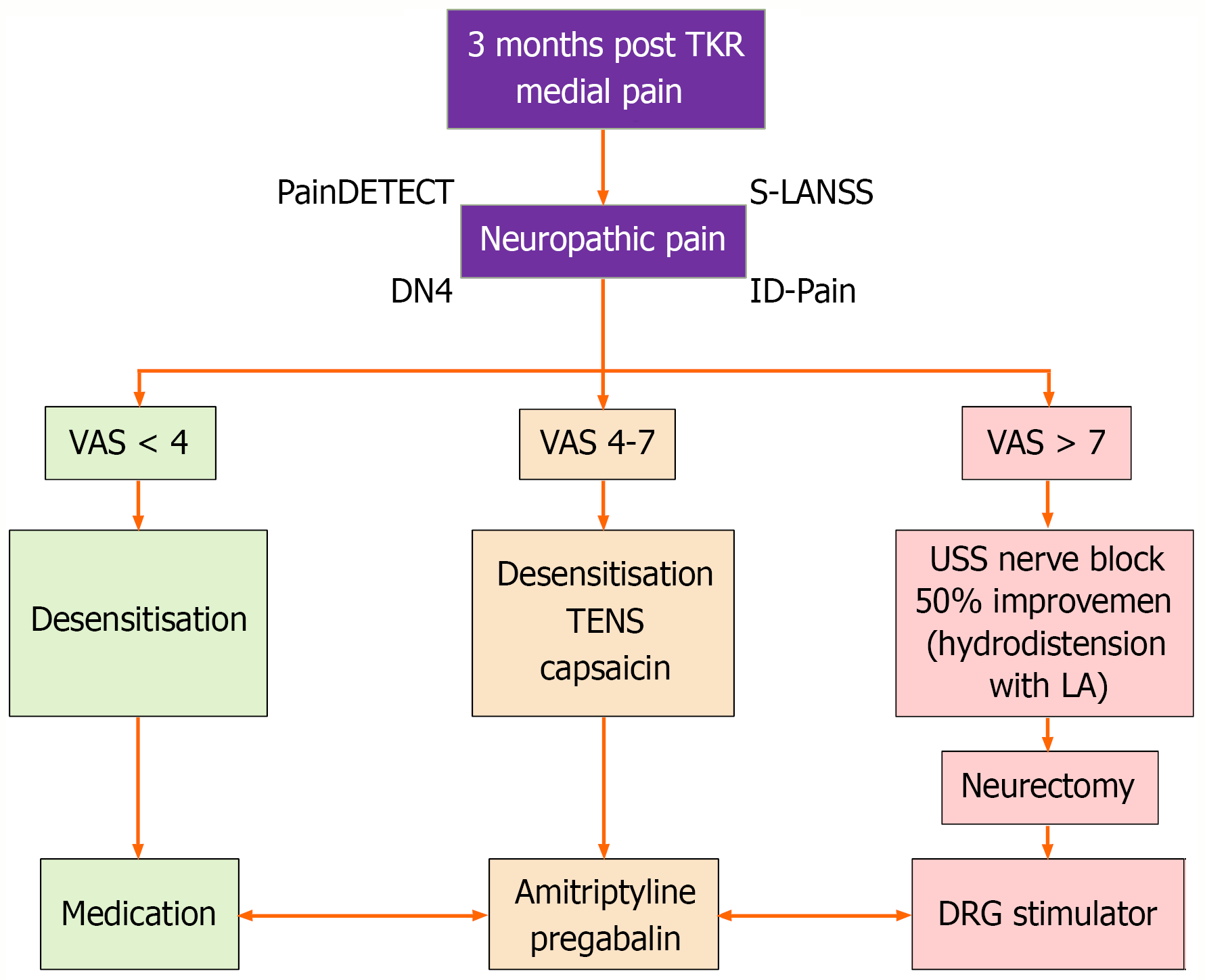
Figure 4 This outlines a potential treatment pathway for neuropathic pain after total knee replacement.
We consider that neuropathic pain needs identification, calibration, and management at three months after total knee replacement (TKR). Many of these interventions have good evidence base but not for neuropathic pain after TKR. For severe pain (Visual Analogue Scale > 7) the first step is to identify a possible cause using an ultrasound guided injection of local anesthetic. In those with 50% improvement of pain and in who simple hydro-dissection does not give lasting improvement consider neurectomy using radiofrequency or cryo-ablation or surgery to recite or release the nerve. If these measures fail, consider proximal methods such as dorsal root ganglion stimulation. As consensus evolves on the use and interpretation of neurophysiology to help classify severity of post TKR neuropathic pain, it could be incorporated into the treatment pathway as it may suggest an optimal treatment[34]. TKR: Total knee replacement; VAS: Visual Analogue Scale; S-LANSS: Self-reported Leeds Assessment of Neuropathic Symptoms and Signs; DN4: Douleur-Neuropathique-4; ID-Pain: Identification Pain questionnaire; TENS: Transcutaneous electrical nerve stimulation; USS: Ultrasound Scan; LA: Local anaesthetic; DRG: Dorsal root ganglion.
- Citation: Dias S, Ashworth S, McGonagle S, Divall P, Dias J. Diagnosis and management of neuropathic pain post-total knee replacement: A systematic review. World J Orthop 2026; 17(6): 119956
- URL: https://www.wjgnet.com/2218-5836/full/v17/i6/119956.htm
- DOI: https://dx.doi.org/10.5312/wjo.v17.i6.119956