
















Copyright: ©Author(s) 2026.
World J Gastrointest Oncol. Mar 15, 2026; 18(3): 115679
Published online Mar 15, 2026. doi: 10.4251/wjgo.v18.i3.115679
Published online Mar 15, 2026. doi: 10.4251/wjgo.v18.i3.115679
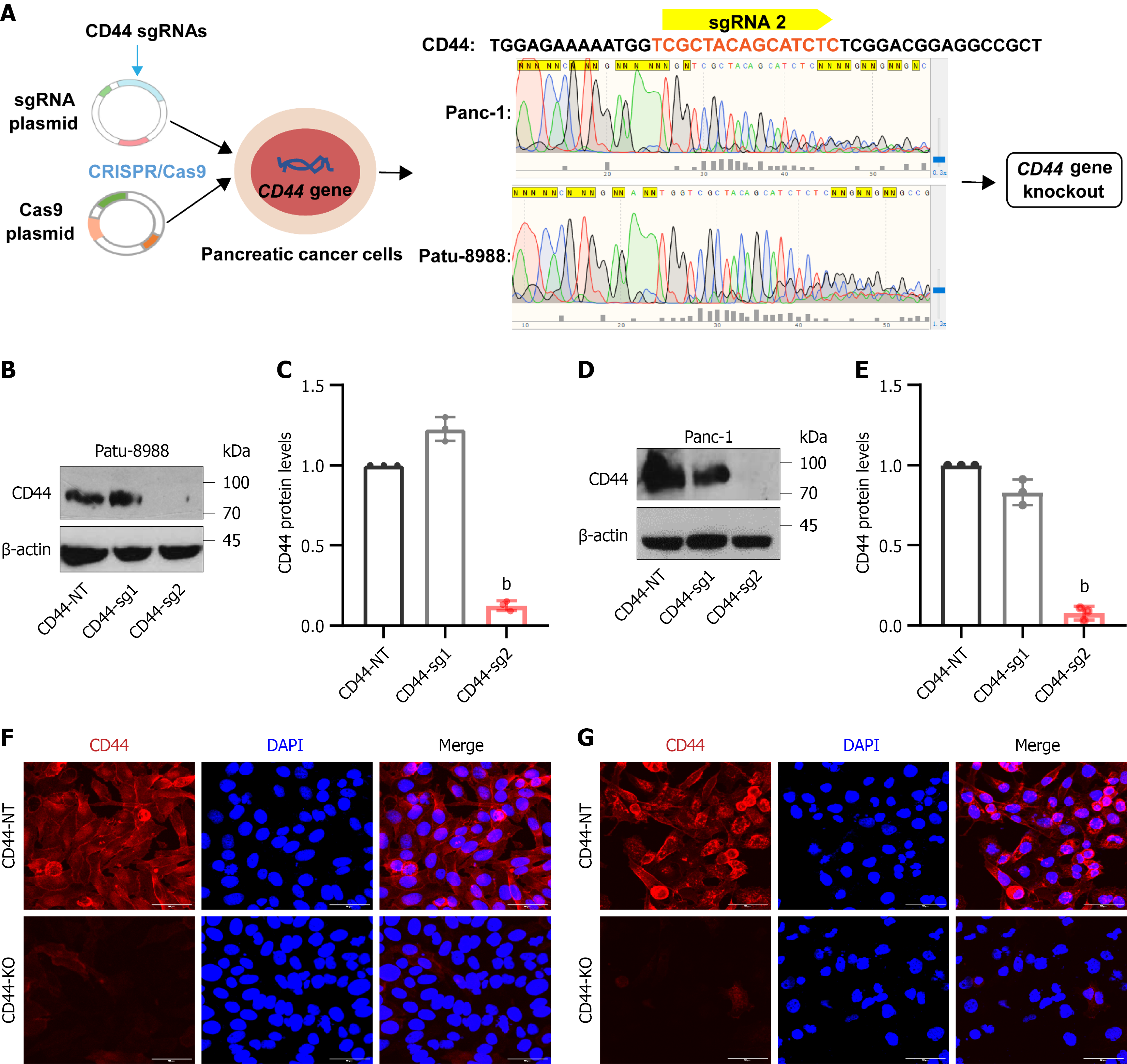
Figure 1 Establishment and verification of CD44 knockout pancreatic cancer cell lines.
Pancreatic cancer Patu-8988 and Panc-1 cells were stably transfected with Cas9-cDNA-vector. A: CD44 single-chain guide RNAs (sgRNAs) were cloned into a lentivirus vector, and the infectious sgRNAs-lentiviruses were prepared as described in the methods section. Cas9-positive pancreatic cancer Patu-8988 and Panc-1 cells were infected with CD44-sgRNA1 lentivirus, CD44-sgRNA2 lentivirus, or control sgRNA-lentivirus (CD44-NT). Further, Sanger sequencing confirmed the efficacy of CRISPR/Cas9 gene editing; B-E: CD44 knockout was verified by western blotting; F and G: Immunofluorescence staining, and confocal microscope analysis (600 ×), red: CD44, blue: DAPI, Merge: Both CD44 and DAPI. Ctrl: CD44-expressing cells, CD44-sgRNA1: CD44 gene single-chain guide RNA1, CD44-sgRNA2: CD44 gene single-chain guide RNA2. Notably, CD44 was almost completely knocked out by CD44-sgRNA2 in pancreatic cancer cells; accordingly, CD44-sgRNA2-mediated CD44 knockout pancreatic cells were named CD44-KO. Data in Figure 1B-E are shown as the mean ± SD of three independent replicates. bP < 0.01 vs CD44-NT in an unpaired t test.
- Citation: Liu YX, Zheng NN, Wang XX, Zhou QS, Meng M. Oncogenic CD44 is essential for pancreatic cancer tumorigenesis: A novel targeted therapeutic strategy. World J Gastrointest Oncol 2026; 18(3): 115679
- URL: https://www.wjgnet.com/1948-5204/full/v18/i3/115679.htm
- DOI: https://dx.doi.org/10.4251/wjgo.v18.i3.115679