
















©The Author(s) 2025.
World J Gastrointest Oncol. Aug 15, 2025; 17(8): 109489
Published online Aug 15, 2025. doi: 10.4251/wjgo.v17.i8.109489
Published online Aug 15, 2025. doi: 10.4251/wjgo.v17.i8.109489
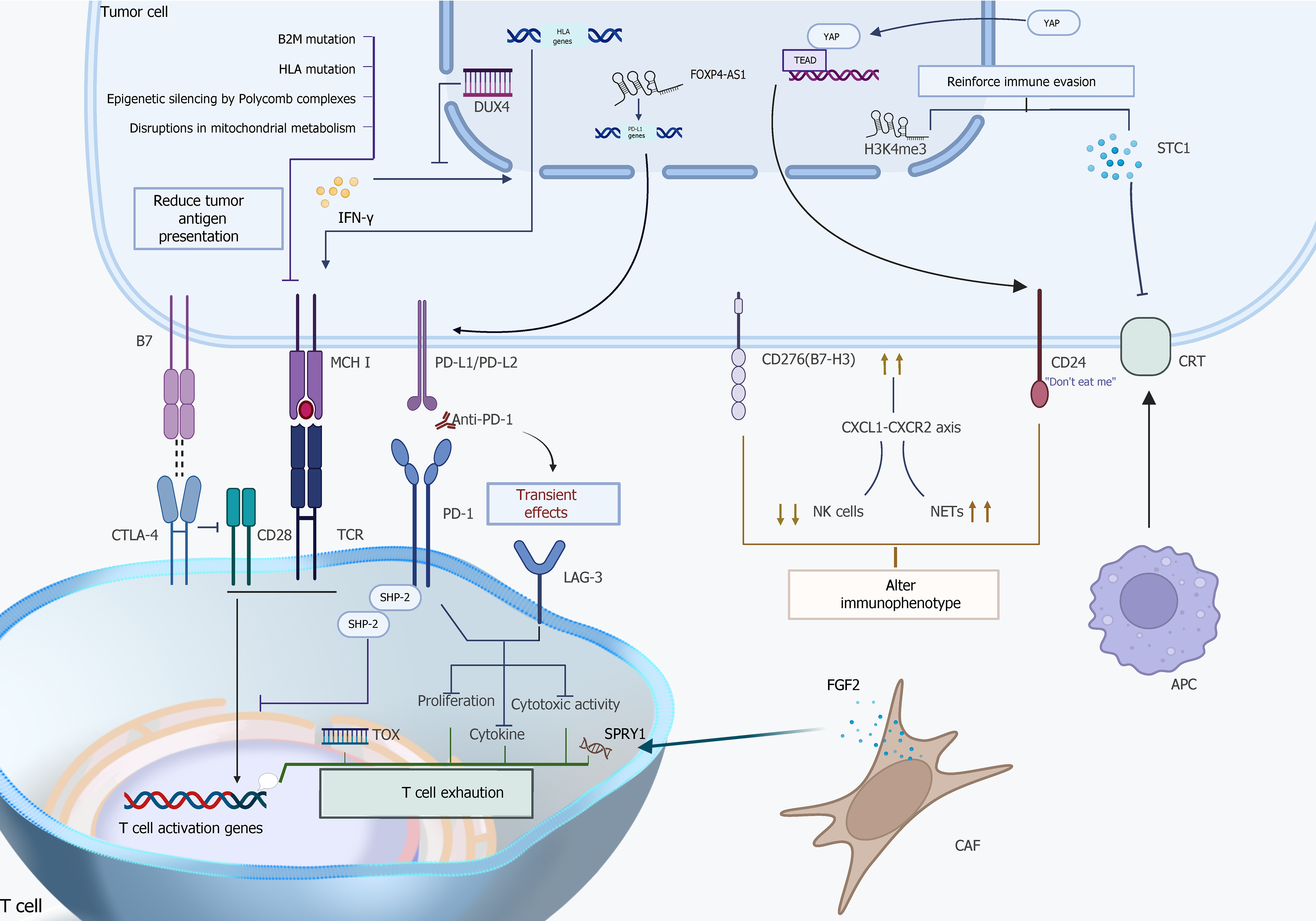
Figure 2 Integrated mechanisms of immune evasion in esophageal squamous cell carcinoma.
This overview assembles the main, temporally and spatially coordinated, escape pathways employed by esophageal squamous cell carcinoma (ESCC). (1) Loss of tumor antigen visibility through B2M/human leukocyte antigen mutations, polycomb-mediated epigenetic silencing and mitochondrial dysfunction that down-regulate major histocompatibility complex-I; (2) FOXP4-AS1 and interferon-gamma-driven programmed death-ligand 1/programmed death-ligand 2 up-regulation recruits SHP-2 via PD-1 and LAG-3 to dampen TCR/CD28 signaling; (3) Tumour-intrinsic programmes—Hippo-YAP-induced CD24, CD276-CXCL1-CXCR2-mediated neutrophil extracellular traps, and STC1-mediated calreticulin masking—reconfigure “don’t-eat-me” or pro-inflammatory cues to alter immune phenotype; and (4) Cancer-associated fibroblast-derived fibroblast growth factor 2 elevates SPRY1 in CD8+ T cells, deepening functional exhaustion. Together these layers converge to reduce antigen presentation, blunt cytotoxic function and remodel innate immunity, thereby enabling durable immune escape in ESCC. HLA: Human leukocyte antigen; IFN-γ: Interferon-gamma PD-L1: Programmed death-ligand 1; PD-L2: Programmed death-ligand 2; FGF2: Fibroblast growth factor 2; MHC: Major histocompatibility complex; NK: Natural killer.
- Citation: Wang Z, Zhang RY, Xu YF, Yue BT, Zhang JY, Wang F. Unmasking immune checkpoint resistance in esophageal squamous cell carcinoma: Insights into the tumor microenvironment and biomarker landscape. World J Gastrointest Oncol 2025; 17(8): 109489
- URL: https://www.wjgnet.com/1948-5204/full/v17/i8/109489.htm
- DOI: https://dx.doi.org/10.4251/wjgo.v17.i8.109489