
















Copyright: ©Author(s) 2026.
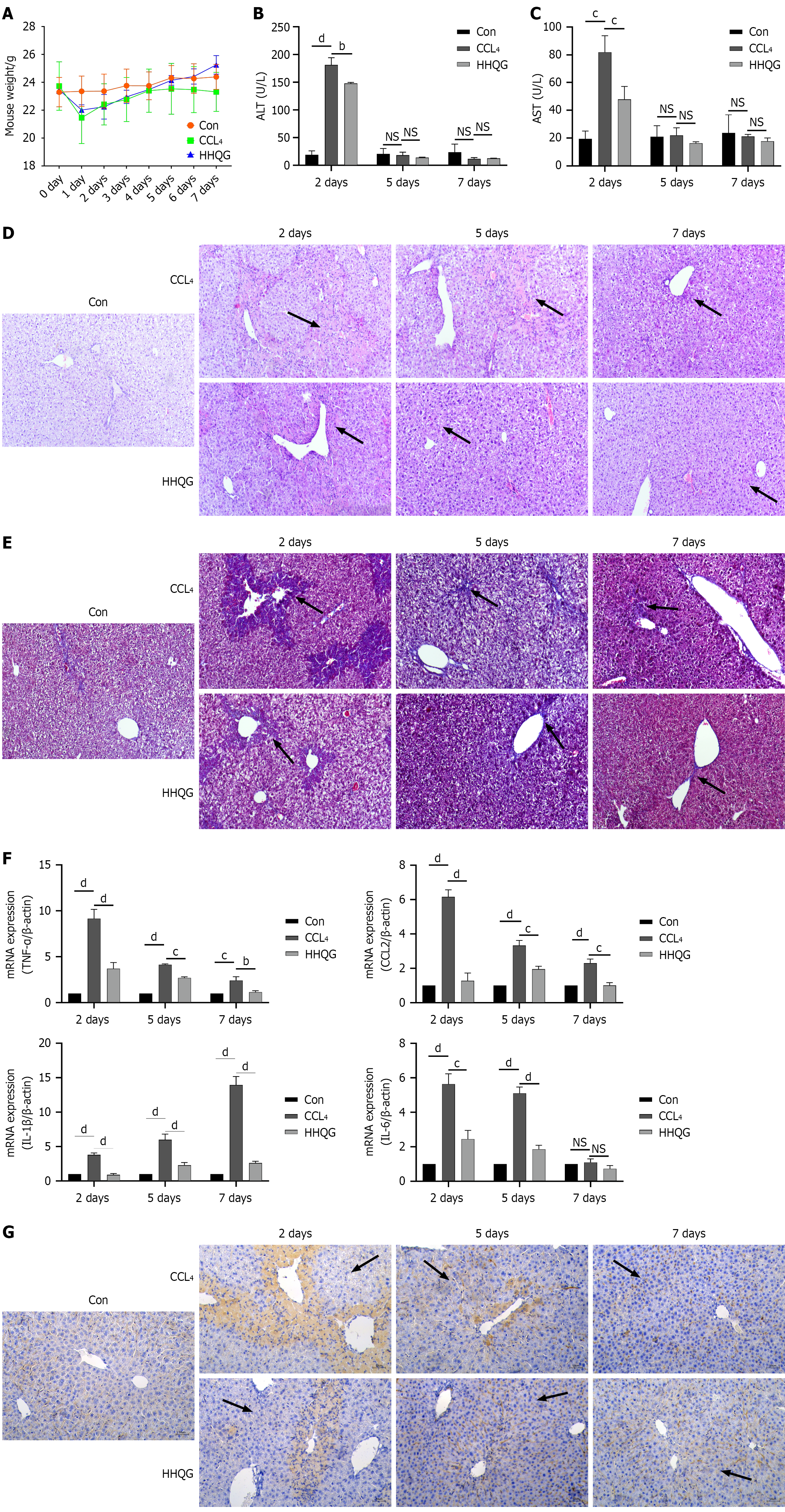
Figure 2 Protective effect of Honghua Qinggan Shisanwei Wan against carbon tetrachloride-induced liver injury in mice.
A: Mouse body weight alterations following acute liver injury induced by carbon tetrachloride; B: Alanine aminotransferase assay in mouse serum; C: Aspartate aminotransferase assay in mouse serum; D: The liver histopathology was analyzed by hematoxylin and eosin staining (200 ×); E: The liver histopathology was analyzed by Masson staining (200 ×); F: The tumor necrosis factor-α/C-C motif chemokine ligand 2/interleukin-1β/interleukin-6 expression of liver tissue in the liver injury; G: The expression of tumor necrosis factor-α in liver injury (200 ×). The regions indicated by arrows represent the injured areas of liver tissue and the corresponding positive expression regions of the gene. bP < 0.01, cP < 0.001, dP < 0.0001, NS: Not significant. ALT: Alanine aminotransferase; CCL2: C-C motif chemokine ligand 2; CCL4: Carbon tetrachloride; HHQG: Honghua Qinggan Shisanwei Wan; AST: Aspartate aminotransferase; TNF-α: Tumor necrosis factor-α; IL: Interleukin; Con: Control.
- Citation: Ma CL, Zhang X, Bao X, Zhao LY, Cao LL, Ma CY, Zhang T, Hong M, Bao YL, Hu RP. Discussion on the effect of Honghua Qinggan Shisanwei Wan on regulating macrophage polarization and alleviating liver injury. World J Hepatol 2026; 18(6): 118215
- URL: https://www.wjgnet.com/1948-5182/full/v18/i6/118215.htm
- DOI: https://dx.doi.org/10.4254/wjh.118215