
















Copyright: ©Author(s) 2026.
World J Hepatol. Nov 27, 2026; 18(11): 126007
Published online Nov 27, 2026. doi: 10.4254/wjh.126007
Published online Nov 27, 2026. doi: 10.4254/wjh.126007
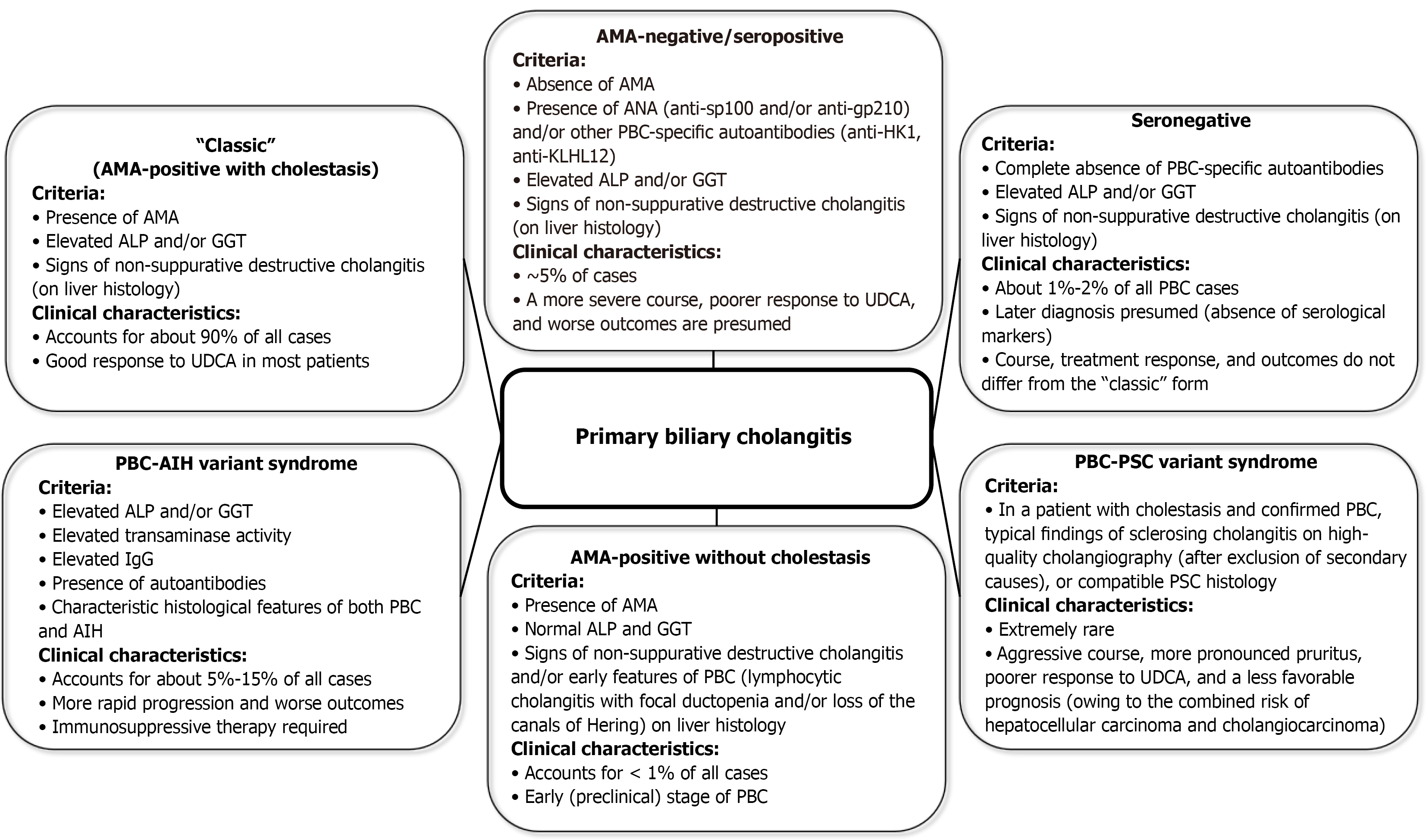
Figure 2 Proposed classification of the main clinical forms of primary biliary cholangitis (authors’ proposal; not a guideline or consensus classification, and not externally validated).
The categories shown are the authors’ proposal and are not guideline-endorsed. Recognition status and certainty of evidence for each category are given in Table 3. Anti-centromere antibodies are not primary biliary cholangitis (PBC)-specific and do not form part of the diagnostic serology for PBC. High-risk features are anti-gp210 positivity, male sex, age under 45 years at diagnosis, incomplete biochemical response at 12 months, advanced fibrosis or increased liver stiffness and, where a biopsy has been obtained, significant ductopenia or marked interface hepatitis (Table 2). Statements of prevalence and prognosis for antimitochondrial antibodies (AMA)-negative PBC, AMA-positive PBC without cholestasis, completely seronegative PBC and for the PBC-primary sclerosing cholangitis variant are uncertain and are qualified in the text; reported outcomes in AMA-negative PBC are conflicting, and the comparison in Table 4 should be read alongside this figure. PBC: Primary biliary cholangitis; PSC: Primary sclerosing cholangitis; UDCA: Ursodeoxycholic acid; AIH: Autoimmune hepatitis; GGT: Gamma-glutamyl transpeptidase; ALP: Alkaline phosphatase.
- Citation: Batskikh S, Morozov S, Sokolova E. Immunological patterns and clinical forms of primary biliary cholangitis. World J Hepatol 2026; 18(11): 126007
- URL: https://www.wjgnet.com/1948-5182/full/v18/i11/126007.htm
- DOI: https://dx.doi.org/10.4254/wjh.126007