
















Copyright: ©Author(s) 2026.
World J Hepatol. Nov 27, 2026; 18(11): 125669
Published online Nov 27, 2026. doi: 10.4254/wjh.125669
Published online Nov 27, 2026. doi: 10.4254/wjh.125669
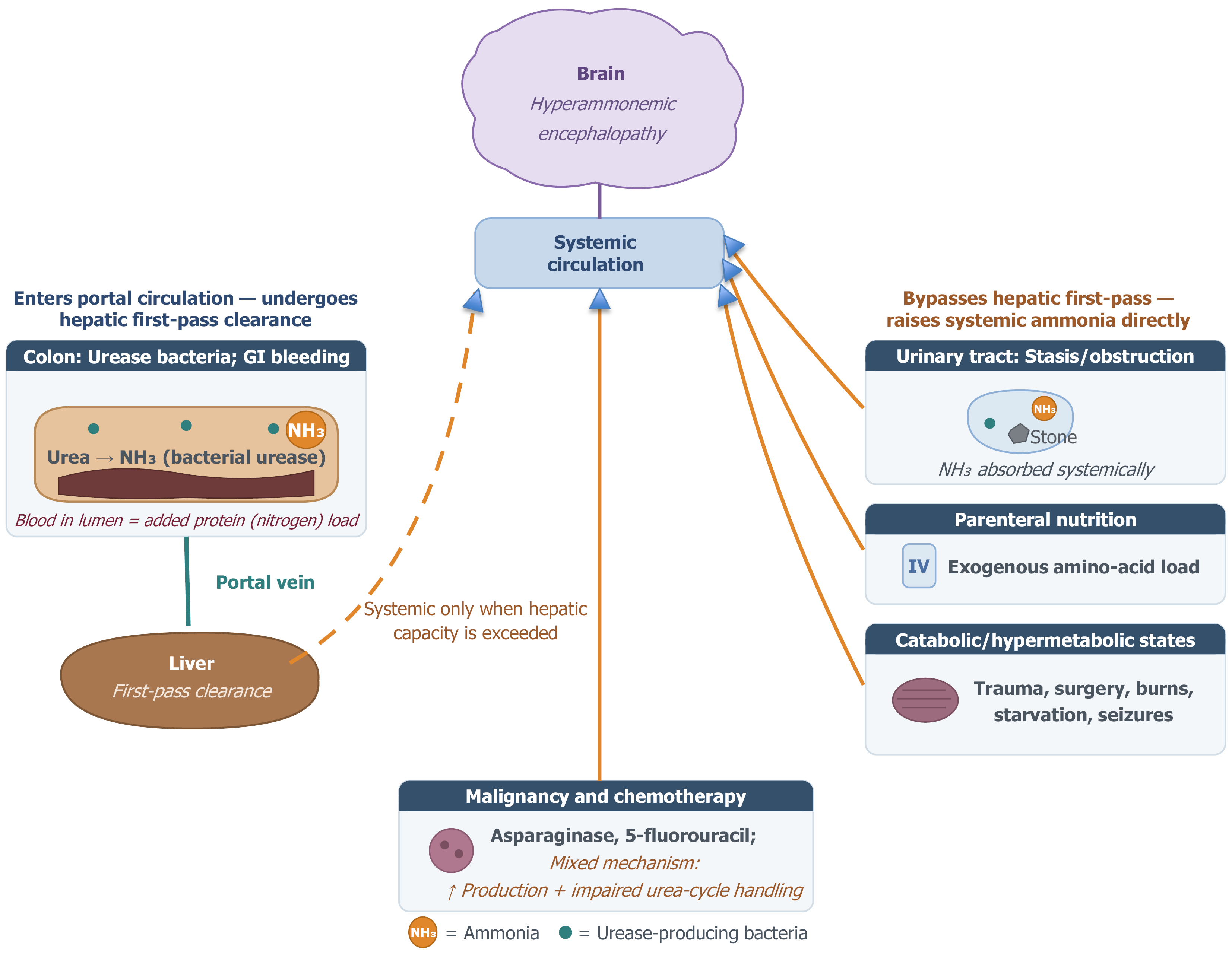
Figure 2 Mechanisms of increased ammonia production in non-cirrhotic hyperammonemia.
Excess ammonia can be generated at several sites. Ammonia produced in the colon by urease-producing bacteria-amplified when gastrointestinal bleeding delivers blood into the lumen as an additional protein load-drains through the portal vein to the liver, where it normally undergoes first-pass clearance; it contributes to systemic hyperammonemia mainly when the load exceeds hepatic capacity or when hepatic reserve is reduced. By contrast, several sources bypass hepatic first-pass clearance and raise systemic ammonia directly: Urease-producing organisms in an obstructed or stagnant urinary tract (here containing a stone), whose ammonia is absorbed into the systemic veins; parenteral nutrition, which delivers an exogenous amino-acid load intravenously; and catabolic or hypermetabolic states (trauma, surgery, burns, starvation, seizures), which release ammonia from peripheral tissues. Malignancy and its treatment (for example, asparaginase or 5-fluorouracil) act through a mixed mechanism, both increasing ammonia production and impairing hepatic urea-cycle handling. All routes ultimately raise systemic ammonia, which reaches the brain. These mechanisms correspond to the increased-production causes summarized in Table 1. IV: Intravenous.
- Citation: Obeidat Y, Cholankeril G. Non-cirrhotic hyperammonemia in adults: Recognition and management. World J Hepatol 2026; 18(11): 125669
- URL: https://www.wjgnet.com/1948-5182/full/v18/i11/125669.htm
- DOI: https://dx.doi.org/10.4254/wjh.125669