
















Copyright: ©Author(s) 2026.
World J Stem Cells. Sep 26, 2026; 18(9): 123933
Published online Sep 26, 2026. doi: 10.4252/wjsc.123933
Published online Sep 26, 2026. doi: 10.4252/wjsc.123933
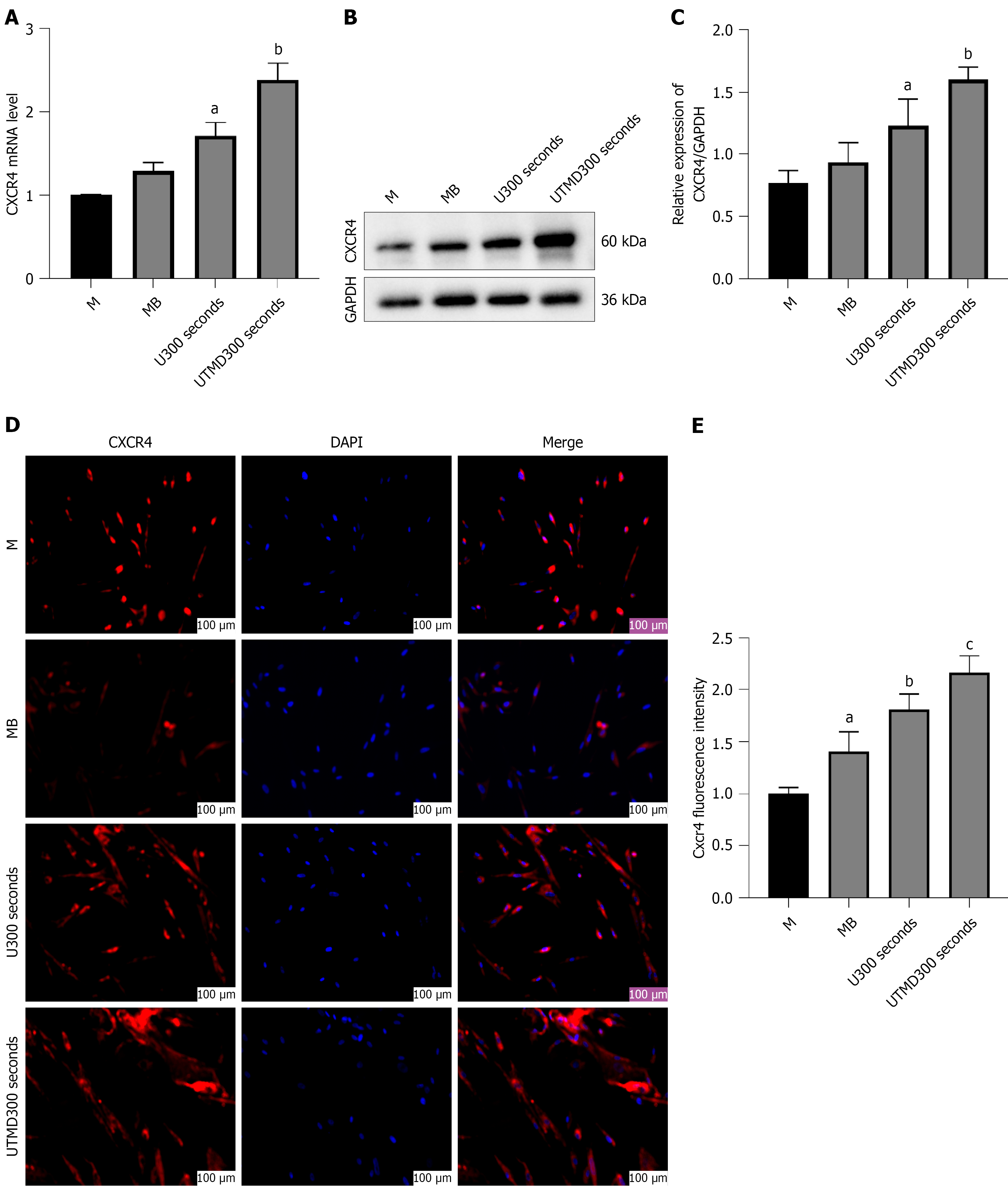
Figure 6 Effects of ultrasound-targeted microbubble destruction exposure duration on C-X-C chemokine receptor type 4 expression in human umbilical cord mesenchymal stem cells.
A: Relative mRNA expression levels of CXCR4 in each group. aP < 0.001 vs M group, bP < 0.001 vs M group; B: C-X-C chemokine receptor type 4 (CXCR4) protein expression in four groups: M (untreated control), MB (microbubbles alone), U300s (ultrasound alone for 300 seconds), and ultrasound-targeted microbubble destruction (UTMD), was analyzed by western blotting, with GAPDH as the loading control; C: Quantification of CXCR4 protein expression normalized to GAPDH, derived from the western blot data in Figure 6B. aP < 0.05 vs M group, bP < 0.01 vs M group; D: Representative immunofluorescence images showing CXCR4 (red) and nuclei (DAPI, blue) in hUCMSCs after UTMD treatment for various durations (original magnification, × 20); E: Quantification of CXCR4 fluorescence intensity from the immunofluorescence images in Figure 6D. aP < 0.05 vs M group, bP < 0.01 vs M group, cP < 0.01 vs MB group. n = 4. All data are presented as mean ± SD. Statistical significance was determined by one-way ANOVA followed by Tukey’s post hoc test for multiple comparisons. CXCR: C-X-C chemokine receptor type 4; MB: Microbubble; UTMD: Ultrasound-targeted microbubble destruction.
- Citation: Zhang P, La BY, Zhang ML, Rewan B, Zhang LY, La XL. Experimental study on ultrasound-targeted microbubble destruction promoting the proliferation, migration of human umbilical cord mesenchymal stem cells. World J Stem Cells 2026; 18(9): 123933
- URL: https://www.wjgnet.com/1948-0210/full/v18/i9/123933.htm
- DOI: https://dx.doi.org/10.4252/wjsc.123933