
















Copyright: ©Author(s) 2026.
World J Stem Cells. Jul 26, 2026; 18(7): 119865
Published online Jul 26, 2026. doi: 10.4252/wjsc.119865
Published online Jul 26, 2026. doi: 10.4252/wjsc.119865
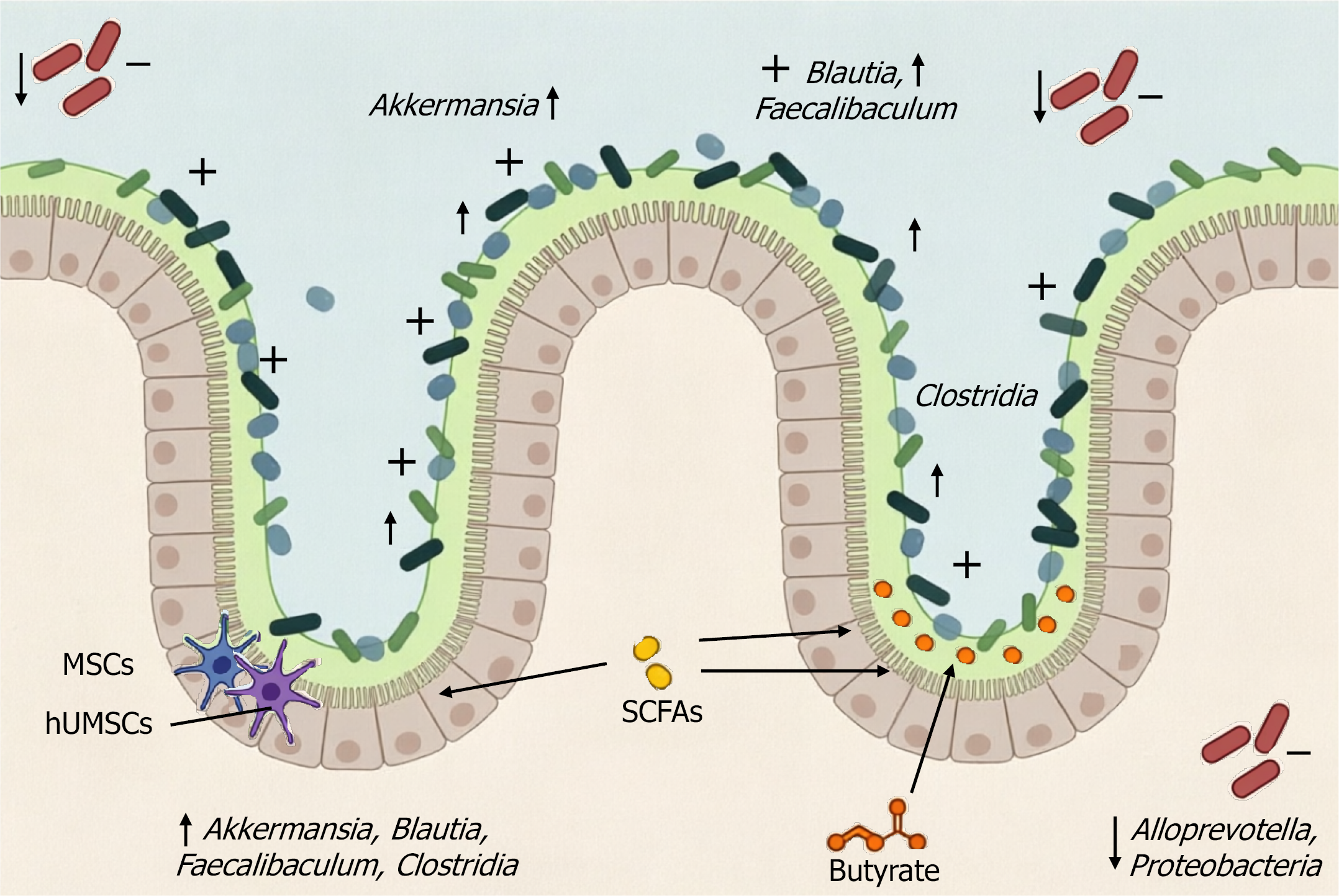
Figure 4 Schematic representation of the effects of human umbilical cord mesenchymal stem cell therapy on the gut microbiota-short-chain fatty acid-immune axis in dextran sodium sulphate-induced colitis.
The administration of human umbilical cord mesenchymal stem cells promotes the enrichment of beneficial bacterial genera, such as Akkermansia, Blautia, Faecalibaculum, and Clostridia, while suppressing pathogenic taxa such as Alloprevotella and Proteobacteria. This restored microbial community enhances the production of short-chain fatty acids, particularly butyrate, thereby strengthening the integrity of the epithelial barrier and exerting anti-inflammatory effects. Adapted from Liu et al[48]. hUMSCs: Human umbilical cord mesenchymal stem cells; MSCs: Mesenchymal stem cell; SCFAs: Short-chain fatty acids.
- Citation: Dudun AA, Bonartseva GA, Bonartsev AP. Enhancing mesenchymal stem cell function with epiregulin in tissue engineering: From tissue regeneration to gut microbiota modulation. World J Stem Cells 2026; 18(7): 119865
- URL: https://www.wjgnet.com/1948-0210/full/v18/i7/119865.htm
- DOI: https://dx.doi.org/10.4252/wjsc.119865