
















Copyright: ©Author(s) 2026.
World J Gastroenterol. Jan 14, 2027; 33(2): 123982
Published online Jan 14, 2027. doi: 10.3748/wjg.123982
Published online Jan 14, 2027. doi: 10.3748/wjg.123982
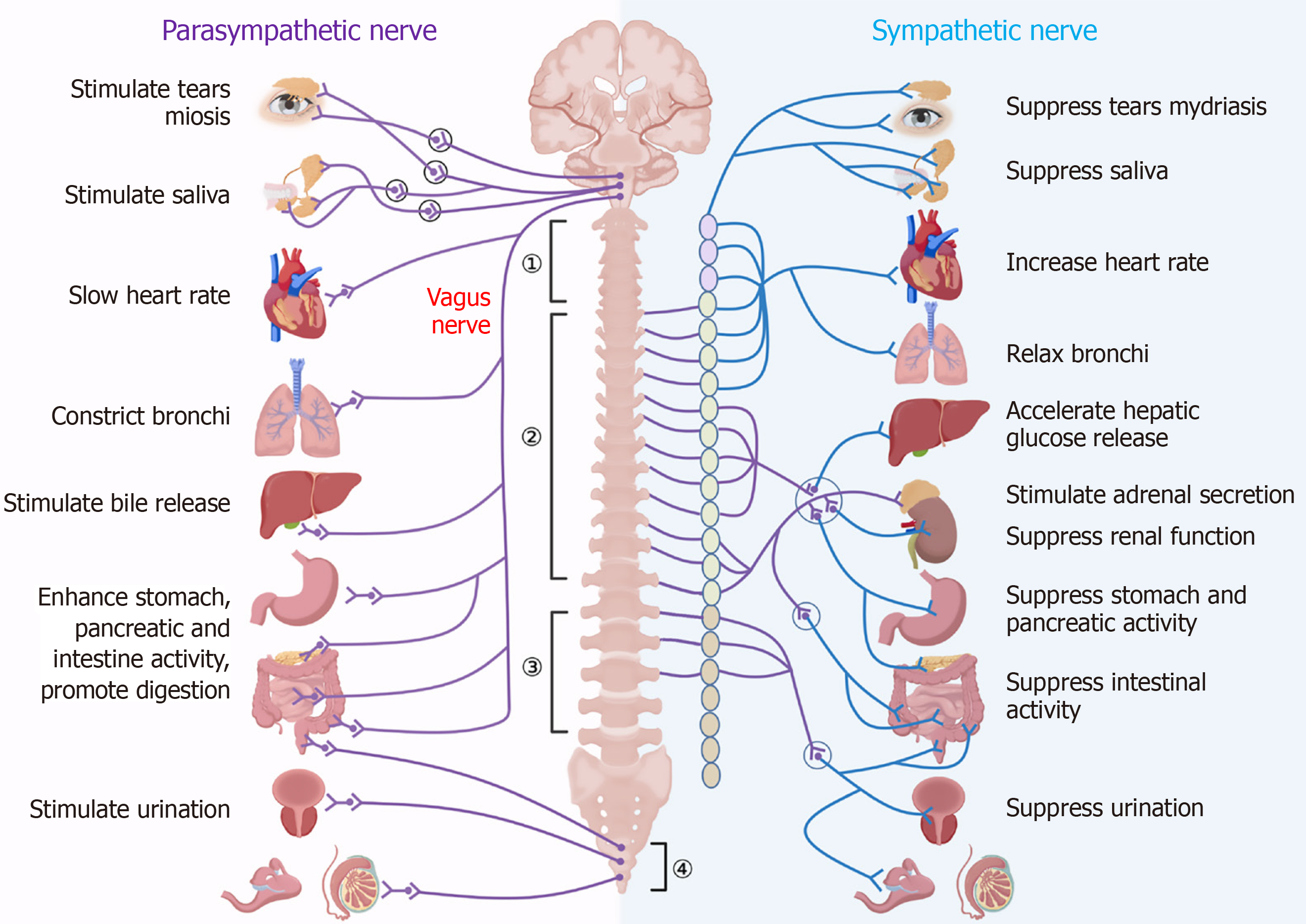
Figure 2 Bidirectional regulation of target organs by the autonomic nervous system.
(1) Cervical nerves; (2) Thoracic nerves; (3) Lumbar nerves; and (4) Sacral nerves. The autonomic nervous system regulates bodily functions through the antagonistic actions of the sympathetic and parasympathetic nerves. Activation of the sympathetic nerve leads to increased energy expenditure and organ function enhancement, resulting in elevated heart rate, accelerated respiration, increased blood pressure, bronchodilation, and pupil dilation, while concurrently inhibiting gastrointestinal motility and digestive secretion. In contrast, parasympathetic nerve activation decreases energy consumption and promotes energy storage, leading to decreased heart rate, slowed respiration, reduced blood pressure, bronchoconstriction, and pupil constriction, while also enhancing gastrointestinal motility and digestive secretion. Furthermore, these systems interact synergistically in specific physiological processes, such as sexual function, where parasympathetic dominance occurs during arousal and sympathetic dominance during orgasm. This delicate balance between antagonism and synergy allows the body to adapt efficiently to various physiological demands, including stress, digestion, and reproduction. The pattern was created with BioGDP.com[14].
- Citation: Hu XX, Zhang XP, Wang CX, Yang RR, Ma LX, Wu SW, Jiang WQ, Deng PM, Zhang T, Su XL, Wei W. Autonomic nervous system as a key modulator in stress-related inflammatory bowel disease: Mechanisms and therapeutic implications. World J Gastroenterol 2027; 33(2): 123982
- URL: https://www.wjgnet.com/1007-9327/full/v33/i2/123982.htm
- DOI: https://dx.doi.org/10.3748/wjg.123982