
















Copyright: ©Author(s) 2027.
World J Gastroenterol. Jan 7, 2027; 33(1): 123681
Published online Jan 7, 2027. doi: 10.3748/wjg.123681
Published online Jan 7, 2027. doi: 10.3748/wjg.123681
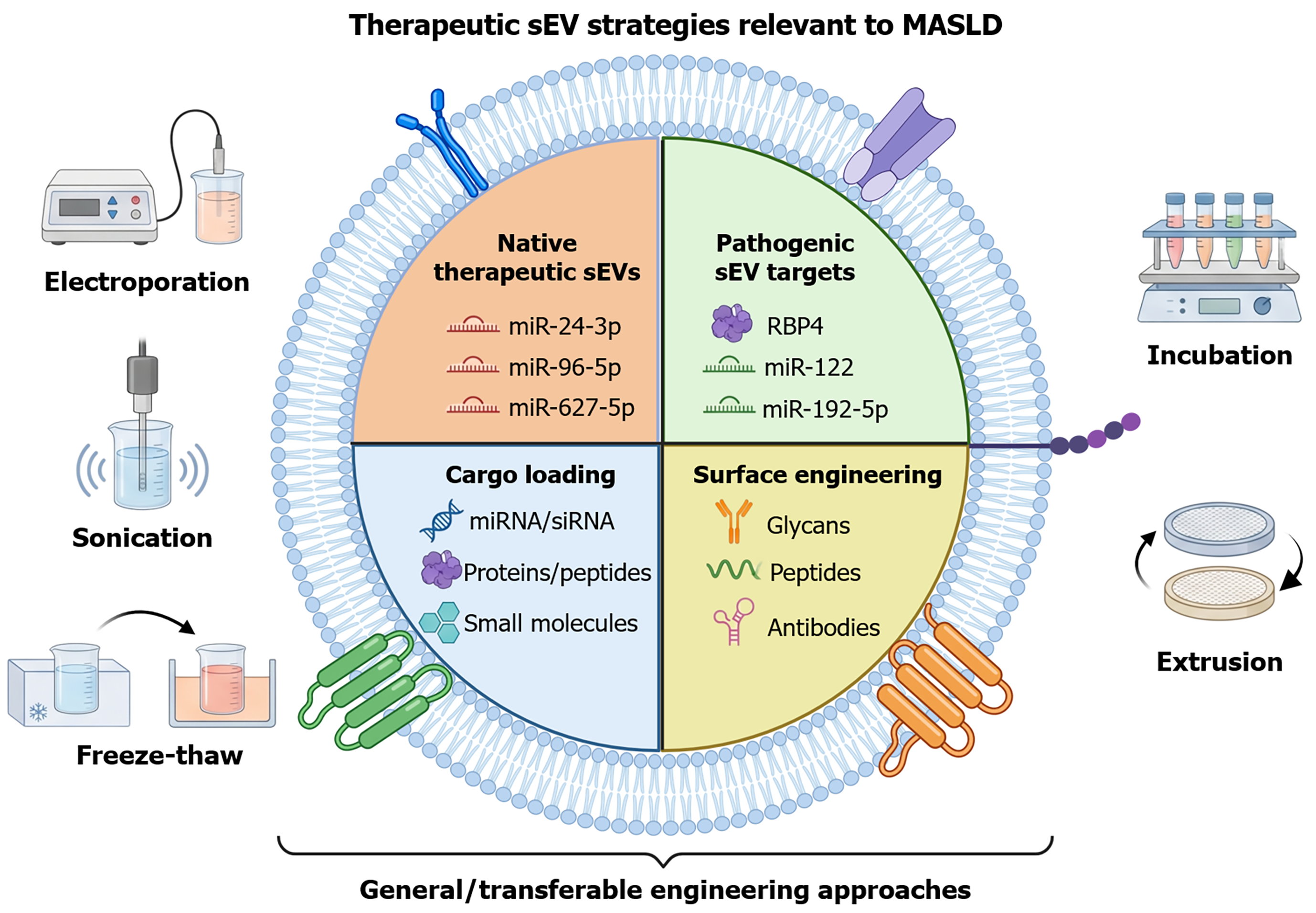
Figure 3 Conceptual schematic of therapeutic roles and engineering strategies of small extracellular vesicles relevant to metabolic dysfunction-associated steatotic liver disease.
The upper panels summarize metabolic dysfunction-associated steatotic liver disease (MASLD)-related evidence for native therapeutic small extracellular vesicles and pathogenic small extracellular vesicle-associated targets. The lower panels summarize general or transferable extracellular vesicle-engineering approaches, including cargo loading and surface engineering. Electroporation, sonication, freeze-thaw cycling, passive incubation, and extrusion represent general cargo-loading methods and should not be interpreted as established MASLD-specific therapeutic strategies unless validated directly in nonalcoholic fatty liver disease/MASLD/metabolic dysfunction-associated steatohepatitis models. Evidence categories and disease-model relevance for representative therapeutic studies are detailed in Table 2. sEV: Small extracellular vesicle; MASLD: Metabolic dysfunction-associated steatotic liver disease.
- Citation: Ding LL, Liu H, Yu Y, Liu XC, Zhang SQ, Qian H, Hao DL. Small extracellular vesicles as liquid biopsy targets and precision therapeutics for metabolic dysfunction-associated steatotic liver disease. World J Gastroenterol 2027; 33(1): 123681
- URL: https://www.wjgnet.com/1007-9327/full/v33/i1/123681.htm
- DOI: https://dx.doi.org/10.3748/wjg.123681