
















©The Author(s) 2026.
World J Gastroenterol. Feb 21, 2026; 32(7): 115143
Published online Feb 21, 2026. doi: 10.3748/wjg.v32.i7.115143
Published online Feb 21, 2026. doi: 10.3748/wjg.v32.i7.115143
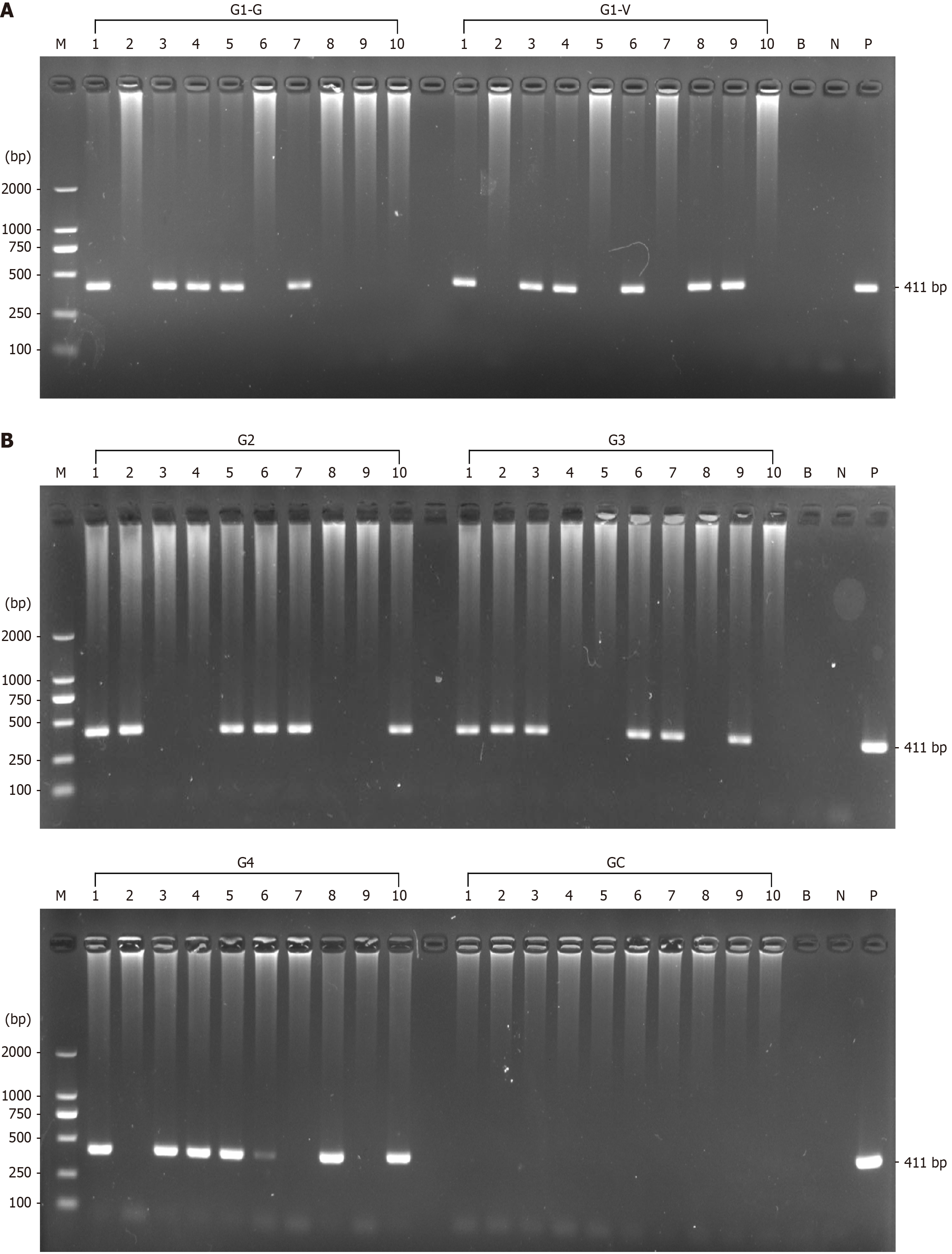
Figure 2 Nested polymerase chain reaction amplification of Helicobacter pylori ureA gene.
A: Fecal and vaginal Candida isolated from group G1 mice; B: Fecal Candida isolated from group G2, G3, G4, and GN mice. Lane M: DL2000 marker; lanes 1-10: The 10 mice in each group; lane B: Blank control (ddH2O); lane N: Negative control (Ca10231); lane P: Positive control (Helicobacter pylori). G1-G: Fecal Candida from group G1 mice. G1-V: Vaginal Candida from group G1 mice. Group G1 mice were infected with Helicobacter pylori via gavage and Candida Ca10231 was inoculated intravaginally. Mice in groups G2, G3, G4, and GC were infected with Candida strains W49, F67, Ca-co-Hp, and Ca10231 via gavage, respectively. Group GN mice received saline solution via gavage.
- Citation: Xu XL, Luo TT, Liu Q, Cui GZ, Wu DY, Wu XJ, Yang TX, Sun JC, Jian HF, Zhuo SW, Chen ZH. Candida-mediated vertical transmission of Helicobacter pylori in C57BL/6J mice. World J Gastroenterol 2026; 32(7): 115143
- URL: https://www.wjgnet.com/1007-9327/full/v32/i7/115143.htm
- DOI: https://dx.doi.org/10.3748/wjg.v32.i7.115143