
















©The Author(s) 2026.
World J Gastroenterol. Feb 21, 2026; 32(7): 115143
Published online Feb 21, 2026. doi: 10.3748/wjg.v32.i7.115143
Published online Feb 21, 2026. doi: 10.3748/wjg.v32.i7.115143
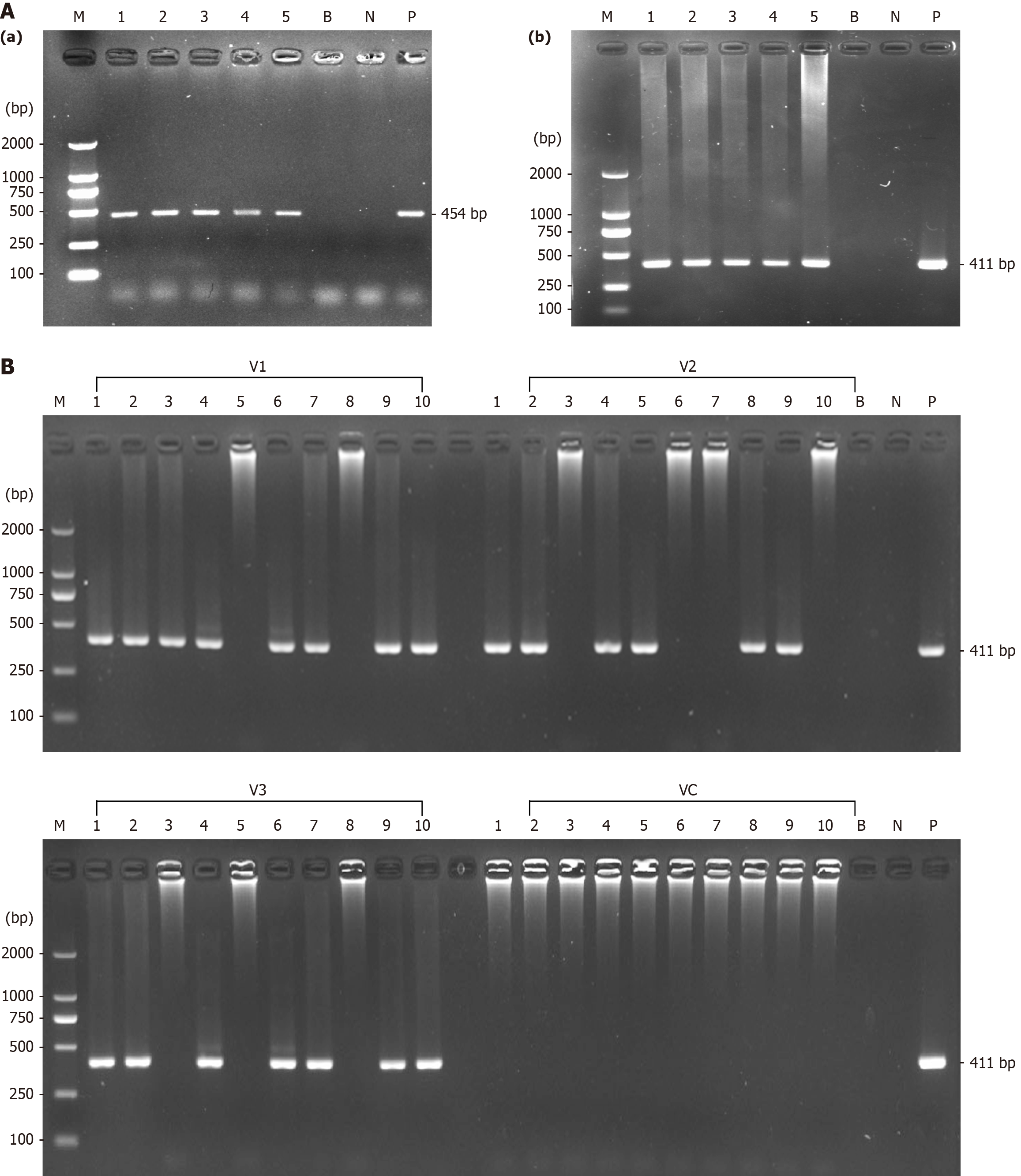
Figure 1 Nested polymerase chain reaction amplification of Helicobacter pylori-specific genes.
A: Identification of the strains used for modeling. a: Helicobacter pylori (H. pylori) 16S rDNA; b: H. pylori ureA gene; lane M: DL2000 marker; lane 1: Candida W49; lane 2: Candida F67; lane 3: Candida Ca-co-Hp; lane 4: Candida J115; lane 5: Candida H100; lane B: Blank control (ddH2O); lane N: Negative control (Ca10231); lane P: Positive control (H. pylori). Candida strains J115, H100, W49, F67, and Ca-co-Hp tested positive for H. pylori 16S rDNA and ureA genes, whereas the Ca10231 strain tested negative; B: Identification of H. pylori ureA gene in vaginal Candida isolates obtained from maternal mice. Lane M: DL2000 marker; lanes 1-10: Ten mice in each group; lane B: Blank control (ddH2O); lane N: Negative control (Ca10231); lane P: Positive control (H. pylori). Groups V1-V3 mice intravaginally inoculated with J115, H100, or Ca-co-Hp. Group VC was intravaginally inoculated with Ca10231. Group VN received saline solution.
- Citation: Xu XL, Luo TT, Liu Q, Cui GZ, Wu DY, Wu XJ, Yang TX, Sun JC, Jian HF, Zhuo SW, Chen ZH. Candida-mediated vertical transmission of Helicobacter pylori in C57BL/6J mice. World J Gastroenterol 2026; 32(7): 115143
- URL: https://www.wjgnet.com/1007-9327/full/v32/i7/115143.htm
- DOI: https://dx.doi.org/10.3748/wjg.v32.i7.115143