
















Copyright: ©Author(s) 2026.
World J Gastroenterol. Dec 14, 2026; 32(46): 123234
Published online Dec 14, 2026. doi: 10.3748/wjg.123234
Published online Dec 14, 2026. doi: 10.3748/wjg.123234
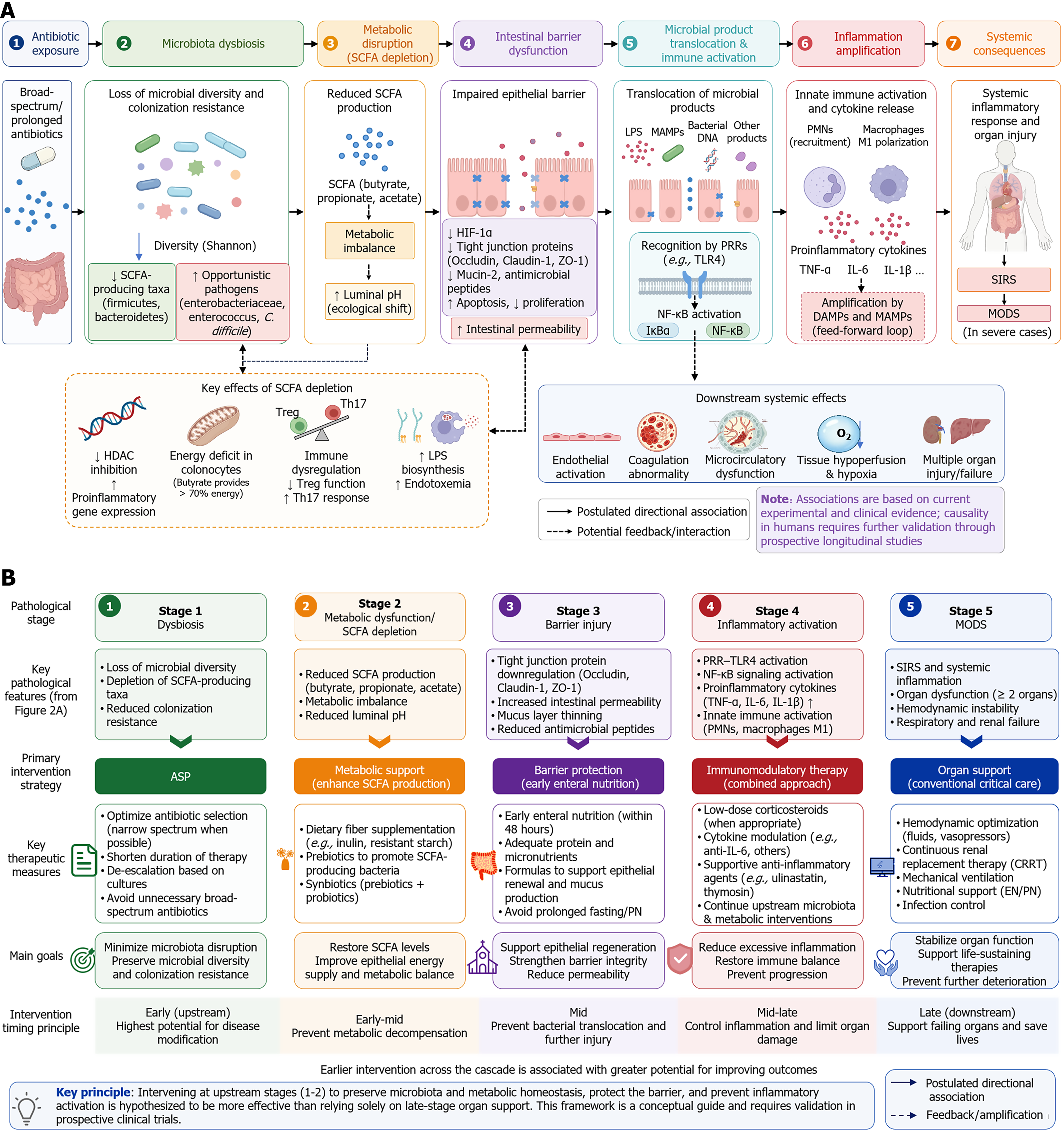
Figure 2 Mechanistic cascade of antibiotic-associated intestinal failure & stage-based intervention pathway.
A: Schematic representation of the “microbiota-metabolism-barrier-inflammation cascade” hypothesized to link antibiotic exposure to multiple organ dysfunction syndrome (MODS) in critically ill patients. Antibiotic exposure is associated with rapid microbial diversity loss, depletion of short-chain fatty acid (SCFA)-producing taxa, and reduced SCFA concentrations. SCFA depletion is linked to downregulation of hypoxia-inducible factor-1α and impaired transcription of tight junction proteins, leading to increased intestinal barrier permeability. The disrupted barrier may allow translocation of lipopolysaccharide and microbial products, engaging pattern recognition receptors including Toll-like receptor 4, activating nuclear factor kappa B signaling, and promoting release of proinflammatory cytokines [tumor necrosis factor-α, interleukin (IL)-6, IL-1β]. Sustained innate immune activation involves polymorphonuclear leukocytes and macrophage polarization toward proinflammatory phenotypes. Microbe-associated molecular patterns and damage-associated molecular patterns further amplify the inflammatory response. These events are collectively associated with systemic inflammatory response syndrome and, in severe cases, MODS. Arrows indicate postulated directional associations based on available experimental and clinical evidence; causal relationships in humans require further validation through prospective longitudinal studies; B: Stage-based intervention pathway aligned with the mechanistic cascade depicted in Figure 2A. Five sequential pathological stages are shown, with corresponding therapeutic strategies mapped to each stage. Stage 1 (dysbiosis): Primary intervention is antibiotic stewardship program implementation to minimize microbiota disruption. Stage 2 (metabolic dysfunction/SCFA depletion): Dietary fiber supplementation and prebiotic use to support SCFA-producing bacterial taxa. Stage 3 (barrier injury): Early enteral nutrition to support epithelial renewal, mucus production, and barrier integrity. Stage 4 (inflammatory activation): Immunomodulatory strategies (low-dose corticosteroids, cytokine modulation) combined with upstream microbiota and metabolic interventions. Stage 5 (MODS): Organ support measures including hemodynamic optimization, continuous renal replacement therapy, and mechanical ventilation. The principle underlying this framework is that early upstream intervention offers greater potential for disease modification than late-stage organ support alone. This framework is proposed as a conceptual guide and requires validation in prospective clinical trials. SCFA: Short-chain fatty acid; MODS: Multiple organ dysfunction syndrome; ZO-1: Zonula occludens-1; PRR: Pattern recognition receptor; TLR4: Toll-like receptor 4; NF-κB: Nuclear factor kappa B; PMNs: Polymorphonuclear leukocytes; M1: Proinflammatory macrophages; SIRS: Systemic inflammatory response syndrome; ASP: Antibiotic stewardship program; PN: Parenteral nutrition; IL-6: Interleukin-6; CRRT: Continuous renal replacement therapy; EN: Enteral nutrition; HIF-1α: Hypoxia-inducible factor-1α; LPS: Lipopolysaccharide; MAMPs: Microbe-associated molecular patterns; TNF: Tumor necrosis factor; Treg: Regulatory T cell; Th17: T helper 17.
- Citation: Tian L, Xu SS. Antibiotic-associated gut dysbiosis and intestinal failure in critically ill patients: Mechanisms and interventions. World J Gastroenterol 2026; 32(46): 123234
- URL: https://www.wjgnet.com/1007-9327/full/v32/i46/123234.htm
- DOI: https://dx.doi.org/10.3748/wjg.123234