











Copyright: ©Author(s) 2026.
World J Gastroenterol. Nov 7, 2026; 32(41): 120035
Published online Nov 7, 2026. doi: 10.3748/wjg.120035
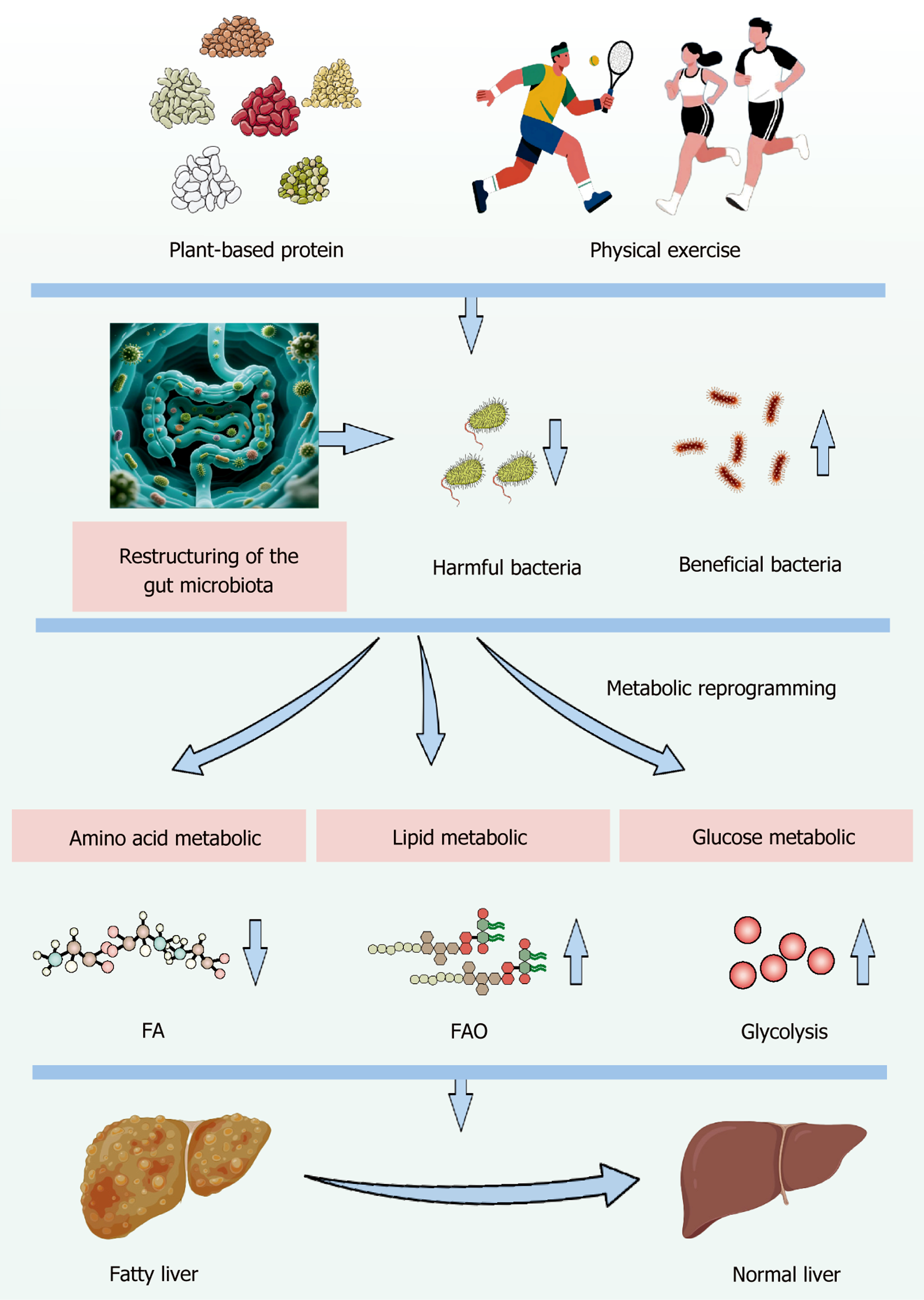
Figure 1 Schematic diagram illustrating the mechanisms by which a high plantbased protein diet and moderate physical exercise alle viate metabolic dysfunction-associated steatotic liver disease.
A high plantbased protein diet combined with moderate physical exercise can remodel the gut microbiota, increasing beneficial genera such as Akkermansia muciniphila (enhances gut barrier function), Faecalibacterium prausnitzii (produces butyrate and has anti-inflammatory effects), and Bifidobacterium (produces short-chain fatty acids), while reducing pathobionts such as Escherichia coli and, in certain contexts, Prevotella copri associated with branched-chain amino acid production and insulin resistance. The resulting microbial alterations subsequently drive hepatic metabolic reprogramming via the gut–liver axis, encompassing changes in lipid, glucose, and amino acid metabolism. These changes enhance fatty acid oxidation, reduce fatty acid production, and increase glycolysis, thereby reversing hepatic steatosis. FA: Fatty acids; FAO: Fatty acid oxidation. The two liver schematic diagrams in Figure 1 were created with BioGDP.com[59].
- Citation: Ma YR, Miao WL, Li N, Zhang GZ, Ren ZG. Dual effects of a high-protein diet on metabolic dysfunction-associated steatotic liver disease: Basic research on precision clinical interventions. World J Gastroenterol 2026; 32(41): 120035
- URL: https://www.wjgnet.com/1007-9327/full/v32/i41/120035.htm
- DOI: https://dx.doi.org/10.3748/wjg.120035