
















Copyright: ©Author(s) 2026.
World J Gastroenterol. Sep 28, 2026; 32(36): 121753
Published online Sep 28, 2026. doi: 10.3748/wjg.121753
Published online Sep 28, 2026. doi: 10.3748/wjg.121753
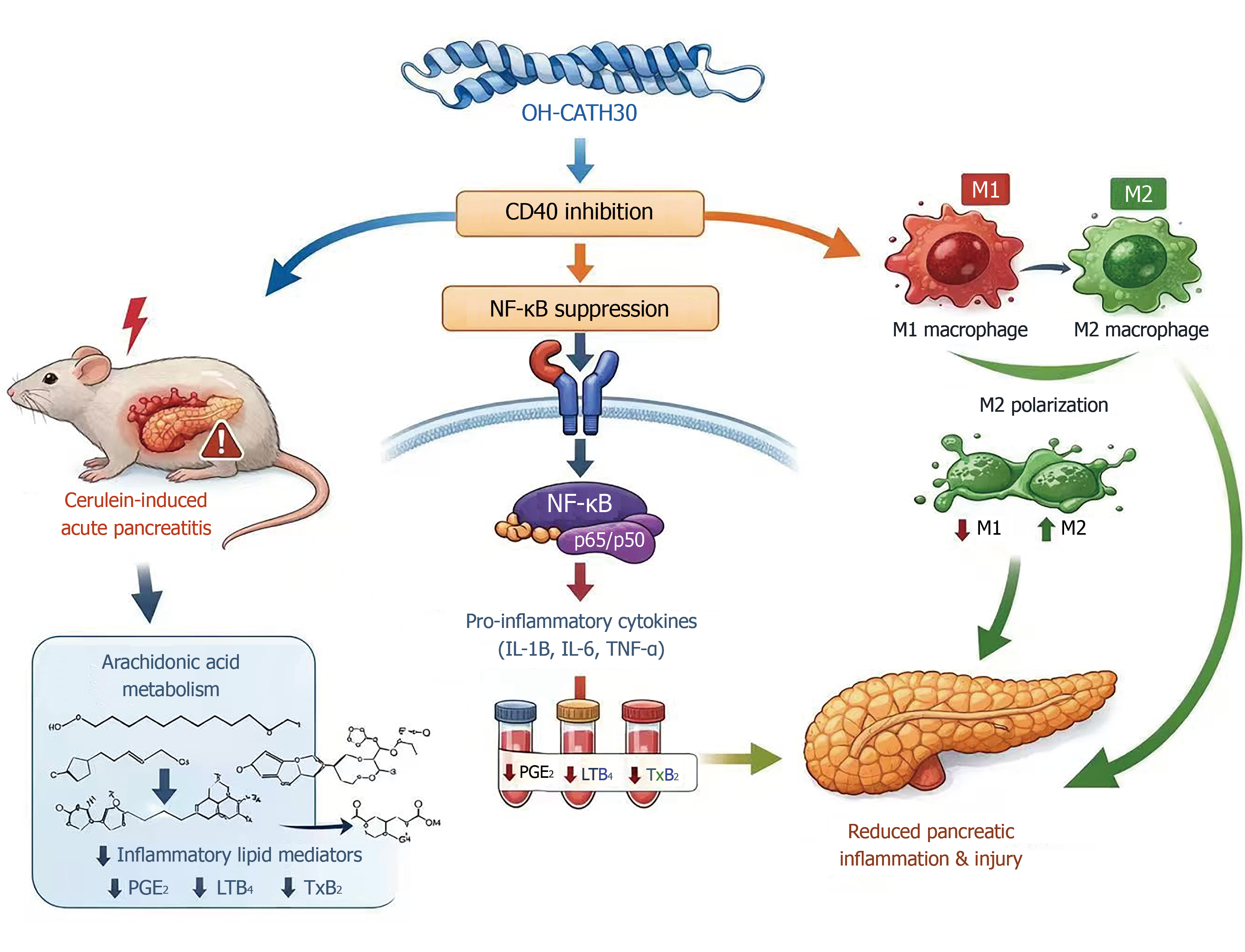
Figure 8 Schematic model of OH-CATH30 ameliorating acute pancreatitis by targeting CD40.
OH-CATH30 binds to CD40, which suppresses the downstream CD40-tumor necrosis factor receptor-associated factor 6-transforming growth factor beta-activated kinase 1-nuclear factor-kappa B signaling cascade in cerulein-induced acute pancreatitis mice model. This inhibition reduces pro-inflammatory cytokine production, drives M1-to-M2 macrophage phenotypic shift, and downregulates cyclooxygenase-2/5-lipoxygenase to inhibit arachidonic acid metabolism and synthesis of pro-inflammatory lipid mediators. These synergistic effects attenuate pancreatic and systemic inflammation, alleviate pancreatic injury, and ameliorate acute pancreatitis pathogenesis. IL: Interleukin; TNF-α: Tumor necrosis factor-α; NF-κB: Nuclear factor-kappa B.
- Citation: Li KL, Zhao Y, Shang WJ, Guo QH, Liu HT, Zhang JY, Jia XL, Liu BR. OH-CATH30 targets CD40 to suppress NF-κB signaling and promote arachidonic acid metabolic reprogramming in acute pancreatitis. World J Gastroenterol 2026; 32(36): 121753
- URL: https://www.wjgnet.com/1007-9327/full/v32/i36/121753.htm
- DOI: https://dx.doi.org/10.3748/wjg.121753