
















©The Author(s) 2026.
World J Gastroenterol. Jan 21, 2026; 32(3): 113452
Published online Jan 21, 2026. doi: 10.3748/wjg.v32.i3.113452
Published online Jan 21, 2026. doi: 10.3748/wjg.v32.i3.113452
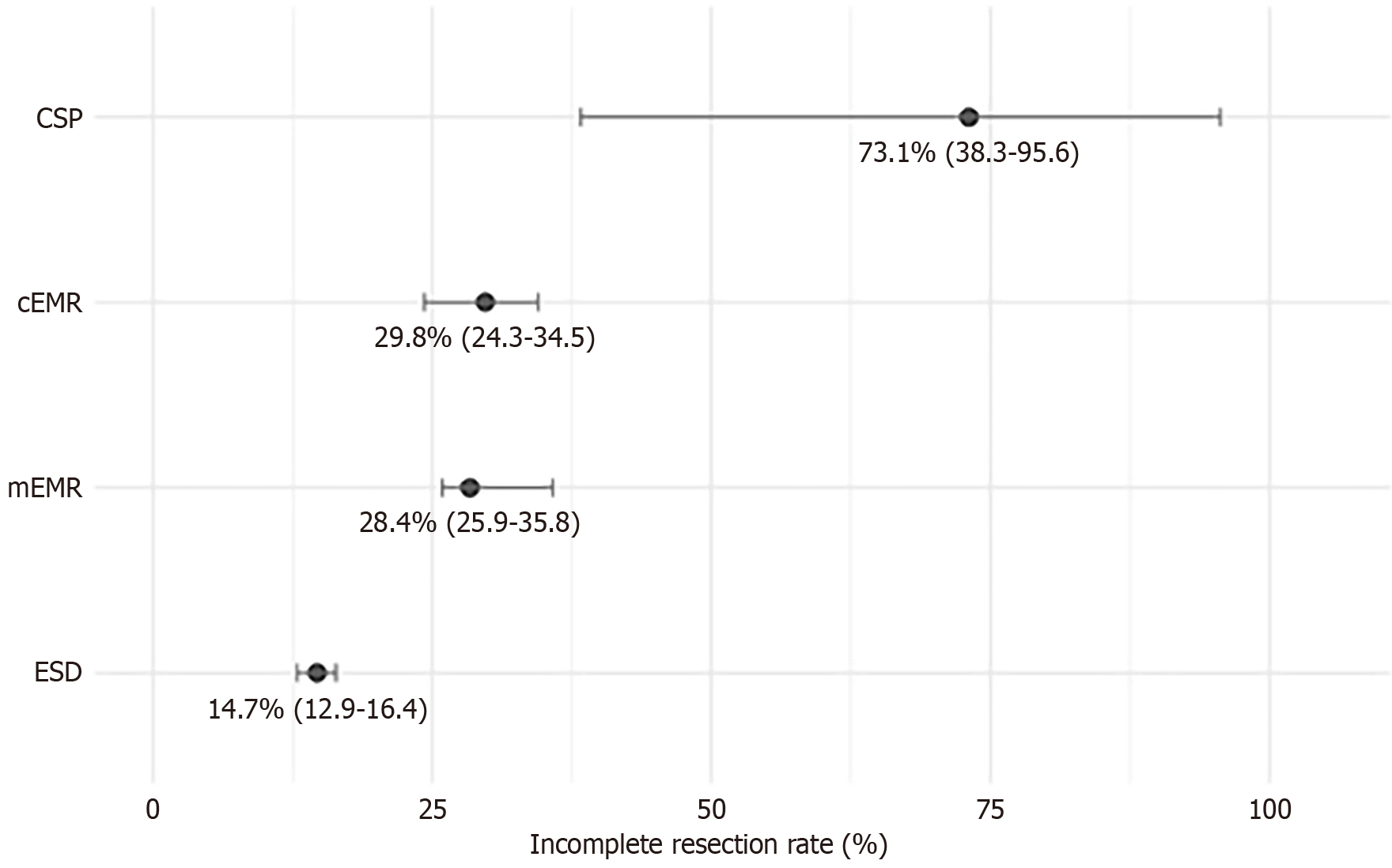
Figure 2 Incomplete resection rate by initial resection method.
The forest plot shows pooled incomplete resection rates across different primary endoscopic techniques based on 17 studies[19,20,24,27,28,30,33,34,37,40-42,46-50]. Cold snare polypectomy exhibited the highest rate (73.1%), whereas endoscopic submucosal dissection had the lowest rate (14.7%). Conventional endoscopic mucosal resection and modified endoscopic mucosal resection had intermediate incomplete resection rates. This figure emphasizes the impact of the resection technique on histological completeness. CSP: Cold snare polypectomy; cEMR: Conventional endoscopic mucosal resection; mEMR: Modified endoscopic mucosal resection; ESD: Endoscopic submucosal dissection.
- Citation: Kim JH, Lee JW, Kim HJ, Hong SM, Park SJ. Is salvage treatment necessary after incomplete resection of rectal neuroendocrine tumors: A systematic review and meta-analysis. World J Gastroenterol 2026; 32(3): 113452
- URL: https://www.wjgnet.com/1007-9327/full/v32/i3/113452.htm
- DOI: https://dx.doi.org/10.3748/wjg.v32.i3.113452