
















Copyright: ©Author(s) 2026.
World J Gastroenterol. Jun 7, 2026; 32(21): 116337
Published online Jun 7, 2026. doi: 10.3748/wjg.v32.i21.116337
Published online Jun 7, 2026. doi: 10.3748/wjg.v32.i21.116337
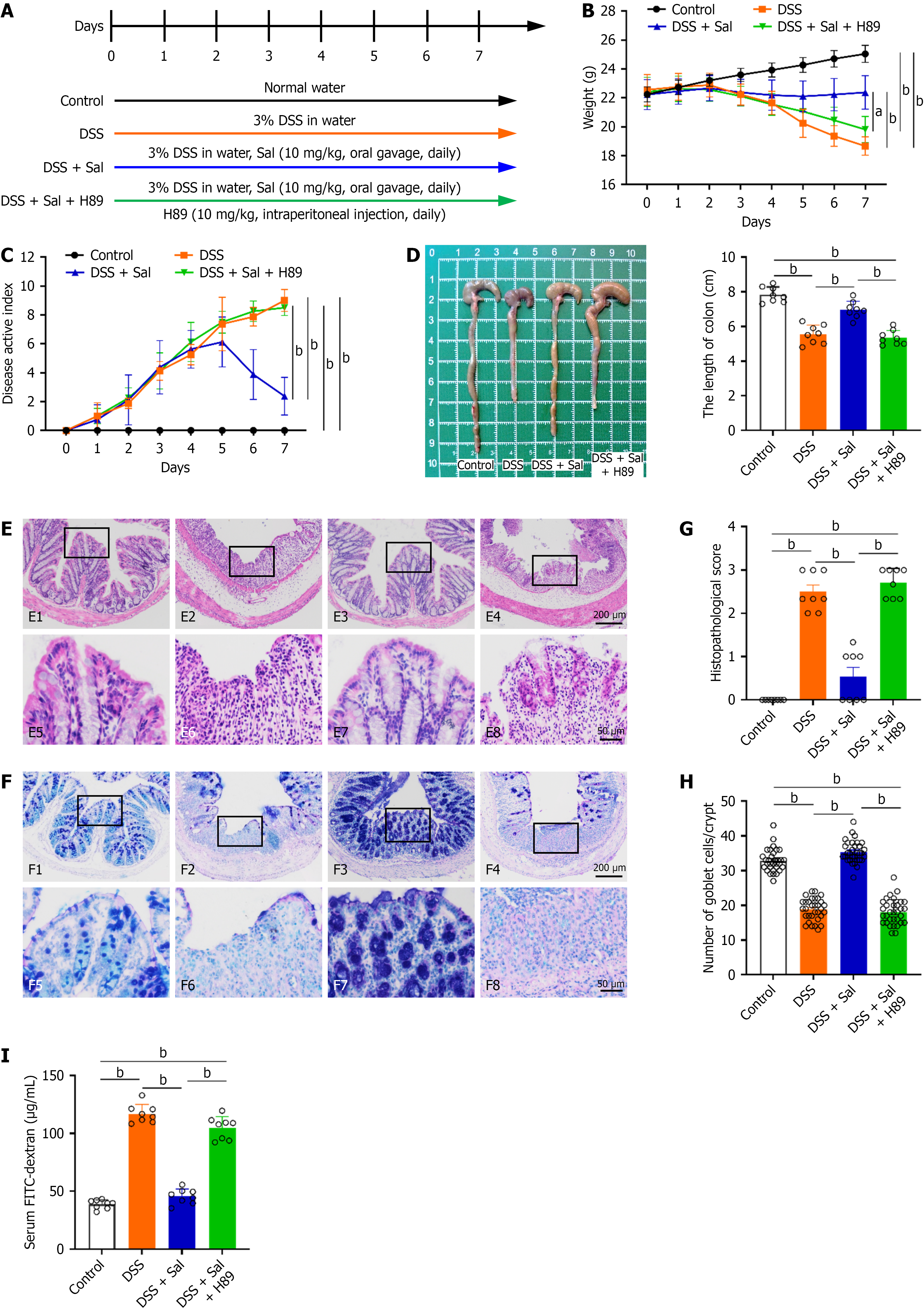
Figure 6 Salidroside alleviated the clinical symptoms and colonic injury of dextran sulfate sodium salt-induced colitis by activating the cyclic adenosine monophosphate/protein kinase A/cyclic adenosine monophosphate-response element binding protein signaling pathway.
A: Schematic of the experimental procedures; B: Changes in body weight of mice; C: Disease activity index scores; D: Comparison of colon length in each group of mice; E: Results of hematoxylin-eosin staining of mouse; F: Results of alcian blue-periodic acid Schiff staining of mouse. Control group (E1 and F1); Dextran sulfate sodium salt (DSS) group (E2 and F2); DSS + salidroside (Sal) group (E3 and F3); DSS + Sal combined with the protein kinase A inhibitor H89 (DSS + Sal + H89) group (E4 and F4); The magnified images show the corresponding black rectangle areas in greater detail (E5-E8 and F5-F8); G: Histological index scores; H: The number of goblet cells in each crypt; I: Intestinal permeability was detected by measuring serum fluorescein isothiocyanate-dextran levels. Data are shown as mean ± SEM (n = 8), P values were calculated using one-way analysis of variance with Tukey’s test for Figure 6E, H-J and two-way analysis of variance with Šídák’s multiple comparisons test for Figure 6B and C. aP < 0.05. bP < 0.01. DSS: Dextran sulfate sodium salt; Sal: Salidroside; FITC: Fluorescein isothiocyanate.
- Citation: Li Y, Tao SS, Wang Y, Sun Q, Li MY, Zhang H, Li YQ. Salidroside mitigates experimental colitis through cyclic adenosine monophosphate pathway activation and suppression of enteric glial cell responses. World J Gastroenterol 2026; 32(21): 116337
- URL: https://www.wjgnet.com/1007-9327/full/v32/i21/116337.htm
- DOI: https://dx.doi.org/10.3748/wjg.v32.i21.116337