
















©The Author(s) 2025.
World J Gastroenterol. Sep 7, 2025; 31(33): 109562
Published online Sep 7, 2025. doi: 10.3748/wjg.v31.i33.109562
Published online Sep 7, 2025. doi: 10.3748/wjg.v31.i33.109562
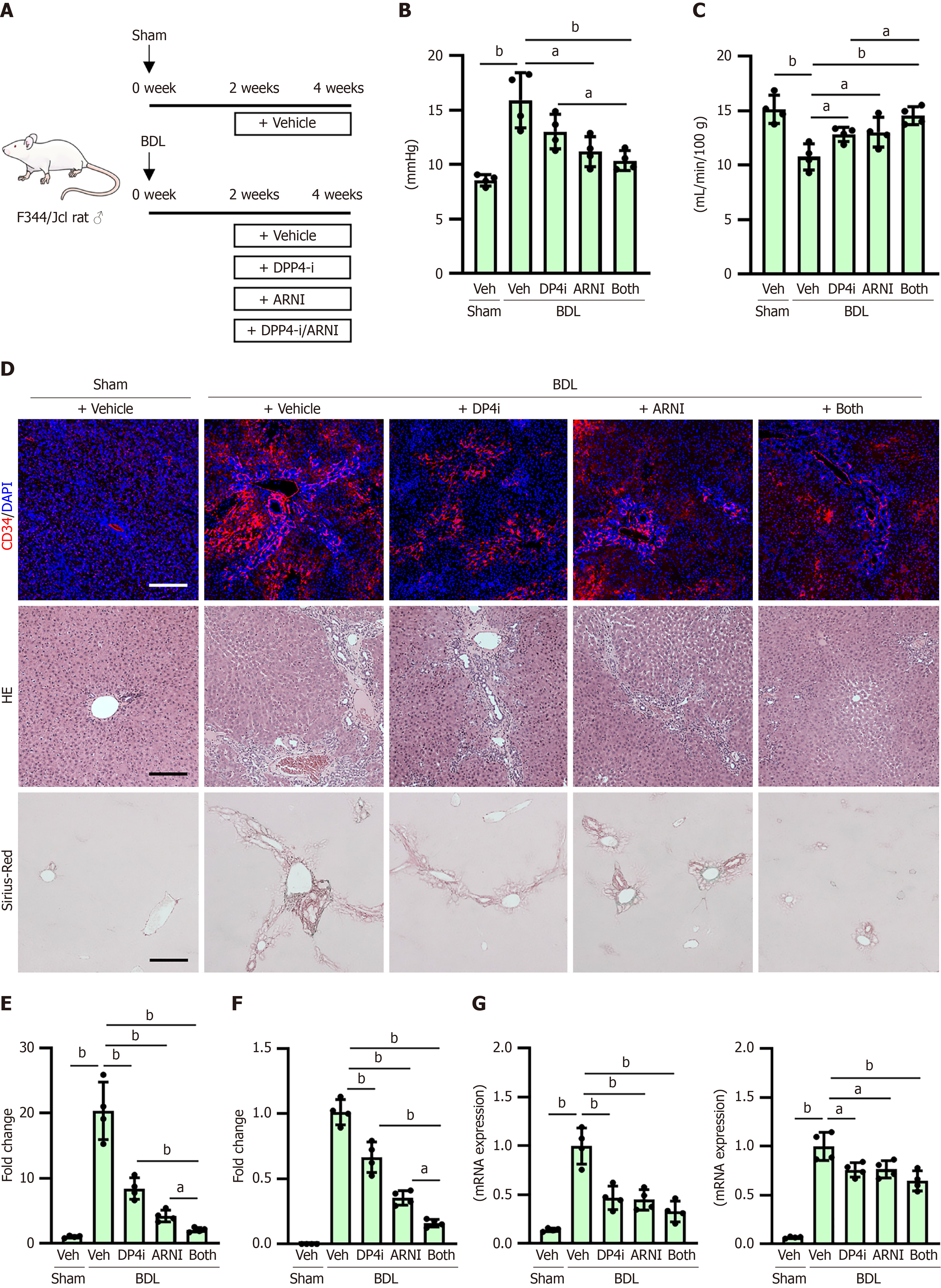
Figure 7 Portal pressure, sinusoidal capillarization and hepatic fibrosis in bile duct-ligated rats.
A: Experimental design of bile duct-ligated rats; B and C: Portal vein pressure (B) and portal blood flow (C) at the end of experiment; D: Immunofluorescence with cluster of differentiation 34, hematoxylin and eosin and Sirius-red staining in liver tissues; E: Quantification of cluster of differentiation 34-positive sinusoidal capillarization; F: Quantification of Sirius-red-stained fibrotic area; G: Hepatic message RNA (mRNA) levels of Acta2 and Col1a1. The mRNA expression levels were measured by quantitative real-time polymerase chain reaction, and glyceraldehyde-3-phosphate dehydrogenase was used as internal control. Quantitative values are indicated as fold changes to the values of sham-operated group + vehicle (saline)-treated group (E) or bile duct-ligated groups + vehicle (saline)-treated group (F and G). Data are the mean ± SD (n = 4, B, C and E-G). aP < 0.05; bP < 0.01. Significant difference between groups determined by Mann-Whitney U test. BDL: Bile duct-ligated; mRNA: Message RNA; DAPI: 4’,6-diamidino-2-phenylindole; CD34: Cluster of differentiation 34; HE: Hematoxylin and eosin; Sham: Sham-operated group; Veh: Vehicle (saline)-treated groups; DP4i: Dipeptidyl peptidase-4 inhibitor (vildagliptin)-treated group; ARNI group: Angiotensin receptor-neprilysin inhibitor (sacubitril/valsartan)-treated group; “Both group” defined dipeptidyl peptidase-4 inhibitor and angiotensin receptor-neprilysin inhibitor-treated group.
- Citation: Oyama M, Kaji K, Nishimura N, Hanatani J, Nakatani T, Nishimura N, Shibamoto A, Asada S, Tsuji Y, Kitagawa K, Sato S, Namisaki T, Yoshiji H. Dual therapy with vildagliptin and sacubitril/valsartan alleviates portal hypertension and inhibits soluble epoxide hydrolase in cirrhotic rats. World J Gastroenterol 2025; 31(33): 109562
- URL: https://www.wjgnet.com/1007-9327/full/v31/i33/109562.htm
- DOI: https://dx.doi.org/10.3748/wjg.v31.i33.109562