
















©The Author(s) 2025.
World J Gastroenterol. Sep 7, 2025; 31(33): 108653
Published online Sep 7, 2025. doi: 10.3748/wjg.v31.i33.108653
Published online Sep 7, 2025. doi: 10.3748/wjg.v31.i33.108653
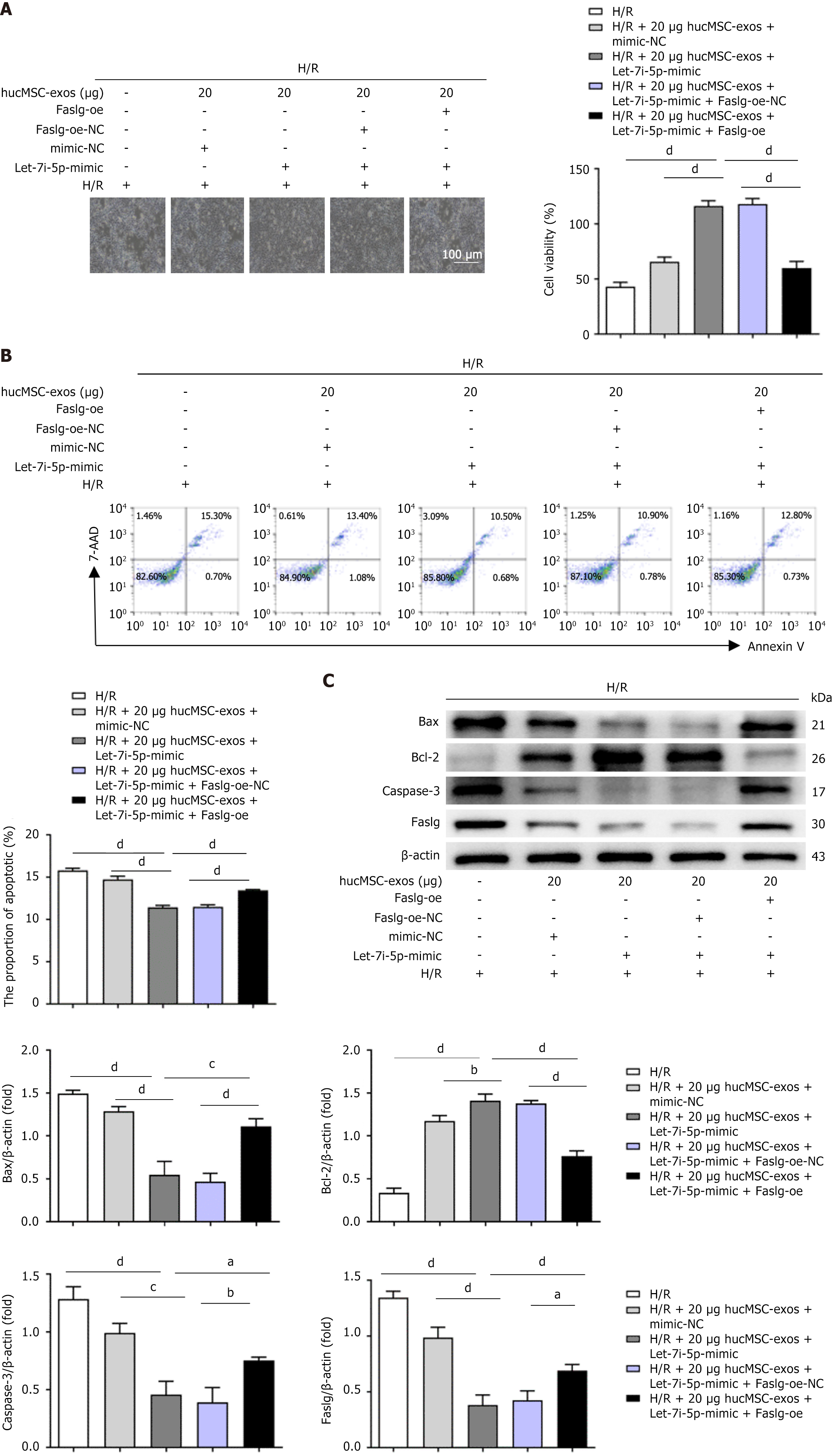
Figure 5 Let-7i-5p in human umbilical cord mesenchymal stem cell-derived exosomes affects the level of LO2 cell apoptosis after hypoxia/reoxygenation injury by regulating the expression of factor-related apoptosis ligand.
A: Representative light microscopy images of LO2 cells after hypoxia/reoxygenation (H/R) treatment in the cell rescue experiment. Scale bars: 100 μm; B: Flow cytometry analysis of the apoptosis rate of LO2 cells after H/R treatment in the cell rescue experiment; C: Western blot analysis of the protein levels of apoptosis-related markers in LO2 cells after H/R treatment in the cell rescue experiment. H/R: Hypoxia/reoxygenation; hucMSC-exos: Human umbilical cord mesenchymal stem cell-derived exosomes; Faslg-oe: Lentiviral vectors overexpressing factor-related apoptosis ligand; NC: Negative control; Bcl-2: B-cell lymphoma-2; Bax: B-cell lymphoma-2-associated X protein; Caspase-3: Cysteinyl aspartate specific proteinase-3; Faslg: Factor-related apoptosis ligand. aP < 0.05, bP < 0.01, cP < 0.001, and dP < 0.0001.
- Citation: Gao Y, He M, Bian CW, Yu R, Luo JJ, Xiang YM, Yang YX, Huang HF, Zeng Z. Exosomes derived from human umbilical cord mesenchymal stem cells attenuate hepatic ischaemia-reperfusion injury via the let-7i-5p/Faslg axis. World J Gastroenterol 2025; 31(33): 108653
- URL: https://www.wjgnet.com/1007-9327/full/v31/i33/108653.htm
- DOI: https://dx.doi.org/10.3748/wjg.v31.i33.108653