
















Copyright: ©Author(s) 2026.
World J Transl Med. Sep 28, 2026; 12(3): 124147
Published online Sep 28, 2026. doi: 10.5528/wjtm.124147
Published online Sep 28, 2026. doi: 10.5528/wjtm.124147
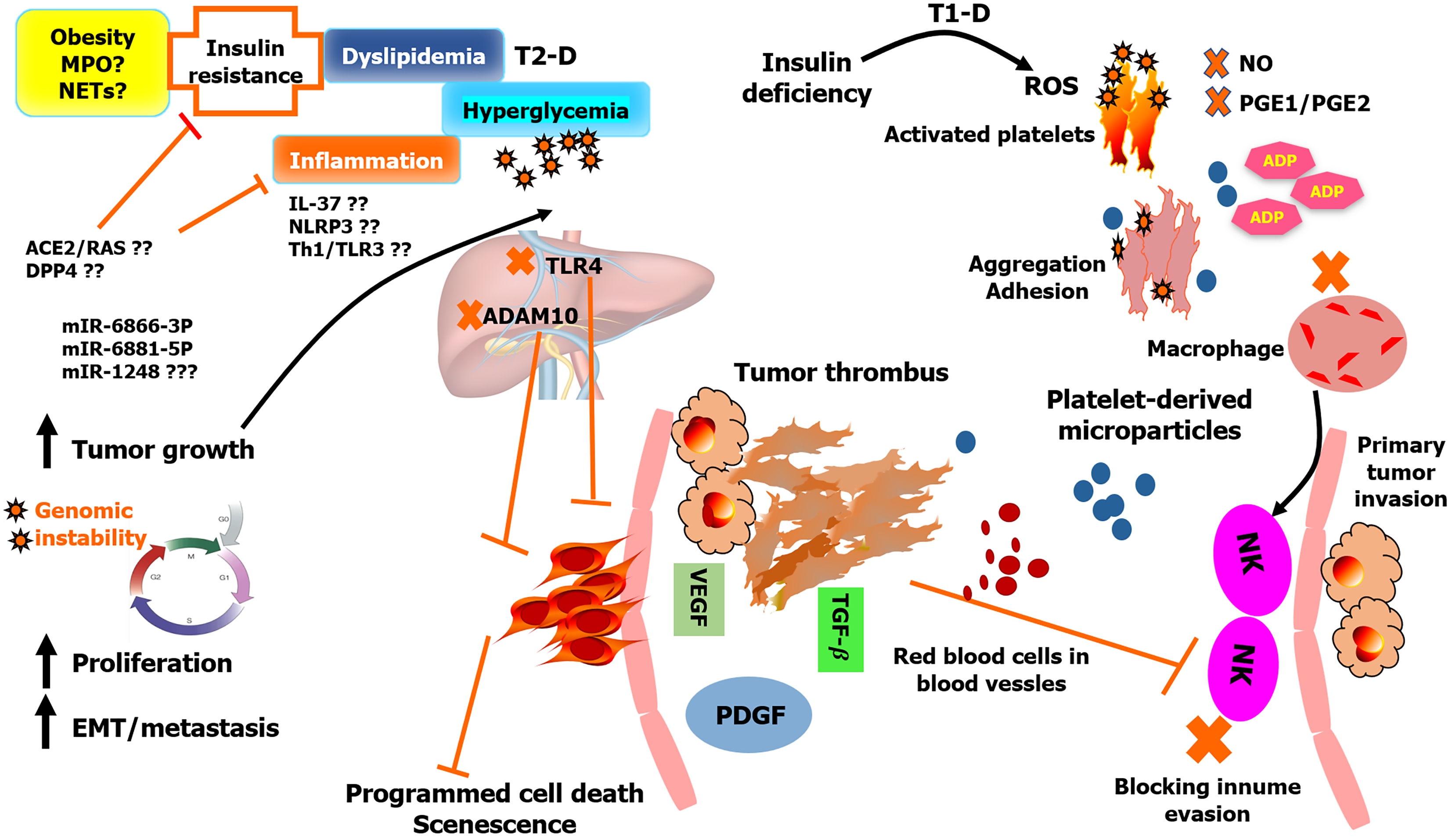
Figure 1 Schematic presentation of the interplay between factors predisposing to insulin resistance and activated platelets in patients with diabetes comorbid with cancer.
Insulin deficiency and other factors contributing to metabolic syndrome precipitate insulin resistance. This, together with increased reactive oxygen species and reduced nitric oxide and prostaglandin E1 and E2 functions, can activate platelet aggregation and the release of microparticles, proteins, and metabolites that promote proteolysis and inflammation. Such a microenvironment promotes neoplastic tissue remodeling and tumor progression. Further, circulating cancer cells facilitate platelet aggregation. Circulating tumor thrombi protect circulating tumor cells from immune cell attack. Tumor thrombi accelerate cancer cell invasion, epithelial-mesenchymal transition, and tumor plasticity. Tumor invasion and entry into the vasculature and subsequent proliferation in endothelial cells promote tumor progression. In hepatocellular carcinoma, blocking ADAM10 and knocking down TLR4 inhibited tumor growth and blocked metastasis. The roles of ACE2/RAS, DPP4, MPO, NETs, IL-37, and NOD-like receptor family pyrin domain-containing protein 3 inflammasomes in cancer progression remain unclear. Areas of research presented with question marks are to be investigated. ACE2/RAS: Angiotensin-converting enzyme 2/renin-angiotensin system; ADAM10: A-disintegrin and metalloproteinase domain-containing protein 10; ADP: Adenosine diphosphate; DPP4: Dipeptidyl peptidase 4; EMT: Epithelial-mesenchymal transition; IL: Interleukin; MPO: Myeloperoxidase; NET: Neutrophil extracellular trap; NK: Natural killer cell; NLRP3: NOD-like receptor family pyrin domain-containing protein 3; NO: Nitric oxide; PDGF: Platelet-derived growth factor; PGE1: Prostaglandin E1; PGE2: Prostaglandin E2; ROS: Reactive oxygen species; T1-D: Type 1 diabetes; T2-D: Type 2 diabetes; TGF: Transforming growth factor; Th1: T helper 1; TLR: Toll-like receptor; VEGF: Vascular endothelial growth factor.
- Citation: Johar D, Mahmoud K, Zaky S. Perspectives on the bioenergetic dysregulation in insulin-resistant patients comorbid with cancer. World J Transl Med 2026; 12(3): 124147
- URL: https://www.wjgnet.com/2220-6132/full/v12/i3/124147.htm
- DOI: https://dx.doi.org/10.5528/wjtm.124147