
















Copyright: ©Author(s) 2026.
World J Clin Oncol. Sep 24, 2026; 17(9): 125602
Published online Sep 24, 2026. doi: 10.5306/wjco.125602
Published online Sep 24, 2026. doi: 10.5306/wjco.125602
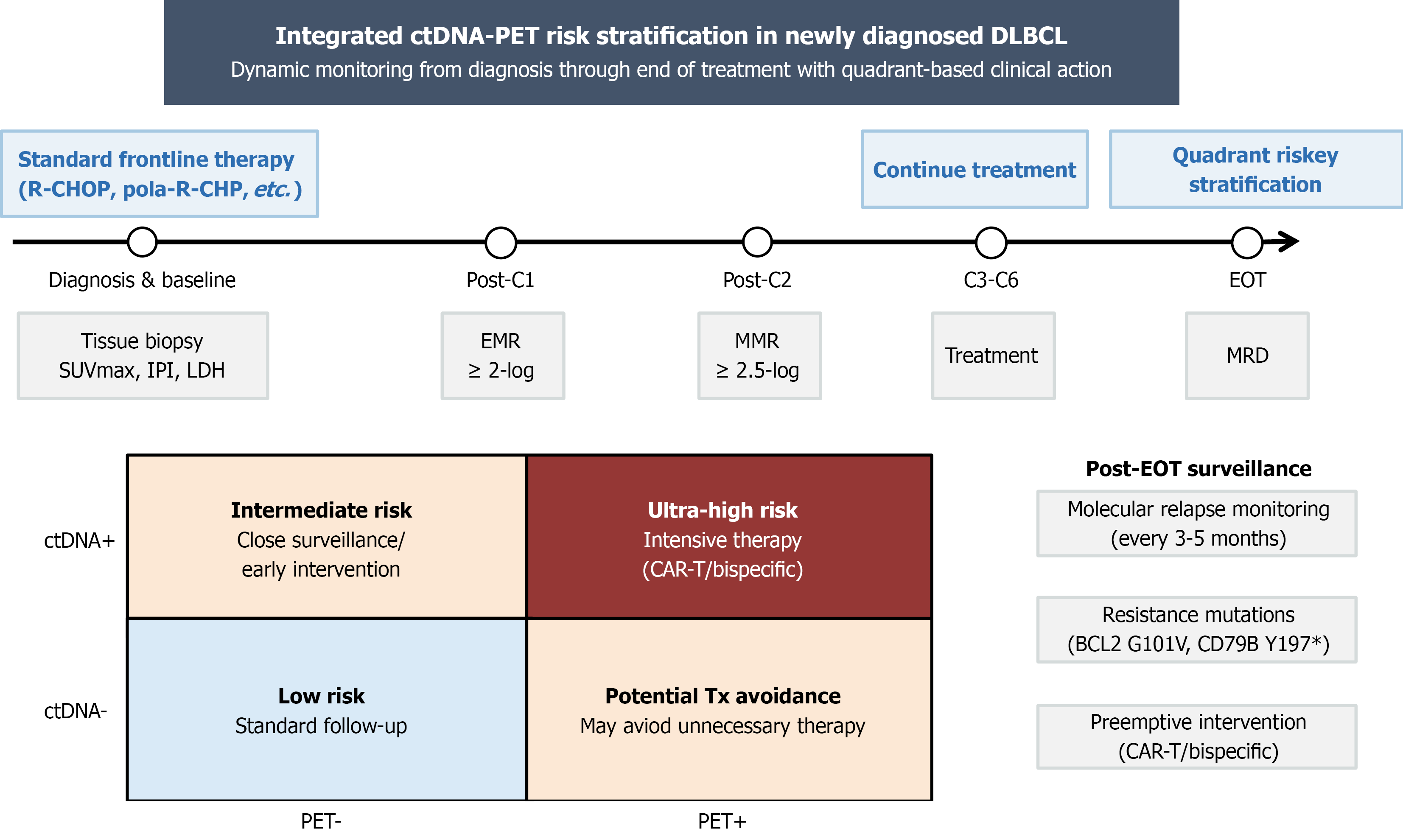
Figure 1 Clinical application pathway of circulating tumor DNA in diffuse large B-cell lymphoma.
This figure illustrates the clinical application of circulating tumor DNA (ctDNA) across the disease continuum of diffuse large B-cell lymphoma. Baseline assessment: At diagnosis, tissue biopsy for genetic profiling and blood draw for baseline ctDNA are performed. Baseline ctDNA levels correlate with tumor burden, International Prognostic Index, lactate dehydrogenase, and maximum standardized uptake value. High baseline ctDNA predicts inferior progression-free survival and overall survival [pooled hazard ratio (HR) = 2.50, 95% confidence interval: 2.15-2.90]. On-treatment monitoring: Early molecular response (≥ 2-log reduction after cycle 1) and major molecular response (≥ 2.5-log reduction after cycle 2) predict favorable event-free survival. Persistent ctDNA positivity is associated with a high risk of progression (HR = 4.0). End-of-treatment (EOT) assessment: Integration of EOT positron emission tomography/computed tomography (PET/CT) and ctDNA results enables four-quadrant risk stratification: PET-/ctDNA- (dual remission) → routine follow-up; PET-/ctDNA+ (high-risk subgroup, specificity 90.8%) → consider consolidation therapy; PET+/ctDNA- (possible inflammatory lesions, negative likelihood ratio = 0.15) → avoid unnecessary biopsy; PET+/ctDNA+ (true residual disease) → intensified therapy. Post-treatment surveillance: Serial ctDNA monitoring detects molecular relapse 3-6 months before radiographic progression and identifies resistance mutations (e.g., BCL2 G101V, CD79B Y197*/E196*), enabling preemptive intervention with chimeric antigen receptor T-cell therapy, bispecific antibodies, or novel targeted agents. Timeline: Diagnosis → cycle 1-2 → cycle 3-6 → EOT (PET/CT) → follow-up (every 3-6 months). Figure 1 was created by the authors using Microsoft PowerPoint. No third-party copyrighted materials were used. R-CHOP: Rituximab, cyclophosphamide, doxorubicin, vincristine, and prednisone; pola-R-CHP: Polatuzumab vedotin combined with rituximab, cyclophosphamide, doxorubicin, and prednisolone; ctDNA: Circulating tumor DNA; PET: Positron emission tomography; SUVmax: Maximum standardized uptake value; IPI: Prognostic index; LDH: Lactate dehydrogenase; EMR: Early molecular response; MMR: Major molecular response; MRD: Minimal residual disease; EOT: End-of-treatment; CAR-T: Chimeric antigen receptor T-cell.
- Citation: Guo BL, Lei HK, Liu Y. Precision medicine in diffuse large B-cell lymphoma: Integrating molecular biomarkers, targeted therapies, and prognostic tools. World J Clin Oncol 2026; 17(9): 125602
- URL: https://www.wjgnet.com/2218-4333/full/v17/i9/125602.htm
- DOI: https://dx.doi.org/10.5306/wjco.125602