
















Copyright: ©Author(s) 2026.
World J Clin Oncol. Sep 24, 2026; 17(9): 124498
Published online Sep 24, 2026. doi: 10.5306/wjco.124498
Published online Sep 24, 2026. doi: 10.5306/wjco.124498
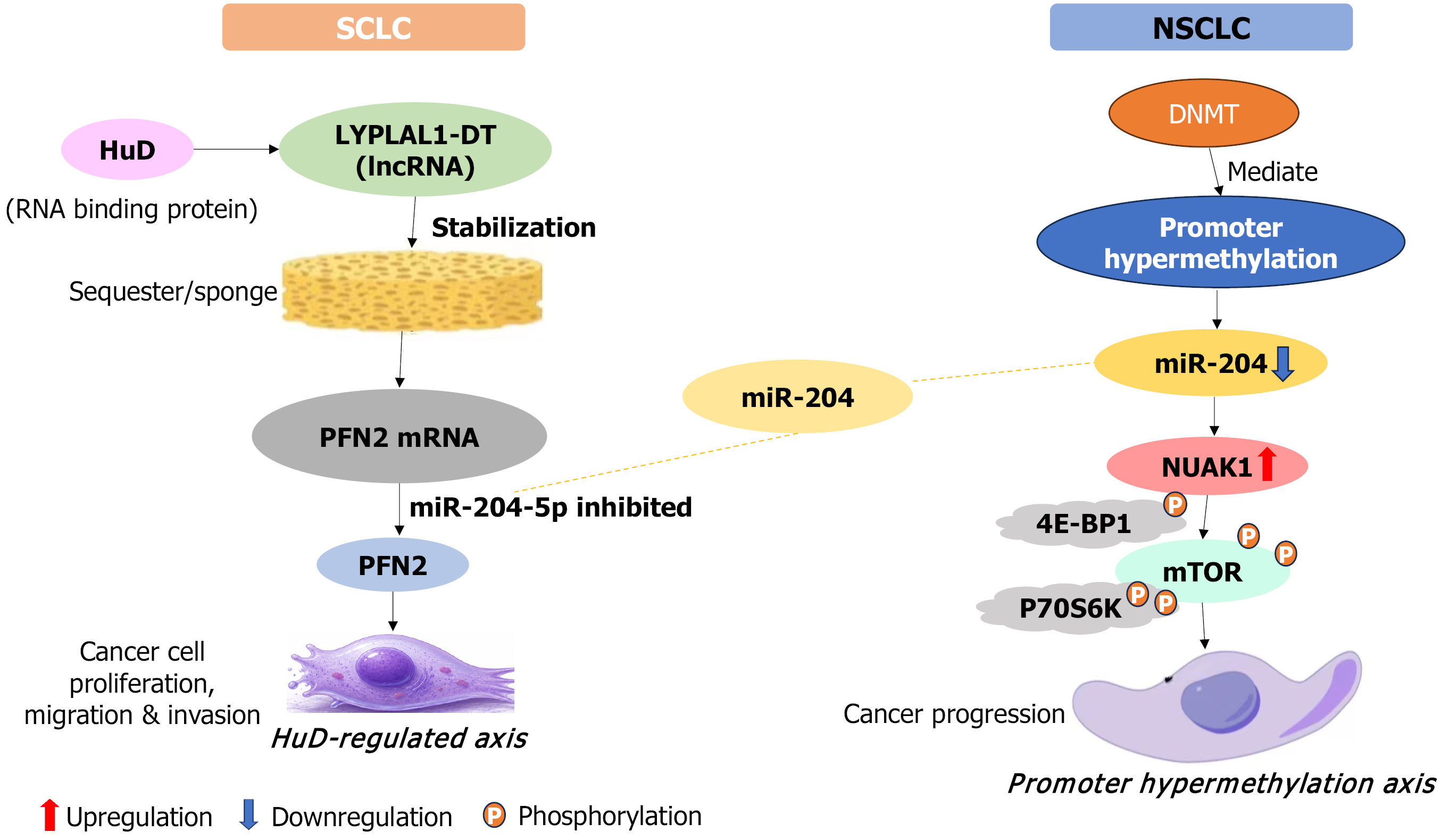
Figure 1 Dual-track regulatory mechanisms of miR-204 inactivation in small cell lung cancer and non-small cell lung cancer.
In small cell lung cancer (left panel), HuD binds to and stabilizes both the oncogenic LYPLAL1-DT (lncRNA) and PFN2 mRNA. LYPLAL1-DT functions as a competing endogenous RNA that indirectly inhibits miR-204-5p, thereby relieving miR-204-5p-mediated repression of PFN2. Elevated PFN2 promotes actin cytoskeletal remodeling, cancer cell proliferation, migration, and invasion. HuD further stabilizes PFN2 mRNA, forming a self-amplifying positive-feedback loop. In non-small cell lung cancer (right panel), DNMT-mediate promoter hypermethylation, directly suppressing miR-204 transcription, leading to NUAK1 upregulation. It activates the mTOR signaling cascade, leading to phosphorylation of 4E-BP1 and p70S6K1, enhanced protein synthesis and cancer progression. The both pathways converge on loss of miR-204 function despite distinct upstream mechanisms. SCLC: Small cell lung cancer; NSCLC: Non-small cell lung cancer.
- Citation: Zhang XL, Zhu JY, Yang JL, Du LL, Tian KW, Zhang JG, Li XP. Recent advances on regulatory roles of HuD and promoter hypermethylation for miR-204 in lung cancer development. World J Clin Oncol 2026; 17(9): 124498
- URL: https://www.wjgnet.com/2218-4333/full/v17/i9/124498.htm
- DOI: https://dx.doi.org/10.5306/wjco.124498