
















Copyright: ©Author(s) 2026.
World J Biol Chem. Sep 5, 2026; 17(3): 121278
Published online Sep 5, 2026. doi: 10.4331/wjbc.121278
Published online Sep 5, 2026. doi: 10.4331/wjbc.121278
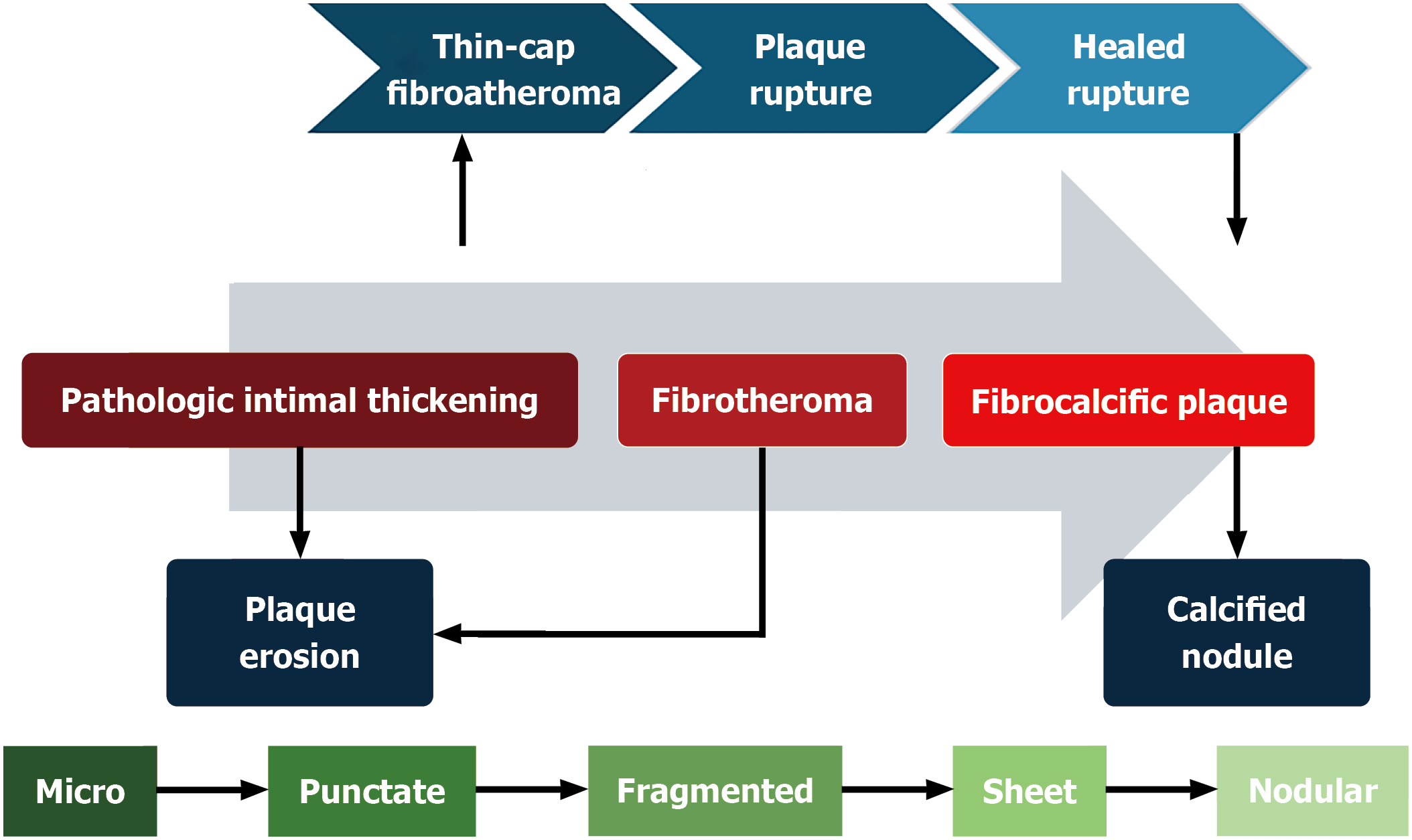
Figure 1 Evolution of coronary atherosclerotic plaque and calcification patterns.
Representation of the progression of coronary artery disease from pathologic intimal thickening to fibroatheroma and ultimately fibrocalcific plaque. Early stages are characterized by microcalcifications, which evolve into punctate and fragmented deposits, eventually forming sheet-like and nodular calcification. Plaque destabilization may occur at the fibroatheroma stage, leading to thin-cap fibroatheroma and plaque rupture, followed by healing and transition to fibrocalcific plaque. Plaque erosion may arise from earlier stages, while calcified nodules typically develop from advanced fibrocalcific plaques and may contribute to thrombotic events (10).
- Citation: Ktenopoulos N, Apostolos A, Theodoropoulou T, Karakasis P, Iliakis P, Tsiamis N, Milaras N, Skalidis I, Evdaimon K, Sagris M, Drakopoulou M, Synetos A, Latsios G, Tsioufis K, Toutouzas K. Calcified coronary artery disease: Mechanisms, risk factors and clinical consequences. World J Biol Chem 2026; 17(3): 121278
- URL: https://www.wjgnet.com/1949-8454/full/v17/i3/121278.htm
- DOI: https://dx.doi.org/10.4331/wjbc.121278