
















Copyright: ©Author(s) 2026.
World J Gastrointest Oncol. Dec 15, 2026; 18(12): 124379
Published online Dec 15, 2026. doi: 10.4251/wjgo.124379
Published online Dec 15, 2026. doi: 10.4251/wjgo.124379
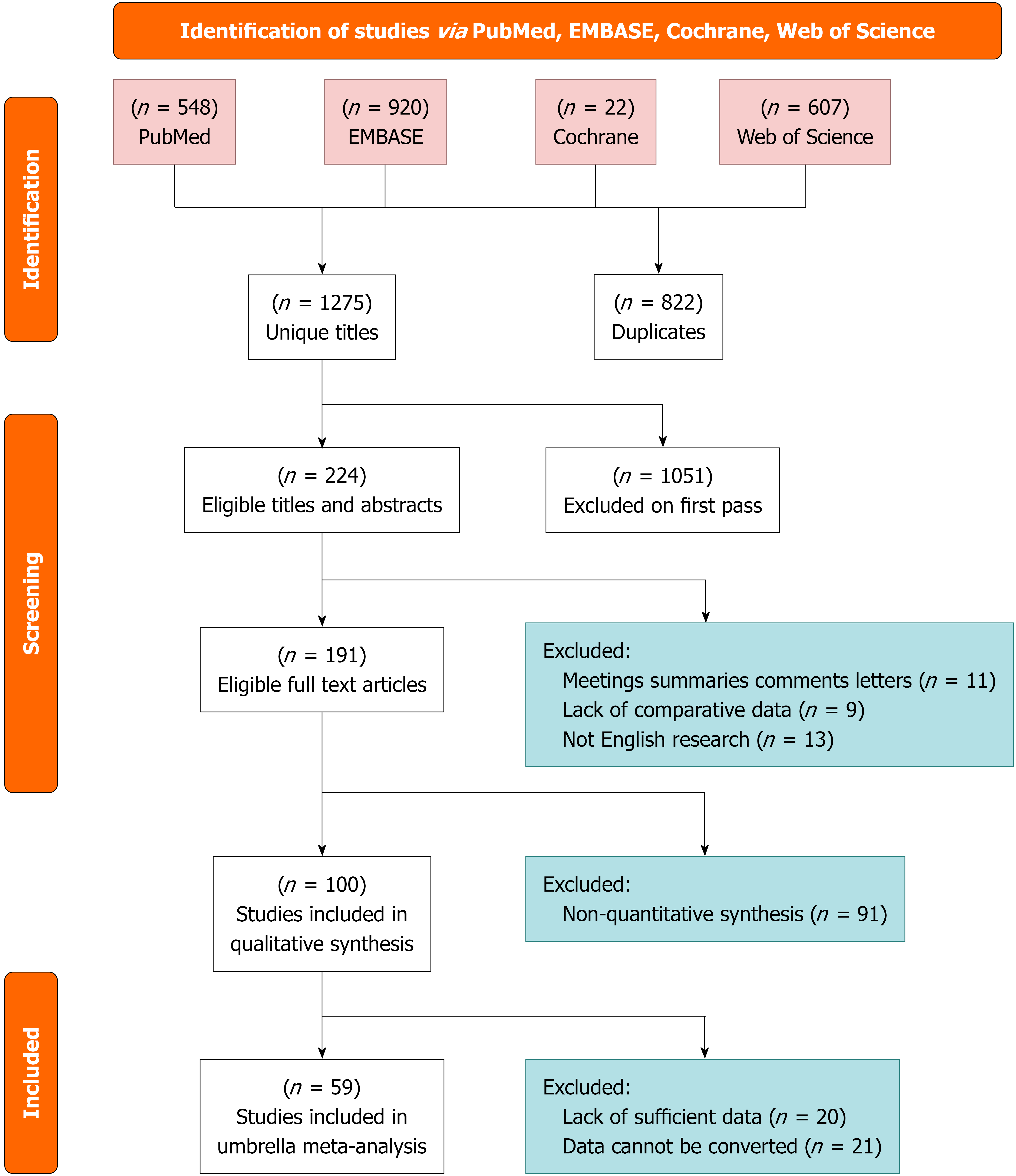
Figure 1
Flow diagram of study selection.
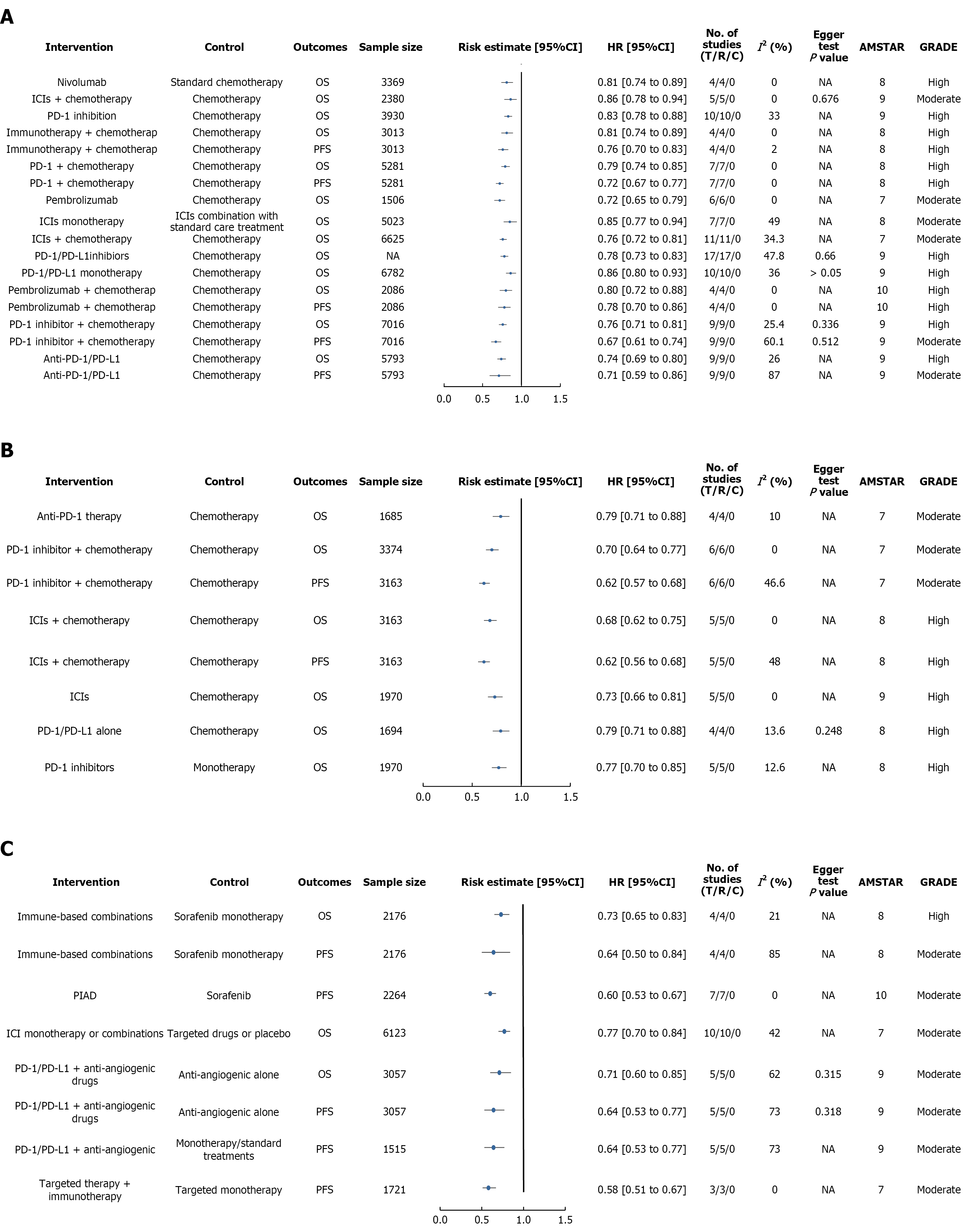
Figure 2 Forest plots of the efficacy of immune checkpoint inhibitors in the treatment of digestive system cancers.
A: Gastric cancer. This forest plot summarizes the pooled (hazard ratios) with 95% confidence intervals for overall survival and progression-free survival outcomes from included meta-analyses evaluating immune checkpoint inhibitors in patients with advanced gastric or gastroesophageal junction cancer. Interventions include programmed cell death protein 1/programmed death ligand 1 (PD-1/PD-L1) inhibitors (nivolumab, pembrolizumab) administered as monotherapy or in combination with chemotherapy, compared against chemotherapy alone or standard care. Each row represents a distinct meta-analysis, with sample sizes ranging from 1506 to 7016 participants. Effect estimates were derived using either fixed-effects or random-effects models as indicated. The AMSTAR (a measurement tool to assess systematic reviews) scores and grading of recommendations assessment, development, and evaluation evidence ratings are provided for each outcome (GRADE); B: Esophageal cancer. This forest plot displays the pooled hazard ratios with 95% confidence intervals for overall survival and progression-free survival outcomes from included meta-analyses evaluating immune checkpoint inhibitors in patients with advanced esophageal squamous cell carcinoma or esophageal cancer. Interventions include PD-1/PD-L1 inhibitors administered as monotherapy or in combination with chemotherapy, compared against chemotherapy alone. Sample sizes range from 1685 to 3374 participants. Effect estimates were derived using fixed-effects or random-effects models. AMSTAR scores and GRADE evidence ratings are shown for each outcome; C: Hepatocellular carcinoma. This forest plot illustrates the pooled hazard ratios with 95% confidence intervals for overall survival and progression-free survival outcomes from included meta-analyses evaluating immune checkpoint inhibitors in patients with advanced or unresectable hepatocellular carcinoma. Interventions include immune-based combinations (e.g., PD-1/PD-L1 inhibitors plus anti-angiogenic agents or tyrosine kinase inhibitors), PD-1/PD-L1 inhibitors combined with anti-angiogenic drugs, and immune checkpoint inhibitor monotherapy or combinations, compared against sorafenib monotherapy, targeted drugs, or placebo. Sample sizes range from 1515 to 6123 participants. Effect estimates were derived using fixed-effects or random-effects models. AMSTAR scores and GRADE evidence ratings are provided for each outcome. HR: Hazard ratio; CI: Confidence interval; T: Total number of studies; R: Random control trials; C: Cohort studies; GRADE: Grading of recommendations assessment, development, and evaluation; OS: Overall survival; PFS: Progression-free survival; NA: Not applicable; ICI: Immune checkpoint inhibitor; PD-1: Programmed cell death-1; PD-L1: Programmed death ligand-1; PIAD: Programmed cell death protein 1/programmed death ligand 1 inhibitors combined with anti-angiogenic drugs.
- Citation: Yu JJ, Zhu L, Li XP, Wang LP, Meng FG, Sui WX, Feng XJ, Sui YY, Leng P, Yu JM. Efficacy and safety of immune checkpoint inhibitors in the treatment of digestive system cancers: An umbrella review. World J Gastrointest Oncol 2026; 18(12): 124379
- URL: https://www.wjgnet.com/1948-5204/full/v18/i12/124379.htm
- DOI: https://dx.doi.org/10.4251/wjgo.124379