











Copyright: ©Author(s) 2026.
World J Hepatol. Nov 27, 2026; 18(11): 126177
Published online Nov 27, 2026. doi: 10.4254/wjh.126177
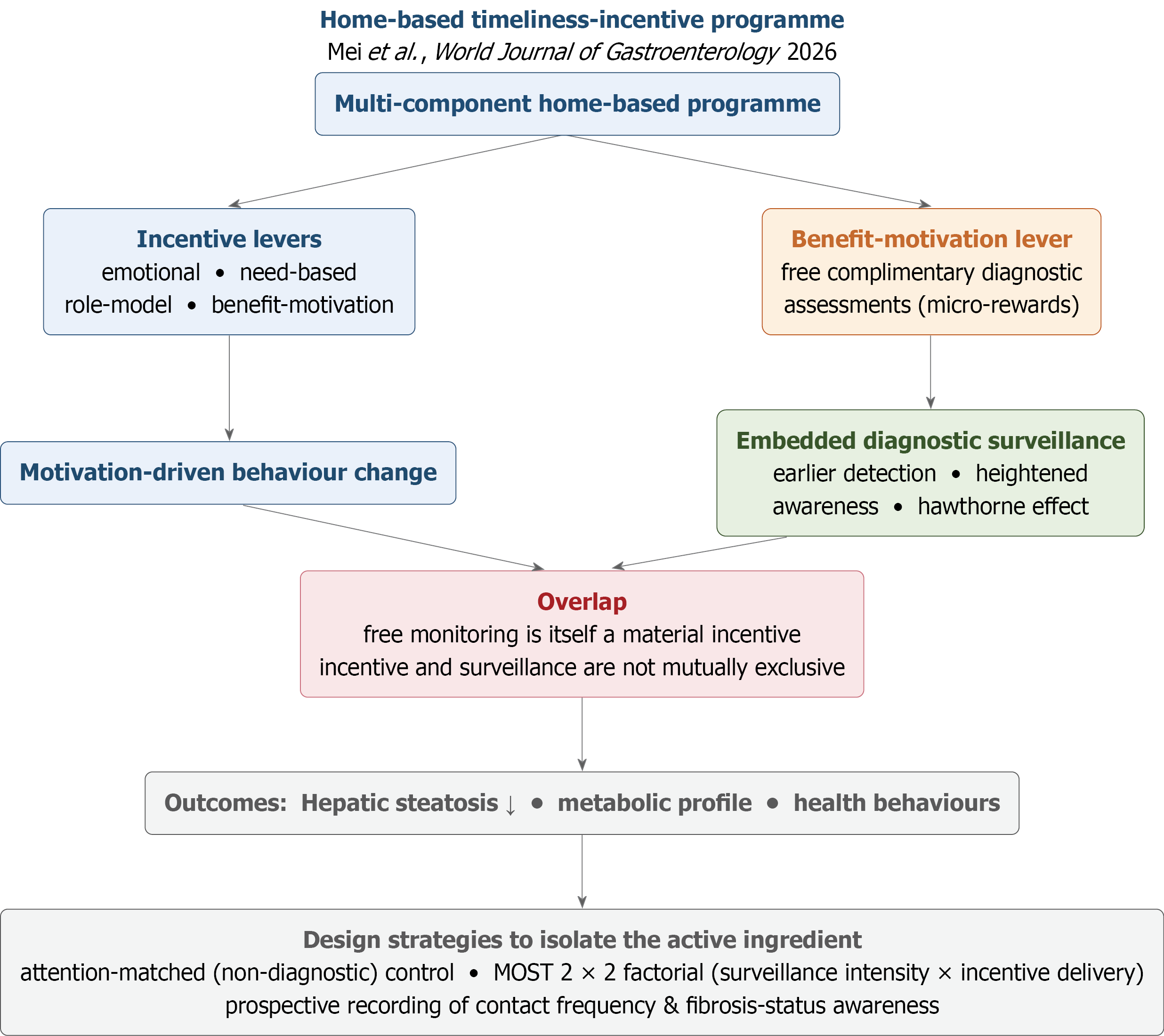
Figure 1 Conceptual causal pathways linking a home-based timeliness-incentive programme to health outcomes in metabolic dys function-associated steatotic liver disease.
The intervention is depicted as two interlinked, non-exclusive components: The incentive levers (emotional, need-based, role-model, and benefit-motivation) and the embedded diagnostic surveillance delivered through the benefit-motivation lever. Each component may improve outcomes through distinct mechanisms. The overlap region indicates that free diagnostic monitoring is itself a material incentive, so that incentive and surveillance are not mutually exclusive. Design strategies for isolating the active ingredient, including an attention-matched control, a multiphase optimization strategy factorial, and prospective recording of contact frequency and awareness of fibrosis status, are listed at the bottom. MOST: Multiphase optimization strategy.
- Citation: Yang ZC, Wang JT, Ren ZG. Letter to the Editor: Unpacking the active ingredient of home-based metabolic dysfunction-associated steatotic liver disease care: Separating incentive from surveillance effects. World J Hepatol 2026; 18(11): 126177
- URL: https://www.wjgnet.com/1948-5182/full/v18/i11/126177.htm
- DOI: https://dx.doi.org/10.4254/wjh.126177