
















Copyright: ©Author(s) 2026.
World J Gastroenterol. Nov 28, 2026; 32(44): 122250
Published online Nov 28, 2026. doi: 10.3748/wjg.122250
Published online Nov 28, 2026. doi: 10.3748/wjg.122250
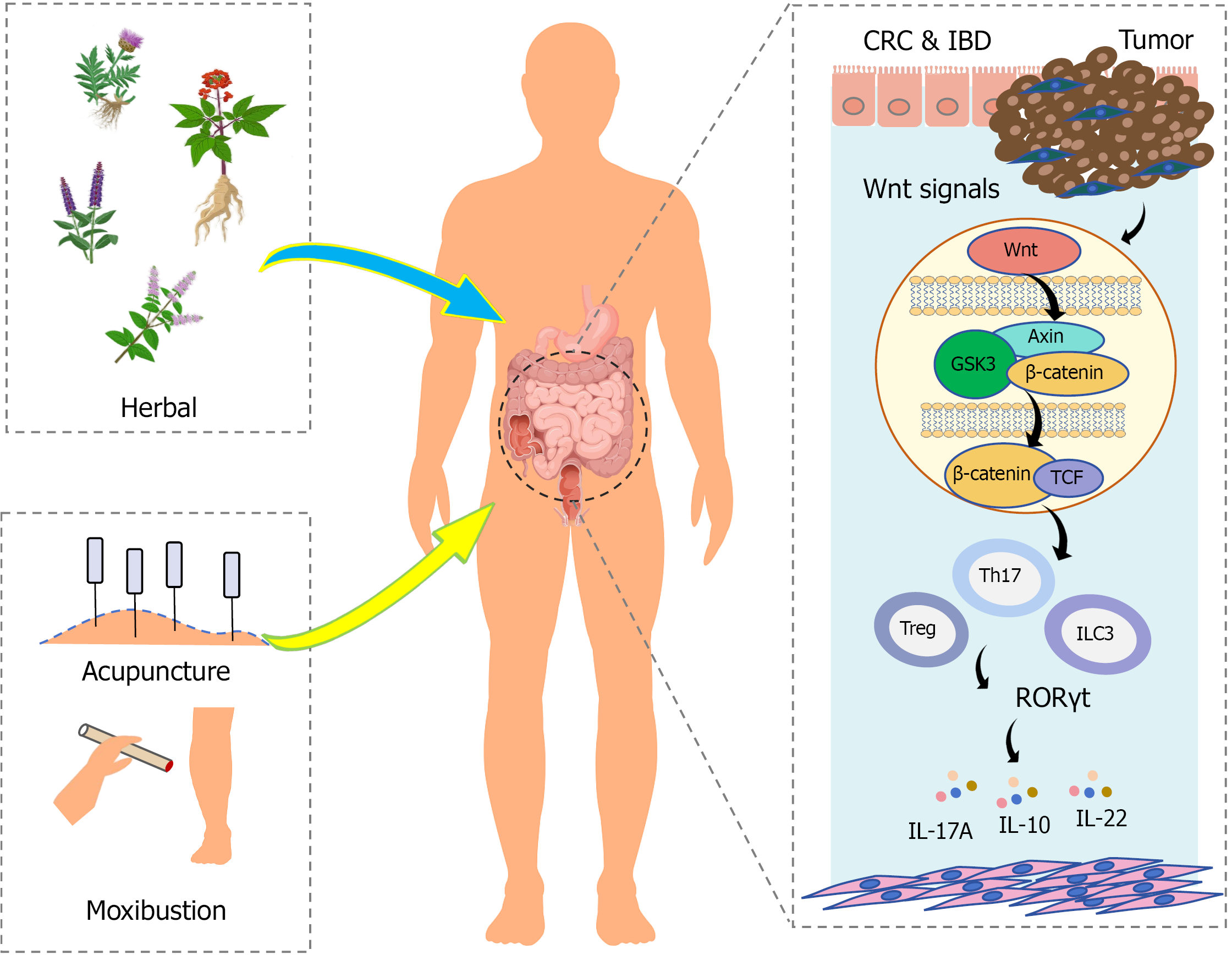
Figure 1 Schematic diagram of herbal acupuncture and moxibustion intervention in inflammatory bowel disease through Wnt signaling pathway.
The left panel illustrates three representative traditional Chinese medicine interventions—herbal medicine, acupuncture, and moxibustion—which target the intestinal tract. The enlarged view of the intestinal microenvironment on the right shows that, in the pathological states of colorectal cancer (CRC) and inflammatory bowel disease (IBD), tumor tissues abnormally activate the Wnt signaling pathway: Wnt ligands inhibit the degradation of β-catenin by the Axin/GSK3β complex, promoting the entry of β-catenin into the cell nucleus and activating the T-cell factor transcription factor; simultaneously, dysregulation of this pathway modulates immune cells such as Th17, Treg, and ILC3, mediating the secretion of cytokines including interleukin (IL)-17A, IL-10, and IL-22 via RORγt, thereby influencing intestinal inflammation and tumor progression. The schematic diagram illustrates how traditional Chinese medicine can improve the intestinal pathological microenvironment by targeting the Wnt pathway and immune networks, thereby demonstrating its potential for the prevention and treatment of CRC and IBD. CRC: Colorectal cancer; IBD: Inflammatory bowel disease; TCF: T-cell factor; IL: Interleukin. Adapted from WPS Docer Image Library, by Kingsoft Office (Supplementary material).
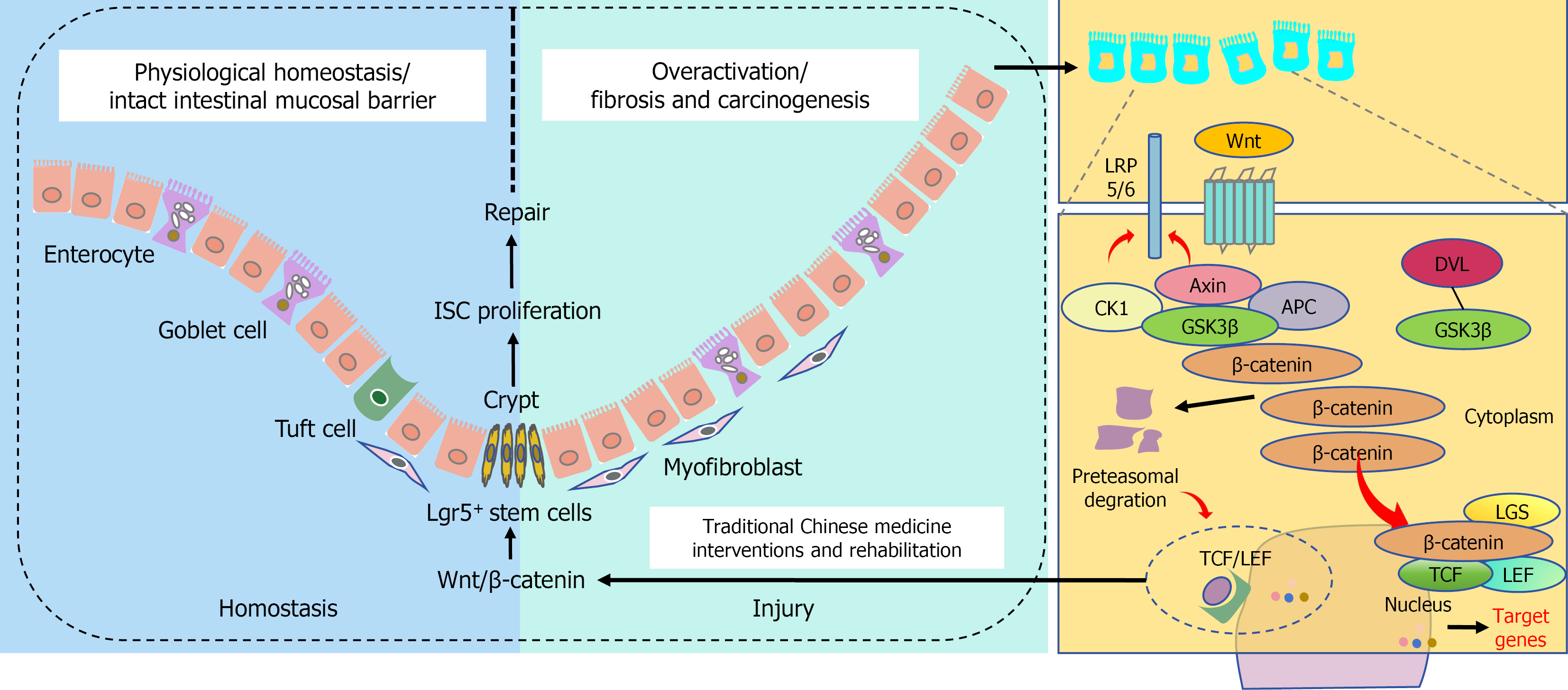
Figure 2 The role of the Wnt/β-catenin signaling pathway in maintaining intestinal homeostasis and repairing damage, and the regulatory mechanisms of traditional Chinese medicine interventions.
The left panel shows the normal intestinal crypt structure. Under physiological conditions, the Wnt/β-catenin pathway maintains the proliferation of Lgr5+ intestinal stem cells, drives the renewal of intestinal epithelial cells (including intestinal epithelial cells, goblet cells, and cluster cells), and ensures the integrity of the intestinal mucosal barrier. When the intestine is damaged, this pathway becomes overactivated, which can induce fibrosis and carcinogenesis. The right panel illustrates the molecular mechanism of the Wnt/β-catenin pathway: Β-catenin is ubiquitinated by a degradation complex composed of casein kinase 1, GSK3β, adenomatous polyposis coli, and Axin, and subsequently degraded by the proteasome; When Wnt ligands bind to the lipoprotein receptor-related protein 5/6 receptors on the cell membrane, DVL is activated and inhibits the activity of the degradation complex, allowing β-catenin to accumulate in the cytoplasm and translocate into the nucleus, where it binds to T-cell factor/Lymphotactic factor binding factor transcription factors to regulate the expression of target genes. Traditional Chinese medicine interventions can target this pathway to regulate intestinal stem cell proliferation and epithelial repair, reverse abnormal activation in damaged states, and restore intestinal physiological homeostasis. ISC: Intestinal Stem Cell; LRP5/6: Lipoprotein receptor-related protein 5/6; CK1: Casein Kinase 1; APC: Adenomatous polyposis coli; TCF: T-cell factor; LEF: Lymphotactic factor binding factor.
- Citation: Lu XX, Li X, Tian HJ, Li XH. Targeting the Wnt/β-catenin pathway in inflammatory bowel disease: Mechanisms and challenges of traditional Chinese medicine treatment. World J Gastroenterol 2026; 32(44): 122250
- URL: https://www.wjgnet.com/1007-9327/full/v32/i44/122250.htm
- DOI: https://dx.doi.org/10.3748/wjg.122250