















©The Author(s) 2025.
World J Clin Cases. Nov 16, 2025; 13(32): 104208
Published online Nov 16, 2025. doi: 10.12998/wjcc.v13.i32.104208
Published online Nov 16, 2025. doi: 10.12998/wjcc.v13.i32.104208
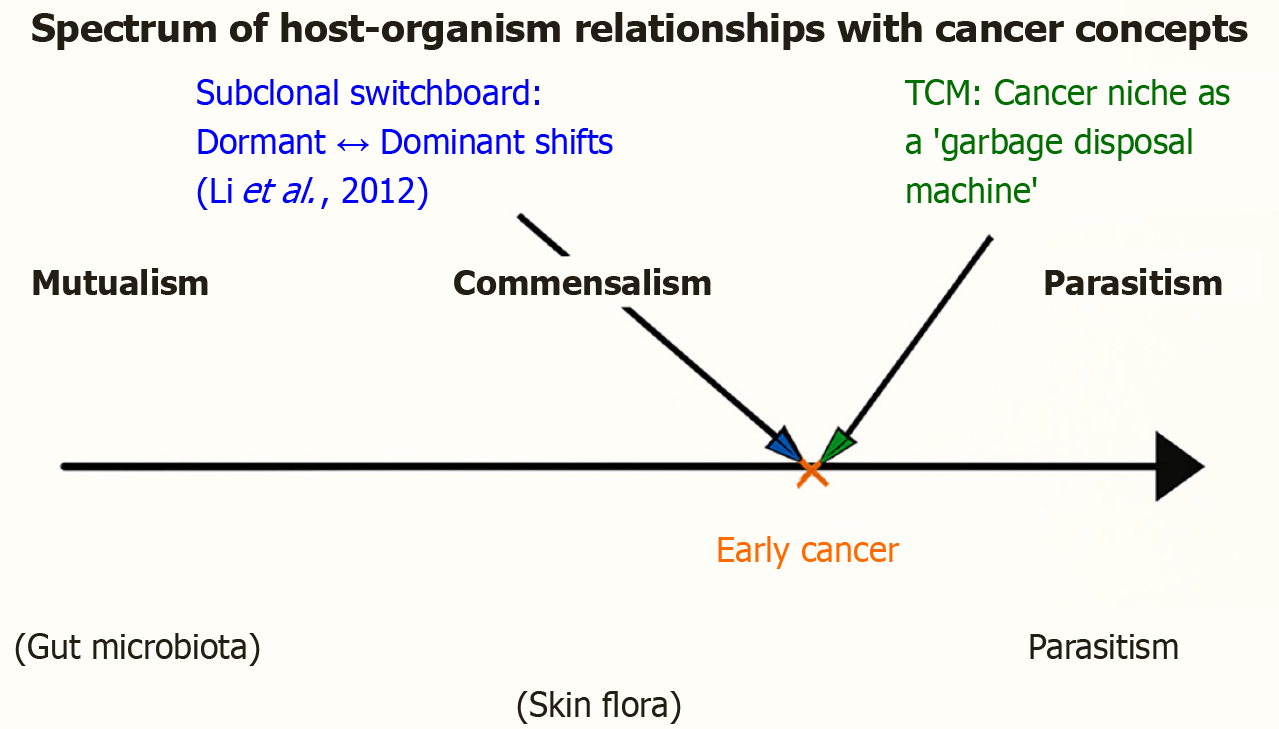
Figure 4 Spectrum of host-organism relationships, applied to cancer.
The continuum of biological interactions ranges from mutualism (benefiting both partners; e.g., gut microbiota), through commensalism (benefiting one partner without harming the other; e.g., skin flora), to parasitism (benefiting one at the expense of the other; e.g., malaria parasite). Early cancer is positioned closer to parasitism but not at the extreme, reflecting its dual role as both a host threat and a potential trainer of immunity. Two conceptual frameworks are overlaid: (1) Cancer niche as a “garbage disposal machine”, Li et al[72], 2019, for subclones, Li et al[73], 2012; green annotation: Highlighting how tumors may buffer metabolic imbalance and function transiently as regulatory sinks within the body-disease continuum, echoing traditional Chinese medicine concepts of balance; and (2) Subclonal switchboard signaling, Li et al[73], 2012; blue annotation: Emphasizing that dominant and dormant cancer subclones dynamically exchange roles, shifting the tumor’s position along the spectrum and driving progression or recurrence. Together, these perspectives reframe cancer not merely as a destructive parasite, but as part of a coevolutionary dialogue with the host, spanning the continuum of mutualism, commensalism, and parasitism.
- Citation: Lee HM, Li SC. Rethinking p16, p53, and HPV in HNCSCC through lessons from glioblastoma subclonal evolution toward patient-centric N-of-1 single-cell RNA sequencing paradigm. World J Clin Cases 2025; 13(32): 104208
- URL: https://www.wjgnet.com/2307-8960/full/v13/i32/104208.htm
- DOI: https://dx.doi.org/10.12998/wjcc.v13.i32.104208