
















Copyright: ©Author(s) 2026.
World J Methodol. Sep 20, 2026; 16(3): 121456
Published online Sep 20, 2026. doi: 10.5662/wjm.121456
Published online Sep 20, 2026. doi: 10.5662/wjm.121456
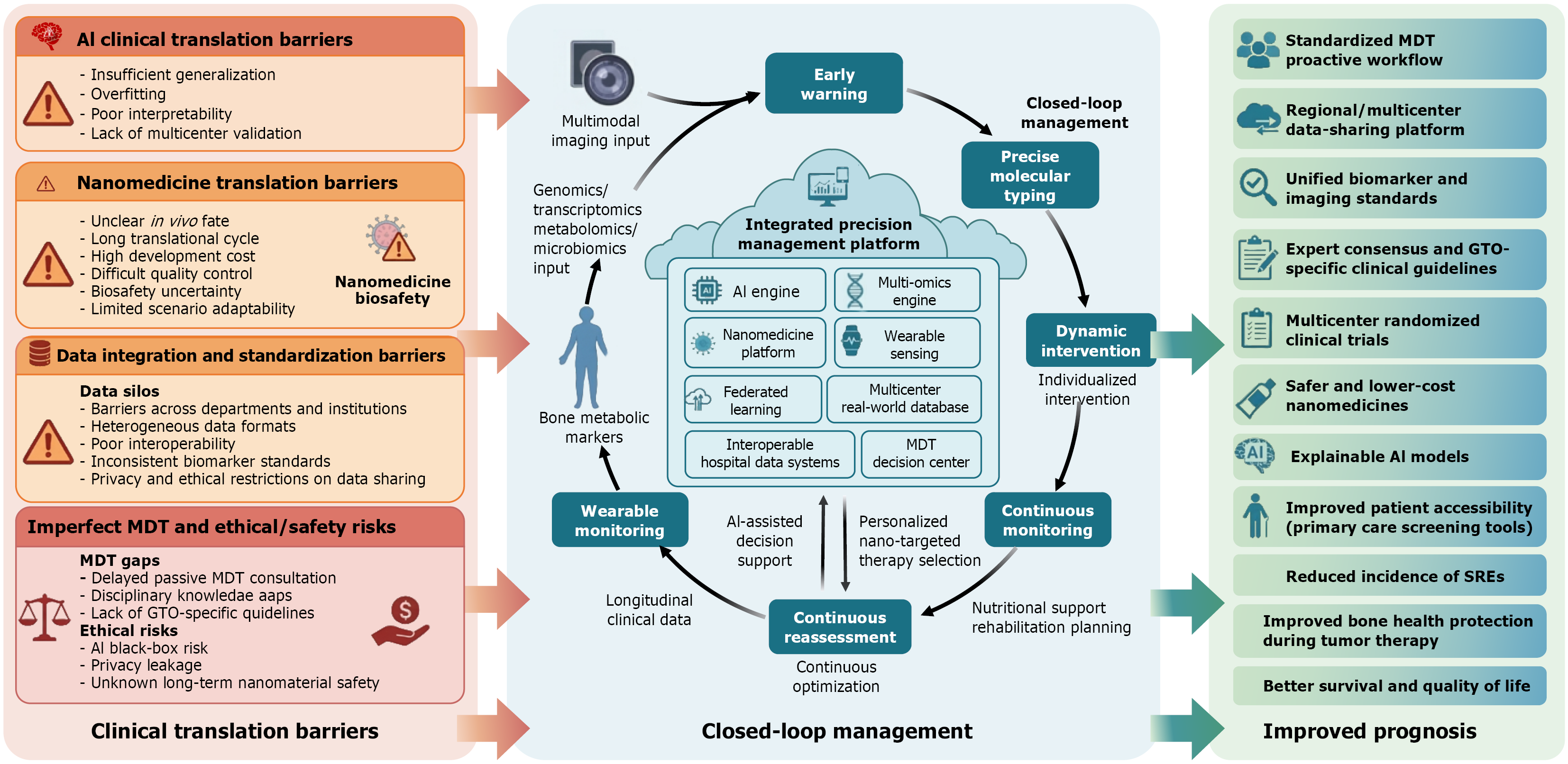
Figure 3 Translational barriers and closed-loop implementation pathway for precision management of gastrointestinal tumor-associated osteoporosis.
The left panel summarizes the major barriers limiting the clinical translation of gastrointestinal tumor-associated osteoporosis precision management, including insufficient artificial intelligence (AI) generalizability and interpretability, nanomedicine biosafety and quality-control challenges, multidimensional data silos and a lack of standardization, and imperfect multidisciplinary team (MDT) collaboration with ethical and safety risks. The center panel illustrates a closed-loop precision-management framework integrating multimodal imaging, multiomics, wearable monitoring, multicenter real-world databases, and interoperable hospital systems to support early warning, molecular typing, dynamic intervention, continuous reassessment, and longitudinal monitoring. The right panel outlines key implementation strategies, including standardized MDT workflows, regional data-sharing platforms, unified biomarker and imaging standards, expert consensus and clinical guidelines, multicenter trials, safer nanomedicines, and explainable AI, ultimately improving bone protection, reducing skeletal-related event incidence, and enhancing prognosis and quality of life. AI: Artificial intelligence; GTO: Gastrointestinal tumor-associated osteoporosis; MDT: Multidisciplinary team; SRE: Skeletal-related event.
- Citation: Wang P, Sun JK, Li D, Shi Z, Lu PY, Jin DF, Huang SF, Ruan YH, Li WT, Shi MD, Ma ZH, Wang ZH, Hu LY, Xue ME, Zhang CJ, Li ZP. Precision management of gastrointestinal tumor-associated osteoporosis driven by cutting-edge technologies: Current status, challenges, and future prospects. World J Methodol 2026; 16(3): 121456
- URL: https://www.wjgnet.com/2222-0682/full/v16/i3/121456.htm
- DOI: https://dx.doi.org/10.5662/wjm.121456