
















Copyright: ©Author(s) 2026.
World J Methodol. Sep 20, 2026; 16(3): 121456
Published online Sep 20, 2026. doi: 10.5662/wjm.121456
Published online Sep 20, 2026. doi: 10.5662/wjm.121456
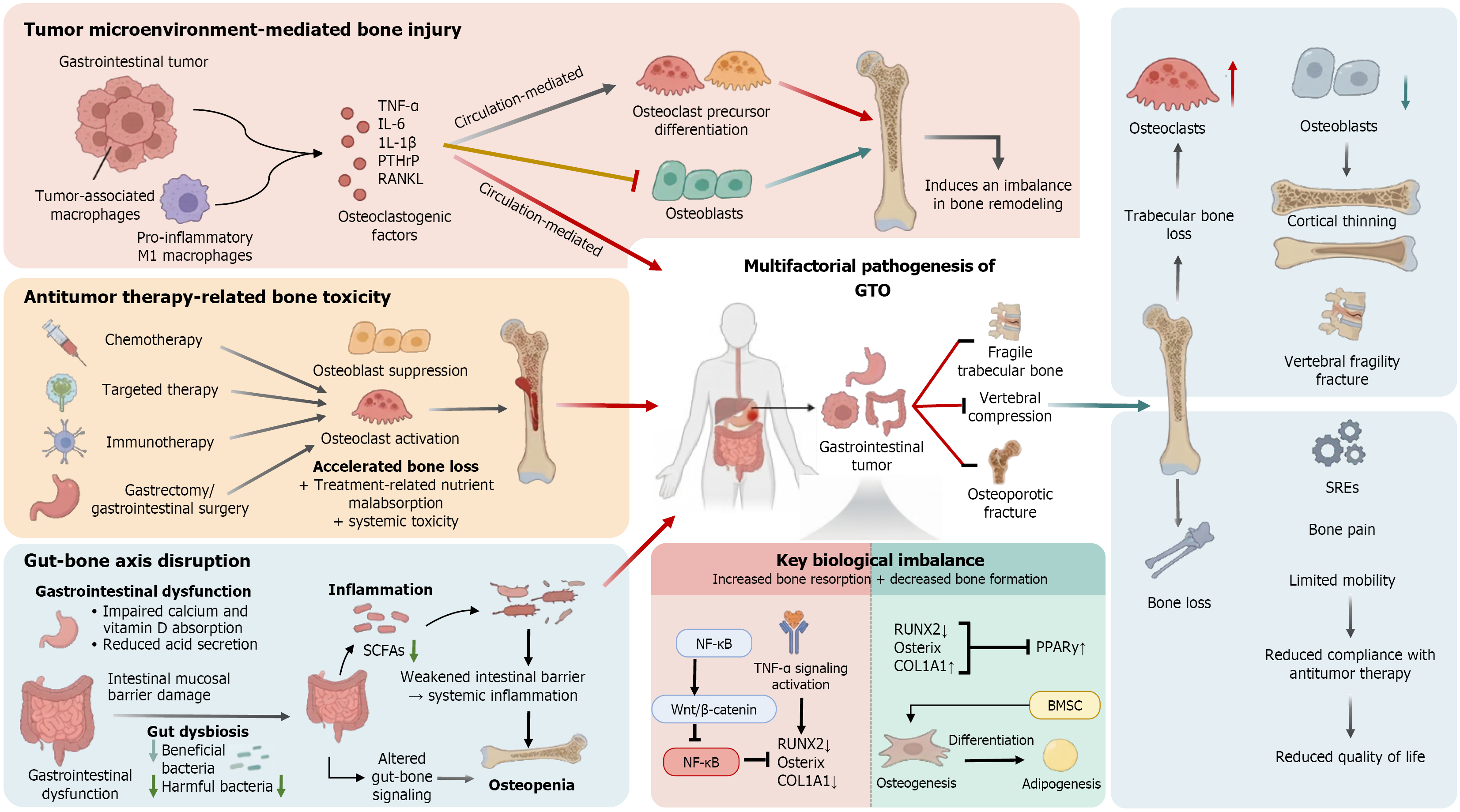
Figure 2 Multiple pathogenesis and consequences of gastrointestinal tumor-associated osteoporosis.
gastrointestinal tumor-associated osteoporosis results from the combined effects of tumor microenvironment-mediated bone injury, antitumor therapy-related bone toxicity, and gut-bone axis disruption. These processes enhance osteoclastogenesis, suppress osteoblast function, impair nutrient absorption, and promote systemic inflammation. At the molecular level, nuclear factor kappa-B/tumor necrosis factor signaling activation, Wnt/β-catenin inhibition, and dysregulated bone marrow mesenchymal stem cell differentiation jointly shift bone remodeling toward increased resorption and reduced formation, ultimately leading to trabecular bone loss, cortical thinning, vertebral fragility fracture, skeletal-related events, bone pain, limited mobility, and reduced quality of life. BMSC: Bone marrow mesenchymal stem cell; COL1A1: Collagen type I alpha 1 chain; GTO: Gastrointestinal tumor-associated osteoporosis; IL-1β: Interleukin-1 beta; IL-6: Interleukin-6; NF-κB: Nuclear factor kappa-B; PPARγ: Peroxisome proliferator-activated receptor gamma; PTHrP: Parathyroid hormone-related protein; RANKL: Receptor activator of nuclear factor kappa-B ligand; RUNX2: Runt-related transcription factor 2; SCFAs: Short-chain fatty acids; SREs: Skeletal-related events; TNF-α: Tumor necrosis factor-alpha.
- Citation: Wang P, Sun JK, Li D, Shi Z, Lu PY, Jin DF, Huang SF, Ruan YH, Li WT, Shi MD, Ma ZH, Wang ZH, Hu LY, Xue ME, Zhang CJ, Li ZP. Precision management of gastrointestinal tumor-associated osteoporosis driven by cutting-edge technologies: Current status, challenges, and future prospects. World J Methodol 2026; 16(3): 121456
- URL: https://www.wjgnet.com/2222-0682/full/v16/i3/121456.htm
- DOI: https://dx.doi.org/10.5662/wjm.121456