
















Copyright: ©Author(s) 2026.
World J Transl Med. Nov 28, 2026; 12(4): 126251
Published online Nov 28, 2026. doi: 10.5528/wjtm.126251
Published online Nov 28, 2026. doi: 10.5528/wjtm.126251
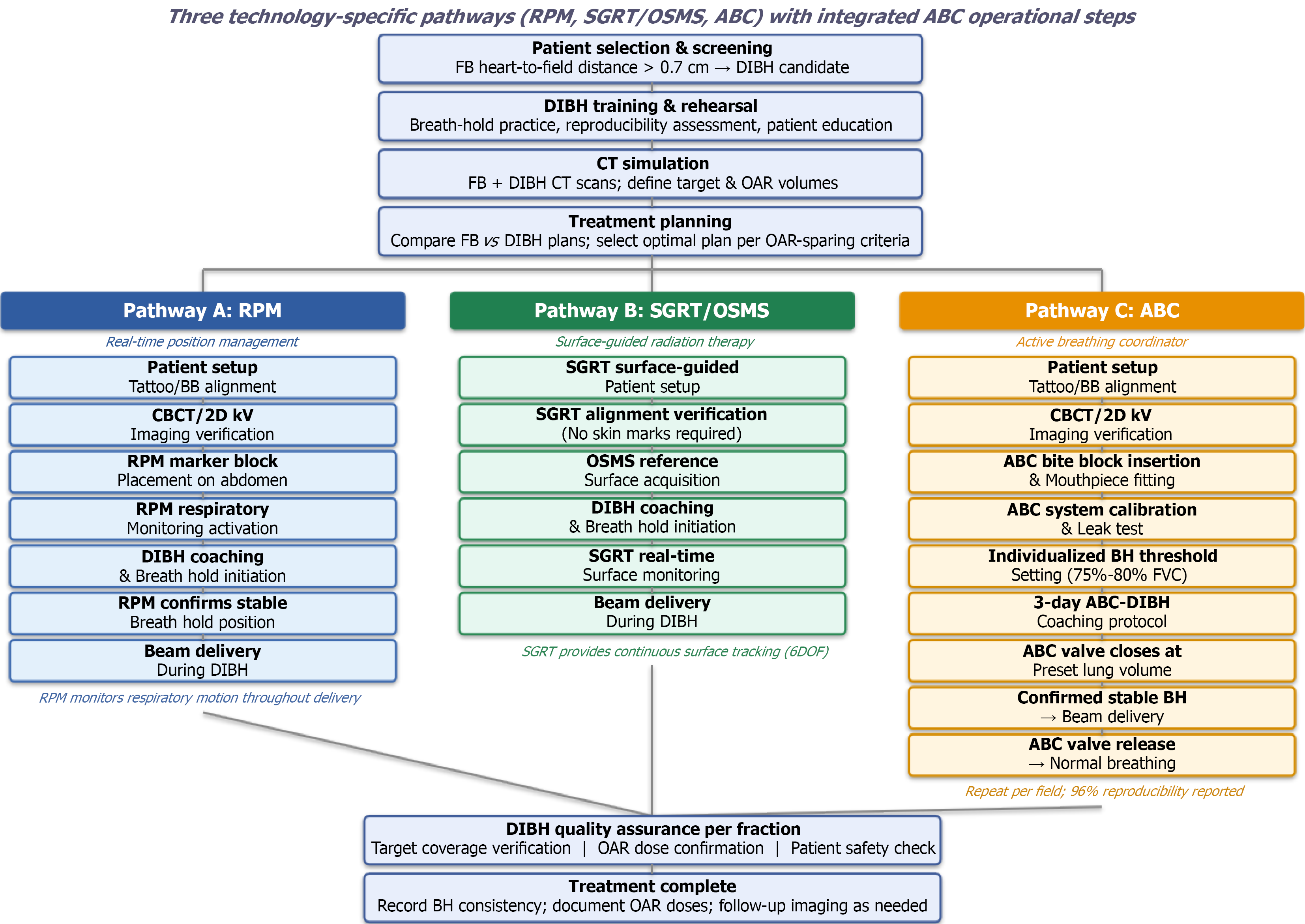
Figure 1 Treatment workflow for deep inspiration breath-hold in right-sided breast radiotherapy.
Three technology-specific pathways are shown: Pathway A (blue, RPM-based), pathway B [green, surface-guided radiotherapy/optical surface monitoring system (OSMS)-based], and Pathway C (amber, active breathing control-based). Shared pre-treatment steps [patient selection, deep inspiration breath-hold (DIBH) training, computed tomography simulation, and treatment planning] are indicated in indigo; per-fraction quality assurance is shown in violet. Pathway A: Real-time position management uses an infrared reflective marker block on the abdomen to track respiratory motion and gate beam delivery when a stable breath-hold position is confirmed. Pathway B: Surface-guided radiation therapy provides 6DOF real-time surface tracking without skin marks; OSMS acquires a DIBH reference surface for intra-fraction monitoring. Pathway C: The Active Breathing Coordinator closes a valve at a preset lung volume (75%-80% forced vital capacity), requiring bite-block insertion, system calibration, individualized threshold setting, and a 3-day coaching protocol to ensure reproducible breath-hold. All pathways converge at per-fraction quality assurance confirming target coverage, organ-at-risk sparing, and patient safety before each fraction. DIBH: Deep inspiration breath-hold; RPM: Real-time position management; SGRT: Surface-guided radiation therapy; OSMS: Optical surface monitoring system; ABC: Active breathing coordinator; FB: Free-breathing; CT: Computed tomography; OAR: Organs at risk; CBCT: Cone-beam computed tomography; kV: Kilovoltage; BB: Radiopaque body marker; BH: Breath-hold; 6DOF: Six degrees of freedom; FVC: Forced vital capacity.
- Citation: Chen WY, Gan ZY, Cai YW, Hua ZQ, Yi L. Advances in deep inspiration breath-hold technique for radiotherapy of right-sided breast cancer. World J Transl Med 2026; 12(4): 126251
- URL: https://www.wjgnet.com/2220-6132/full/v12/i4/126251.htm
- DOI: https://dx.doi.org/10.5528/wjtm.126251