
















Copyright: ©Author(s) 2026.
World J Transl Med. Nov 28, 2026; 12(4): 125988
Published online Nov 28, 2026. doi: 10.5528/wjtm.125988
Published online Nov 28, 2026. doi: 10.5528/wjtm.125988
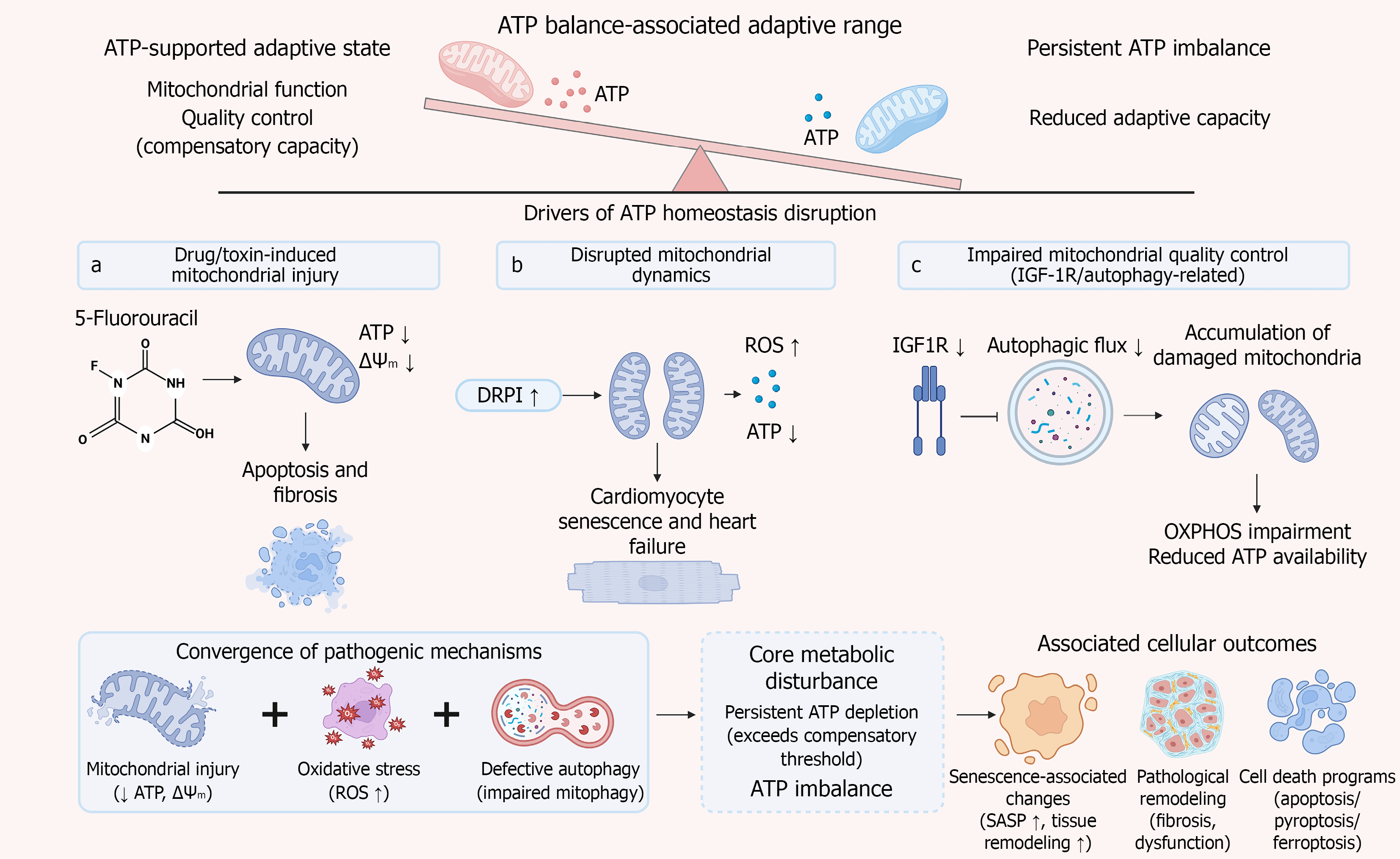
Figure 3 A conceptual framework linking adenosine triphosphate homeostasis disruption to cardiovascular cell-fate transitions and pathological remodeling.
The potential importance of adenosine triphosphate (ATP) homeostasis is proposed as an integrative metabolic framework influencing the cell-fate trajectories in cardiovascular cells. Under physiological conditions, adequate ATP availability supports mitochondrial function, organelle quality control and cellular compensatory capacity. Different pathological insults, including drug/toxin treatment, mitochondrial dynamics imbalance, and autophagy dysfunction, may be associated with ATP homeostasis disruption together with mitochondrial damage, oxidative stress, and impaired organelle clearance. Persistent ATP dysregulation accompanying failure of metabolic adaptation is proposed to be associated with persistent senescence-associated phenotypes, maladaptive remodeling, and regulated cell-death programs. In this framework, ATP homeostasis is positioned as an integrative metabolic framework that links metabolic derangements with cardiovascular remodeling across disease progression. ATP: Adenosine triphosphate; DRP1: Dynamin-related protein 1; IGF1R: Insulin-like growth factor 1 receptor; OXPHOS: Oxidative phosphorylation; ROS: Reactive oxygen species; SASP: Senescence-associated secretory phenotype; ΔΨm: Mitochondrial membrane potential.
- Citation: Zhao R, Zhang JJ, Mohd Shahpudin SN, Harun MSR, Zhang HL, Doblin S. Adenosine triphosphate homeostasis in cardiovascular cell-fate transitions: Adenosine triphosphate-induced cellular senescence and adenosine triphosphate-induced cell death. World J Transl Med 2026; 12(4): 125988
- URL: https://www.wjgnet.com/2220-6132/full/v12/i4/125988.htm
- DOI: https://dx.doi.org/10.5528/wjtm.125988