
















Copyright: ©Author(s) 2026.
World J Transl Med. Nov 28, 2026; 12(4): 125988
Published online Nov 28, 2026. doi: 10.5528/wjtm.125988
Published online Nov 28, 2026. doi: 10.5528/wjtm.125988
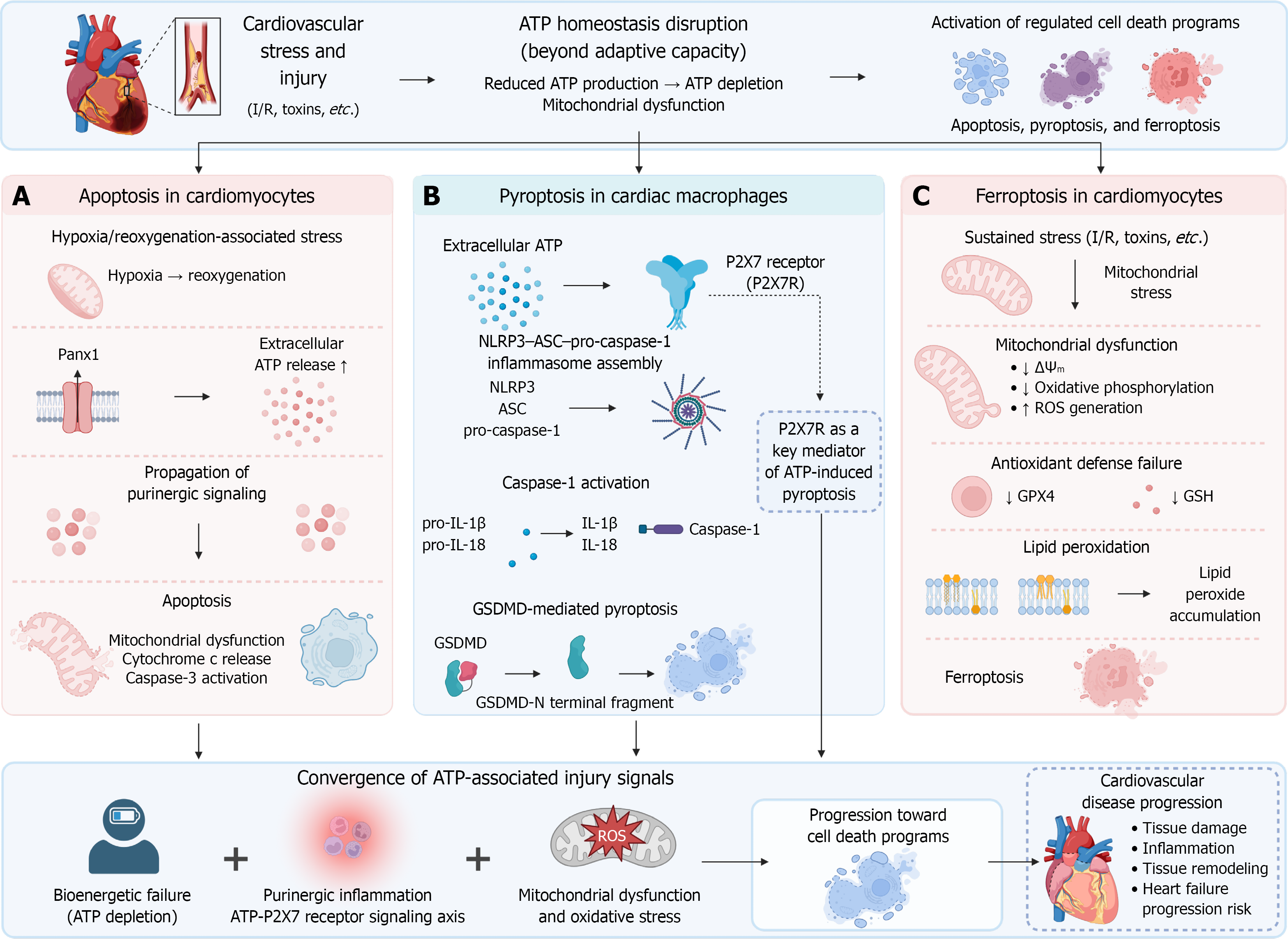
Figure 2 Adenosine triphosphate dysregulation and regulated cell-death pathways in cardiovascular injury.
Cardiovascular stress disrupts cellular energy metabolism, mitochondrial function, and extracellular adenosine triphosphate (ATP) signaling, potentially contributing to distinct regulated cell-death pathways. A: Apoptosis in cardiomyocytes: Hypoxia/reoxygenation-associated stress promotes pannexin 1 (Panx1)-mediated extracellular ATP release and purinergic signaling, accompanied by mitochondrial dysfunction, cytochrome c release, and caspase-3 activation, which are associated with cardiomyocyte apoptosis. B: Pyroptosis in cardiac macrophages: Extracellular ATP activates the P2X7 receptor (P2X7R), promoting NLRP3 inflammasome assembly, caspase-1 activation, maturation of interleukin-1β (IL-1β) and interleukin-18 (IL-18), and gasdermin D (GSDMD)-mediated pyroptosis. C: Ferroptosis in cardiomyocytes: Sustained oxidative stress and mitochondrial dysfunction are associated with impaired antioxidant defenses, including reduced glutathione peroxidase 4 (GPX4) activity and glutathione (GSH) availability, leading to lipid peroxidation and ferroptotic cell death. Together, these pathways illustrate the potential convergence of bioenergetic impairment, purinergic inflammation, and mitochondrial oxidative stress in cardiovascular injury and pathological remodeling. These pathways are presented as distinct, context-dependent mechanisms rather than consecutive stages of a single ATP-driven process. ASC: Apoptosis-associated speck-like protein containing a caspase recruitment domain; ATP: Adenosine triphosphate; GPX4: Glutathione peroxidase 4; GSDMD: Gasdermin D; GSH: Glutathione; I/R: Ischemia/reperfusion; IL-1β: Interleukin-1 beta; IL-18: Interleukin-18; NLRP3: NOD-like receptor family pyrin domain-containing 3; Panx1: Pannexin 1; P2X7R: Purinergic receptor P2X7; ROS: Reactive oxygen species; ΔΨm: Mitochondrial membrane potential.
- Citation: Zhao R, Zhang JJ, Mohd Shahpudin SN, Harun MSR, Zhang HL, Doblin S. Adenosine triphosphate homeostasis in cardiovascular cell-fate transitions: Adenosine triphosphate-induced cellular senescence and adenosine triphosphate-induced cell death. World J Transl Med 2026; 12(4): 125988
- URL: https://www.wjgnet.com/2220-6132/full/v12/i4/125988.htm
- DOI: https://dx.doi.org/10.5528/wjtm.125988