
















Copyright: ©Author(s) 2026.
World J Transl Med. Nov 28, 2026; 12(4): 125988
Published online Nov 28, 2026. doi: 10.5528/wjtm.125988
Published online Nov 28, 2026. doi: 10.5528/wjtm.125988
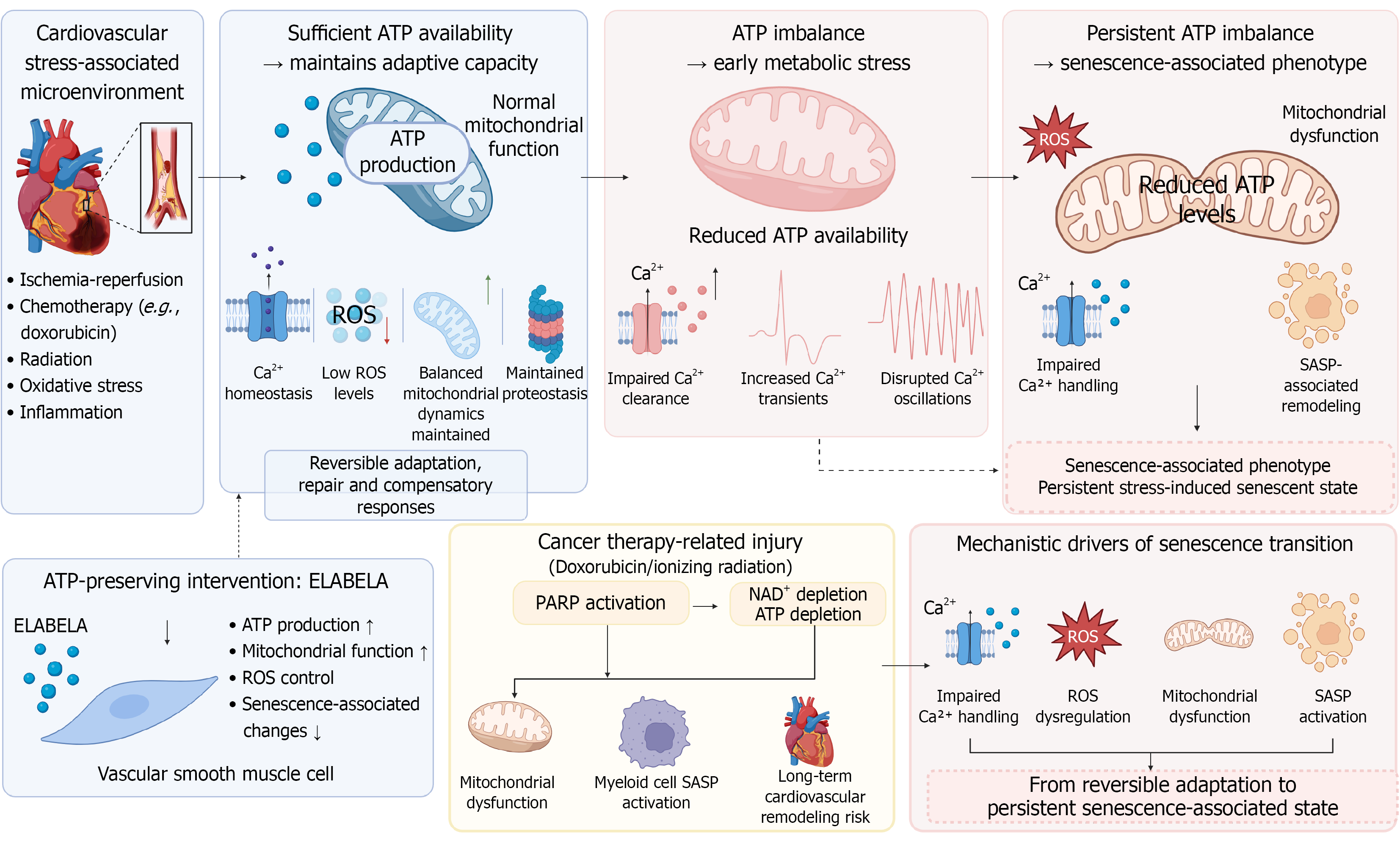
Figure 1 Adenosine triphosphate homeostasis, metabolic adaptation, and senescence-associated changes in cardiovascular injury.
Cardiovascular stress alters cellular energetics together with mitochondrial function, Ca²+ handling, redox balance, and proteostasis. During sustained stress, impaired adenosine triphosphate (ATP) homeostasis can accompany mitochondrial dysfunction and oxidative and Ca²+ disturbances, whereas prolonged metabolic dysfunction is associated with senescence-related changes, including stable cell-cycle arrest and SASP activity. ATP disturbance may occur upstream or downstream of these processes, and the sequence is unlikely to be uniform across cardiovascular cell types. The figure therefore summarizes the proposed relationships among ATP homeostasis, metabolic adaptation, and senescence-associated remodeling rather than defining a fixed pathway or ATP threshold. ATP: Adenosine triphosphate; Ca²+: Calcium ion; NAD+: Nicotinamide adenine dinucleotide; PARP: Poly(ADP-ribose) polymerase; ROS: Reactive oxygen species; SASP: Senescence-associated secretory phenotype.
- Citation: Zhao R, Zhang JJ, Mohd Shahpudin SN, Harun MSR, Zhang HL, Doblin S. Adenosine triphosphate homeostasis in cardiovascular cell-fate transitions: Adenosine triphosphate-induced cellular senescence and adenosine triphosphate-induced cell death. World J Transl Med 2026; 12(4): 125988
- URL: https://www.wjgnet.com/2220-6132/full/v12/i4/125988.htm
- DOI: https://dx.doi.org/10.5528/wjtm.125988