
















Copyright: ©Author(s) 2026.
World J Transl Med. Sep 28, 2026; 12(3): 124965
Published online Sep 28, 2026. doi: 10.5528/wjtm.124965
Published online Sep 28, 2026. doi: 10.5528/wjtm.124965
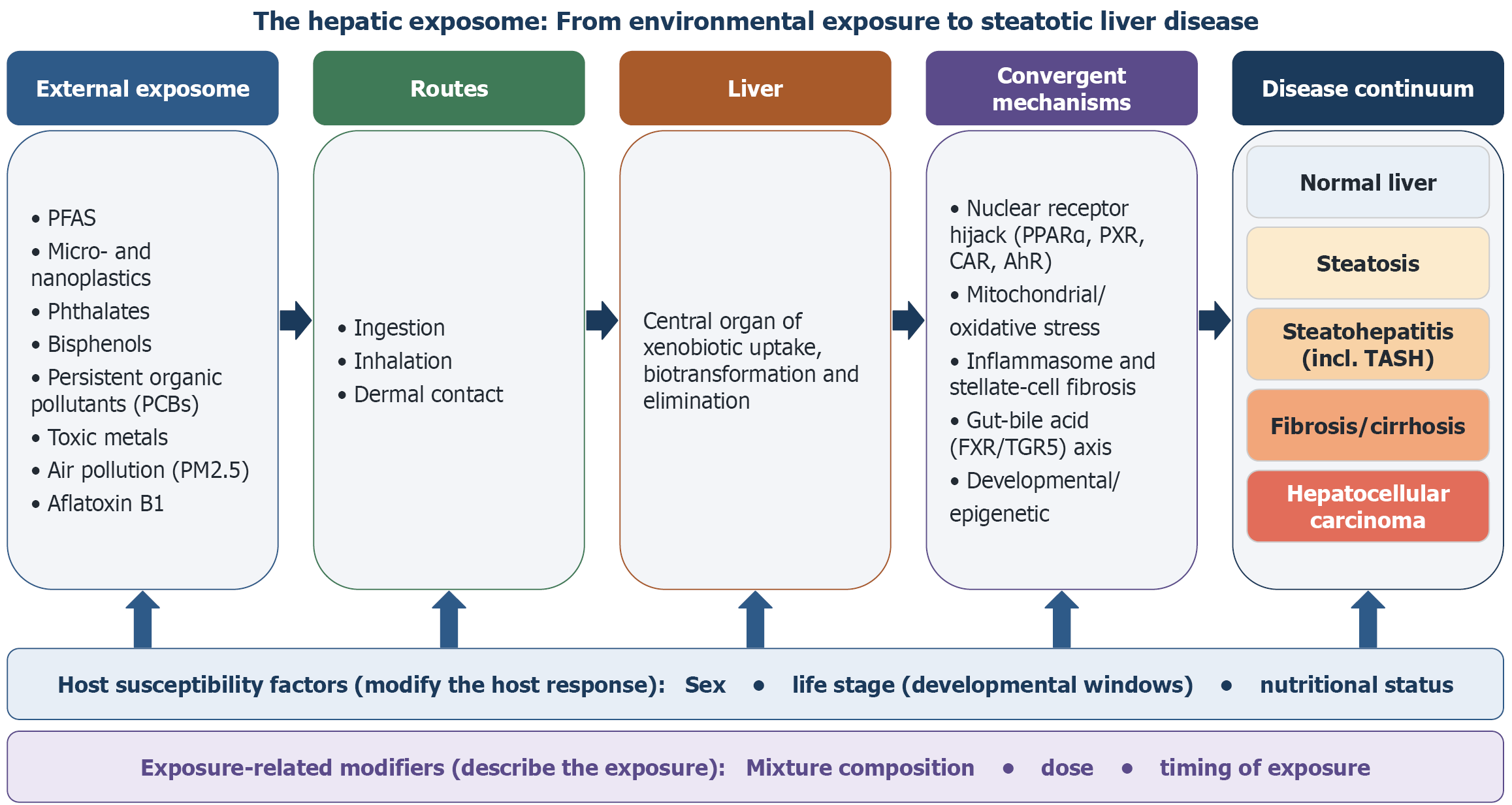
Figure 1 Hepatic exposome and transition from environmental exposure to steatotic liver disease.
Environmental chemicals from the external exposome (per- and polyfluoroalkyl substances, micro- and nanoplastics, phthalates and bisphenols, persistent organic pollutants, toxic metals, air pollution and aflatoxin B1) are absorbed by the body through ingestion, inhalation and dermal contact and are transported to the liver, the key organ for xenobiotic uptake, biotransformation and elimination. They converge on a common set of mechanisms: Nuclear receptor hijacking (peroxisome proliferator-activated receptor alpha, pregnane X receptor, constitutive androstane receptor, arylhydrocarbon receptor), mitochondrial and peroxisomal dysfunction with oxidative stress, inflammasome activation and hepatic stellate cell-driven fibrogenesis, disruption of the gut microbiota-bile acid-farnesoid X receptor axis, and developmental and epigenetic reprogramming. These mechanisms are associated with the clinical progression from normal liver to steatosis and toxicant-associated steatohepatitis, and then to fibrosis, cirrhosis and hepatocellular carcinoma. Two distinct classes of modifiers act upon this pathway and are shown separately: Host-susceptibility factors (sex, life stage, including developmental windows, and nutritional status) that modify the host response to a given exposure (e.g., women exhibit more robust steatogenic responses to several pollutants and in utero and early childhood windows of exposure confer disproportionately high and persistent risk) and exposure-related modifiers (mixture composition, dose, and timing of exposure) that describe the exposure itself, rather than host susceptibility. PPARα: Peroxisome proliferator-activated receptor alpha; PXR: Pregnane X receptor; CAR: Constitutive androstane receptor; AhR: Aryl hydrocarbon receptor; FXR: Farnesoid X receptor; PM2.5: Particulate matter < 2.5 μm; PCBs: Polychlorinated biphenyls; TGR5: Takeda G protein-coupled receptor 5; PFAS: Per- and polyfluoroalkyl substances; incl: Including; TASH: Toxicant-associated steatohepatitis.
- Citation: Salman A, Elewa A, Marwan A, Salman MA. Hepatic exposome as an emerging contributor to metabolic dysfunction-associated steatotic liver disease. World J Transl Med 2026; 12(3): 124965
- URL: https://www.wjgnet.com/2220-6132/full/v12/i3/124965.htm
- DOI: https://dx.doi.org/10.5528/wjtm.124965