
















©The Author(s) 2025.
World J Psychiatry. Nov 19, 2025; 15(11): 109581
Published online Nov 19, 2025. doi: 10.5498/wjp.v15.i11.109581
Published online Nov 19, 2025. doi: 10.5498/wjp.v15.i11.109581
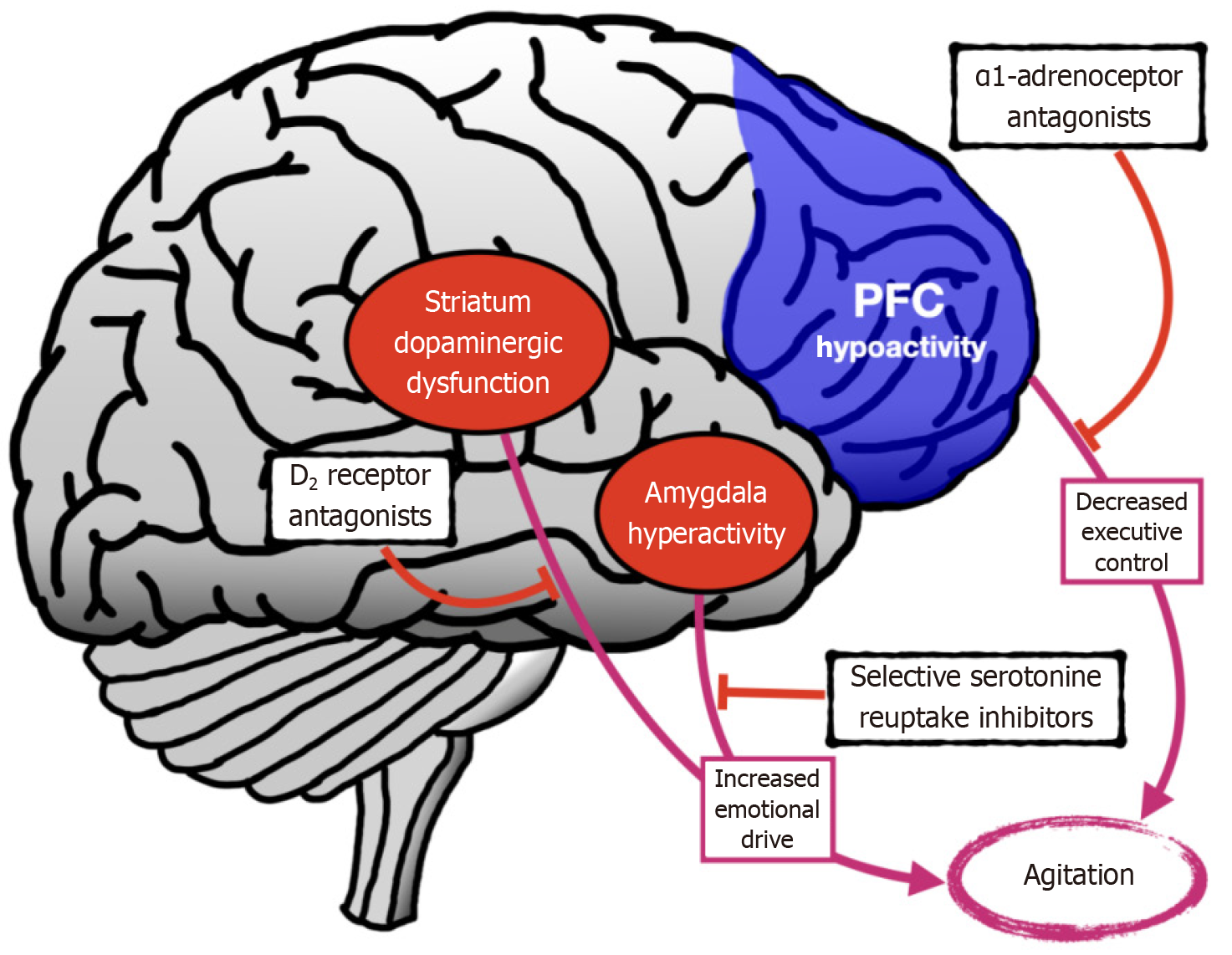
Figure 1 Neurobiological model of agitation depicting key brain regions and neurotransmitter systems.
Prefrontal cortex hypoactivity contributes to decreased executive control, while amygdala hyperactivity and striatal dopaminergic dysfunction increase emotional drive, collectively leading to agitation. Pharmacological targets include D2 receptor antagonists (antipsychotics) for dopaminergic dysfunction, selective serotonin reuptake inhibitors to reduce emotional drive, and α1-adrenoceptor antagonists (e.g., prazosin) to enhance executive control. Based on the model of agitation in Alzheimer’s disease proposed by Cummings et al[9]. SSRIs: Selective serotonin reuptake inhibitors; AD: Alzheimer’s disease.
- Citation: Teixeira AL, Kim Y, Cordeiro TM, de Erausquin GA, Rocha NP. Agitation in Alzheimer’s disease: From assessment to therapeutics. World J Psychiatry 2025; 15(11): 109581
- URL: https://www.wjgnet.com/2220-3206/full/v15/i11/109581.htm
- DOI: https://dx.doi.org/10.5498/wjp.v15.i11.109581