
















©The Author(s) 2025.
World J Crit Care Med. Dec 9, 2025; 14(4): 108638
Published online Dec 9, 2025. doi: 10.5492/wjccm.v14.i4.108638
Published online Dec 9, 2025. doi: 10.5492/wjccm.v14.i4.108638
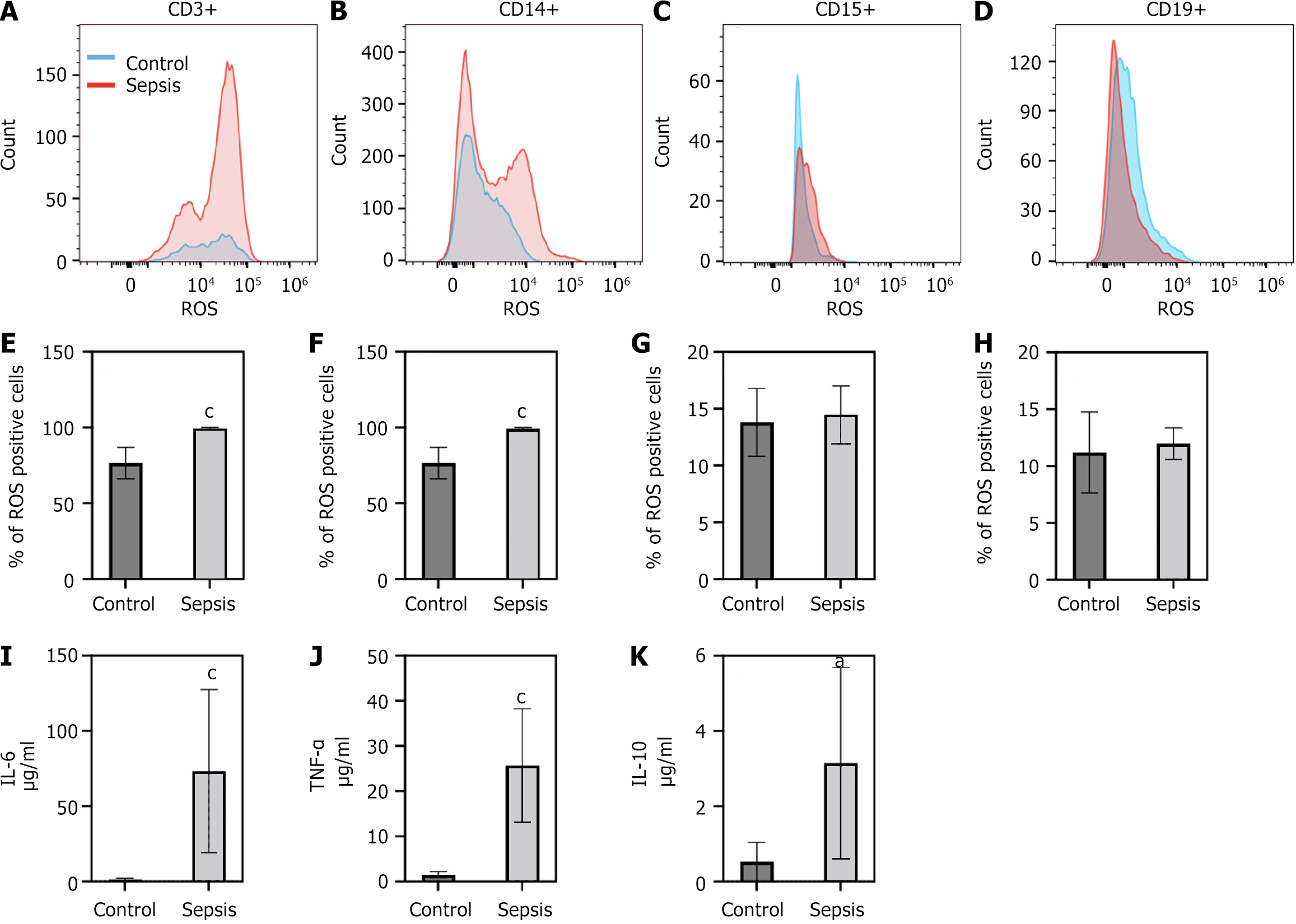
Figure 2 Reactive oxygen species levels are increased septic patients in CD3+ and CD14+ cells.
A–D: Representative histograms of intracellular reactive oxygen species (ROS) fluorescence in CD3+ T cells, CD14+ monocytes, CD15+ granulocytes and CD19+ B cells, from 1 control and 1 septic patient; E–H: Quantification of ROS levels (mean ± SD) in each subset from 6 control and 6 septic patients. While CD3+ and CD14+ cells exhibited significantly elevated ROS levels in sepsis, CD19+ and CD15+ cells did not show statistically significant differences; I–K: Plasma concentrations of interleukin (IL)-6, tumor necrosis factor-α, and IL-10 measured in 13 control and 12 septic patients. Statistical analysis: Unpaired two-tailed Student’s t-test. aP < 0.05, cP < 0.001. IL: Interleukin; ROS: Reactive oxygen species.
- Citation: Thoppil J, Farrar JD, Sharma D, Kirby S, Mobley A, Courtney DM. Reactive oxygen species elevations in human immune cell subsets during sepsis are mitigated by norepinephrine and N-acetylcysteine. World J Crit Care Med 2025; 14(4): 108638
- URL: https://www.wjgnet.com/2220-3141/full/v14/i4/108638.htm
- DOI: https://dx.doi.org/10.5492/wjccm.v14.i4.108638