
















Copyright: ©Author(s) 2026.
World J Clin Pediatr. Dec 9, 2026; 15(4): 121115
Published online Dec 9, 2026. doi: 10.5409/wjcp.121115
Published online Dec 9, 2026. doi: 10.5409/wjcp.121115
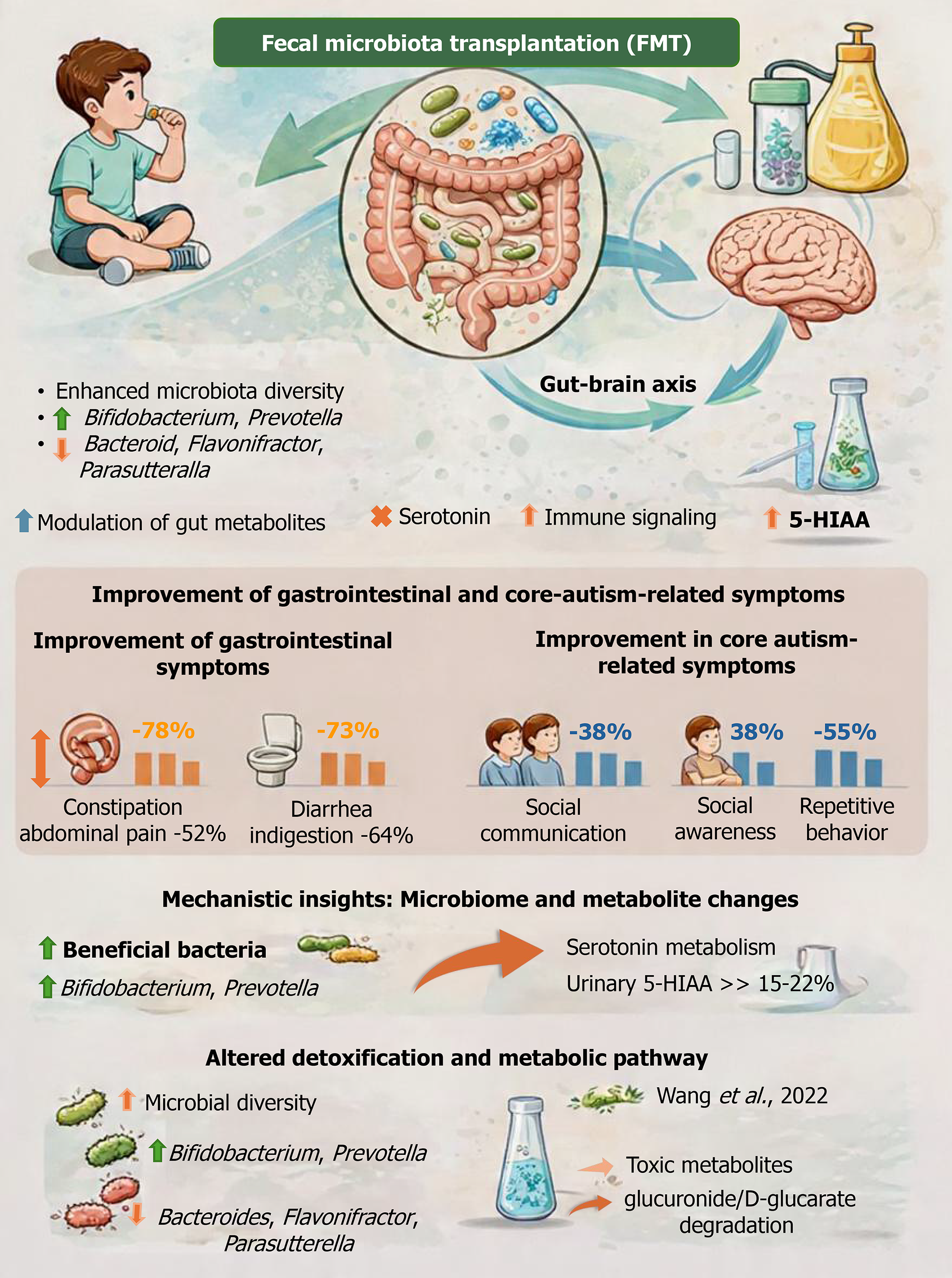
Figure 8 Proposed mechanisms and clinical effects of fecal microbiota transplantation in children with autism spectrum disorder.
This schematic overview illustrates the potential therapeutic effects of fecal microbiota transplantation (FMT) on gastrointestinal (GI) dysfunction and core behavioral symptoms in children with autism spectrum disorder (ASD) through modulation of the gut-brain axis. FMT involves transferring a complex microbial community from a healthy donor to a recipient to restore microbial diversity and functional balance in the intestinal ecosystem. Several clinical studies have shown that FMT can significantly alter the gut microbial composition of children with ASD, typically increasing beneficial taxa such as Bifidobacterium and Prevotella while reducing the relative abundance of potentially pathogenic bacteria, including Bacteroides, Flavonifractor, and Parasutterella. These microbial shifts may influence host metabolism, immune signaling, and neuroactive compound production. Through these microbiome changes, FMT may modulate the gut-brain axis and improve multiple clinical domains. Improvements in GI symptoms-such as constipation, diarrhea, abdominal pain, and indigestion-have been reported using validated instruments, including the GI Symptom Rating Scale. In parallel, improvements in core ASD-related symptoms have been observed using standardized behavioral assessments such as the Childhood Autism Rating Scale, Aberrant Behavior Checklist, and Social Responsiveness Scale. Mechanistically, alterations in microbial metabolism may contribute to these clinical effects. Changes in microbial metabolic pathways can affect serotonin metabolism, immune signaling, and detoxification processes. For example, clinical evidence indicates that FMT may reduce urinary levels of 5-hydroxyindoleacetic acid, a serotonin metabolite, suggesting that microbial modulation of serotonergic pathways may contribute to symptom improvement. Overall, the figure summarizes the current evidence indicating that FMT can reshape the gut microbiome, modify microbial metabolic pathways, and subsequently improve GI symptoms, behavioral outcomes, and neurodevelopmental features associated with ASD. FMT: Fecal microbiota transplantation.
- Citation: Al-Beltagi M, Saeed NK, Elbeltagi YM. Psychobiotics in pediatric autism spectrum disorder: A systematic review of efficacy, mechanisms, and clinical translation. World J Clin Pediatr 2026; 15(4): 121115
- URL: https://www.wjgnet.com/2219-2808/full/v15/i4/121115.htm
- DOI: https://dx.doi.org/10.5409/wjcp.121115